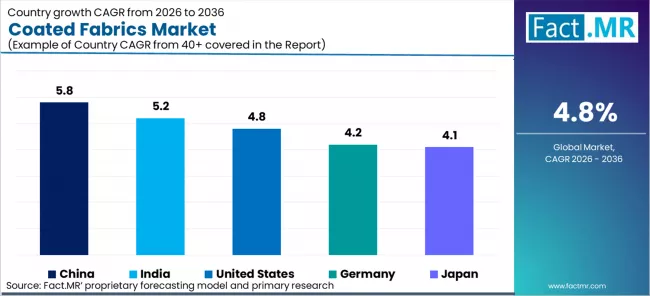
Germany’s coated fabrics market is emerging as a high-value, innovation-driven segment within Europe, supported by strong automotive manufacturing, regulatory leadership, and advanced material science capabilities.The market is estimated at approximately USD 3.4 billion in 2026, expected to reach USD 3.6 billion in 2027, and projected to expand to nearly USD 5.4 billion by 2036, growing at a CAGR of 4.2%.An incremental opportunity of over USD 2.0 billion is anticipated during 2026–2036. The transformation is primarily driven by OEM sustainability targets, EV interior material upgrades, and REACH-driven reformulation, pushing the industry toward polyurethane, silicone, and fluoropolymer-coated fabrics.
Quick Stats
- Market Size (2026): USD 3.4 Billion
- Market Size (2027): USD 3.6 Billion
- Forecast Value (2036): USD 5.4 Billion
- CAGR (2026–2036): 4.2%
- Incremental Opportunity: USD 2.0 Billion
- Leading Segment: Transportation (Automotive Interiors)
- Leading Region: Germany (within Europe)
- Key Players: Continental AG, Sioen Industries NV, Serge Ferrari Group SA, Trelleborg AB, Saint-Gobain Performance Fabrics
Executive Insight for Decision Makers
Germany’s coated fabrics market is shifting from PVC-dominant production to sustainable, high-performance materials.
- Automotive OEMs are phasing out PVC interiors by 2030, accelerating demand for low-emission coatings
- Manufacturers must invest in REACH-compliant, waterborne technologies to retain supplier approvals
- Investors should focus on companies aligned with EV supply chains and regulatory compliance
Risk: Suppliers lacking certification and sustainability alignment risk losing OEM contracts and export competitiveness.Market Dynamics
Key Growth Drivers
- Strong automotive manufacturing base and EV transition
- Increasing adoption of low-VOC, flame-retardant materials
- Regulatory push under EU REACH and environmental norms
- Growth in industrial and architectural membrane applications
Key Restraints
- Phase-out pressure on PVC-based coated fabrics
- High cost of advanced coatings (PU, silicone)
- Strict compliance requirements increasing production costs
Emerging Trends
- Rapid shift toward waterborne PU coatings
- Increasing use of silicone-coated fabrics for high-performance applications
- Integration of recyclable and bio-based materials
- OEM-driven demand for lightweight and durable EV interiors
Segment Analysis
- Transportation (Automotive Interiors) dominates, accounting for over 30% share, driven by seating, dashboards, and EV interior components
- Polymer-coated fabrics (PU and advanced PVC alternatives) lead material demand
Fastest-Growing Segments
- Silicone-coated fabrics for industrial and heat-resistant applications
- Fluoropolymer fabrics for chemical and high-performance environments
Strategic Importance
- OEM approvals in Germany create long-term supplier relationships and pricing stability
- High-performance segments deliver premium margins and export opportunities
Supply Chain Analysis (Critical Insight)
Value Chain Structure
- Raw Material Suppliers: European chemical companies supplying PU resins, silicones, and specialty polymers
- Manufacturers: Leading players such as Continental AG and Sioen Industries convert technical textiles into coated fabrics
- Distributors: OEM-approved suppliers and industrial distributors across Germany and the EU
- End-Users:
- Automotive OEMs (BMW, Volkswagen Group, Mercedes-Benz)
- Defence and industrial sectors
- Construction and infrastructure developers
Who Supplies Whom
- Chemical producers → coating specialists → textile processors → OEM-certified suppliers → automotive & industrial buyers
Key Insight:
Germany’s supply chain is highly certification-driven, with OEM approvals acting as barriers to entry and ensuring long-term supplier contracts.
Pricing Trends
- Commodity Segment: Declining share due to PVC restrictions
- Premium Segment: PU, silicone, and fluoropolymer fabrics command 30–70% higher prices
Price Influencers
- Compliance with REACH and EU environmental regulations
- Rising cost of specialty chemicals and energy
- OEM specifications and certification requirements
Margin Insight
- Premium segments offer higher margins and stable demand
- Commodity products face price pressure and declining volumes
Regional Analysis (Germany Focus)
Germany remains the innovation hub for coated fabrics in Europe, driven by:
- Strong presence of automotive OEMs and Tier-1 suppliers
- Early adoption of sustainability regulations and certifications
- Investments in advanced coating technologies and EV-compatible materials
Comparative Position
- Germany vs Europe: Leads in technology and compliance standards
- Germany vs Asia: Higher costs but stronger in premium, high-performance segments
Competitive Landscape
The Germany coated fabrics market is moderately consolidated, with leading players dominating high-value applications.
Key Players
- Continental AG
- Sioen Industries NV
- Serge Ferrari Group SA
- Trelleborg AB
- Saint-Gobain Performance Fabrics
- Haartz Corporation
- Seaman Corporation
Competitive Strategies
- Focus on sustainable coatings and innovation
- Expansion of EV-focused product portfolios
- Strengthening OEM partnerships and certifications
- Investment in eco-friendly production processes
Strategic Takeaways
For Manufacturers
- Transition toward PVC-free and REACH-compliant coatings
- Invest in R&D for EV and high-performance applications
For Investors
- Target companies aligned with automotive electrification and sustainability trends
- Focus on premium coated fabric segments
For Marketers & Distributors
- Strengthen presence in OEM supply chains
- Emphasize compliance, durability, and environmental performance
Future Outlook
Germany’s coated fabrics market will continue evolving toward a high-performance, sustainability-driven ecosystem.
- Growth in EV interiors and lightweight materials
- Increasing adoption of bio-based and recyclable coatings
- Rising demand from industrial and smart infrastructure sectors
The market will remain a benchmark for innovation and regulatory compliance in Europe.
Conclusion
Germany’s coated fabrics market represents a high-value, regulation-driven opportunity where innovation and sustainability define success.For decision-makers, the path forward lies in aligning with EU regulations, investing in advanced materials, and strengthening OEM partnerships.As automotive electrification and environmental mandates reshape the industry, Germany will continue to lead in premium coated fabric innovation and global standards, making it a critical market for long-term growth and strategic investment.