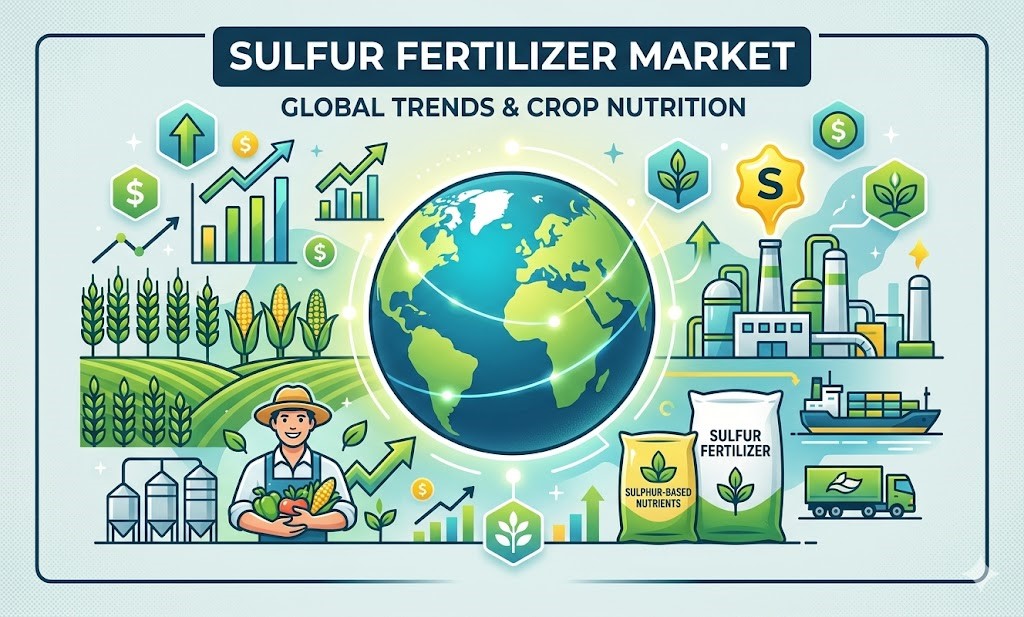
As global agriculture faces the dual challenge of increasing food production while maintaining soil health, sulfur fertilizers are gaining renewed importance. Sulfur, once naturally abundant in soils due to atmospheric deposition, has become a critical nutrient requiring supplementation in modern farming systems. With the intensification of agriculture and the widespread use of high-analysis fertilizers lacking sulfur, deficiencies are becoming more common. This shift is driving the growth of the sulfur fertilizer market, positioning it as a key component in sustainable crop nutrition strategies.
Market Overview
Sulfur fertilizers are essential for plant growth, playing a vital role in protein synthesis, enzyme function, and chlorophyll formation. They enhance nutrient uptake efficiency, particularly nitrogen, and improve crop quality and yield. As farmers increasingly recognize the impact of sulfur deficiency on productivity, the demand for sulfur-based fertilizers is steadily rising.
The market is supported by the growing adoption of balanced fertilization practices. Modern agriculture is moving beyond nitrogen, phosphorus, and potassium to include secondary nutrients like sulfur, which are crucial for optimizing crop performance. Additionally, the expansion of commercial farming and the need for higher agricultural output are reinforcing the importance of sulfur fertilizers.
Manufacturers are focusing on developing advanced formulations that ensure efficient nutrient delivery and minimize environmental impact. Products such as sulfate-based fertilizers and elemental sulfur are widely used, each offering specific benefits depending on soil conditions and crop requirements.
Regional Insights
The sulfur fertilizer market exhibits strong regional dynamics influenced by agricultural practices, soil conditions, and policy frameworks.
Asia-Pacific dominates the market, driven by extensive agricultural activities and the need to enhance crop productivity in densely populated regions. Countries in this region are increasingly adopting sulfur fertilizers to address widespread soil nutrient deficiencies and improve food security.
North America represents a mature market, where precision farming techniques and advanced nutrient management practices are well established. Farmers in this region are focusing on optimizing soil health and maximizing yields, contributing to consistent demand for sulfur fertilizers.
Europe is also a significant market, characterized by stringent environmental regulations and a strong emphasis on sustainable agriculture. The region’s focus on reducing chemical runoff and improving soil quality is encouraging the use of balanced fertilization, including sulfur supplementation.
Latin America and the Middle East & Africa are emerging as promising markets, supported by expanding agricultural activities and increasing awareness of soil nutrition. These regions offer growth opportunities as farmers adopt modern farming practices and invest in productivity-enhancing inputs.
Key Trends and Forecast
Several key trends are shaping the future of the sulfur fertilizer market, reflecting broader changes in global agriculture.
One major trend is the increasing adoption of precision agriculture. Farmers are using data-driven tools and soil testing technologies to determine nutrient requirements more accurately, leading to targeted application of sulfur fertilizers. This approach improves efficiency and reduces waste.
Another important trend is the growing demand for high-quality crops. Sulfur plays a crucial role in enhancing the nutritional value, flavor, and appearance of crops, making it particularly important for high-value agricultural products such as oilseeds, pulses, and fruits.
Sustainability is also a central theme in the market. With rising concerns about environmental impact, there is a shift toward eco-friendly fertilizer solutions. Manufacturers are exploring innovative production methods and formulations that reduce emissions and improve nutrient use efficiency.
In addition, the integration of sulfur with other nutrients in compound fertilizers is gaining popularity. These multi-nutrient products provide a balanced approach to fertilization, simplifying application and improving overall crop performance.
Applications and End-Use Outlook
Sulfur fertilizers are widely used across various agricultural applications, reflecting their importance in modern farming systems.
In crop production, they are essential for oilseeds such as soybean, canola, and sunflower, which have high sulfur requirements. Sulfur is also critical for cereals, pulses, and vegetables, where it contributes to improved yield and quality.
The horticulture sector is another key area of application, where sulfur fertilizers are used to enhance the growth and quality of fruits, flowers, and specialty crops. These applications require precise nutrient management, making sulfur supplementation particularly valuable.
In addition to conventional farming, sulfur fertilizers are increasingly used in organic and sustainable agriculture. Elemental sulfur, in particular, is favored for its ability to improve soil health and support long-term productivity.
Agricultural cooperatives, large-scale farms, and agribusiness companies are among the primary end-users, leveraging sulfur fertilizers to optimize production and meet market demand for high-quality crops.
Challenges and Opportunities
While the sulfur fertilizer market shows strong growth potential, it also faces certain challenges. Fluctuations in raw material availability and prices can impact production and supply. Additionally, lack of awareness among farmers in some regions may limit adoption.
Environmental concerns related to fertilizer use, such as soil acidification and runoff, also require careful management. Regulatory frameworks aimed at promoting sustainable agriculture may impose additional requirements on manufacturers and users.
However, these challenges are creating opportunities for innovation and education. Increasing awareness about soil health and nutrient management is encouraging farmers to adopt balanced fertilization practices. Government initiatives and extension services are playing a key role in promoting the benefits of sulfur fertilizers.
Technological advancements are also opening new avenues for growth. The development of controlled-release fertilizers and improved application techniques is enhancing efficiency and reducing environmental impact.
Conclusion
The sulfur fertilizer market is becoming an integral part of the global agricultural landscape, addressing the critical need for balanced crop nutrition. As farming practices evolve and the focus on sustainability intensifies, sulfur fertilizers are playing a vital role in improving soil health and crop productivity.
Looking ahead, continued innovation, increased awareness, and supportive policies will drive the adoption of sulfur fertilizers across regions. For stakeholders in the agriculture sector, understanding market trends and investing in advanced solutions will be key to unlocking the full potential of this essential nutrient market.
Browse Full Report – https://www.factmr.com/report/sulfur-fertilizer-market