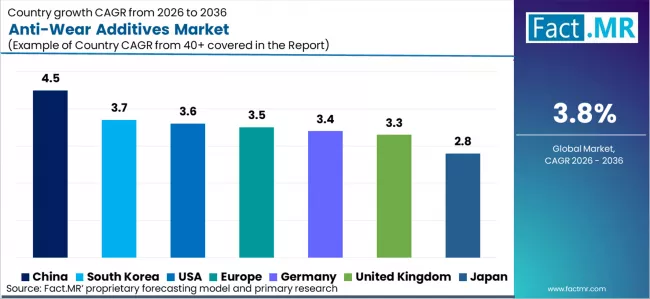
Brazil’s anti-wear additives market is emerging as a high-growth segment within Latin America, supported by expanding industrial activity and rising automotive demand. The market is estimated at USD 420 million in 2026, projected to reach USD 440 million in 2027, and forecast to surpass USD 650 million by 2036, growing at a CAGR of 4.2%.The market is expected to create an incremental opportunity of USD 230 million over the next decade. Growth is driven by increased adoption of high-performance lubricants in automotive, mining, and heavy machinery sectors, alongside a gradual shift toward advanced additive formulations.
Quick Stats
- Market Size (2026): USD 420 Million
- Market Size (2027): USD 440 Million
- Forecast Value (2036): USD 650 Million
- CAGR (2026–2036): 4.2%
- Incremental Opportunity: USD 230 Million
- Leading Segment: ZDDP Chemistry (51% share)
- Leading End-Use: Automotive (49% share)
- Leading Region: Brazil (Latin America growth engine)
- Key Players:Afton Chemical Corporation, LANXESS AG, Evonik Operations GmbH
Executive Insight for Decision Makers
Brazil is transitioning from a volume-driven lubricant market to a performance-oriented ecosystem, creating opportunities for advanced anti-wear additives.
- Strategic Shift: Growing demand for high-efficiency lubricants in industrial and automotive sectors
- Action Required: Localize supply chains and invest in cost-effective, high-performance formulations
- Risk: Overdependence on imported additives may lead to pricing volatility and supply disruptions
Companies that align with Brazil’s industrial growth and evolving lubrication standards will gain first-mover advantage in a rapidly maturing market.
Market Dynamics
Key Growth Drivers:
- Expansion of automotive manufacturing and vehicle parc
- Growth in mining, agriculture, and heavy machinery sectors
- Rising demand for durable, high-performance lubricants
- Infrastructure development boosting industrial activity
Key Restraints:
- Dependence on imported raw materials and additives
- Price sensitivity in industrial lubricant segments
- Limited adoption of advanced formulations in smaller industries
Emerging Trends:
- Increasing use of cost-efficient additive blends
- Gradual shift toward low-emission and eco-friendly lubricants
- Growing demand for industrial gear and hydraulic oils
- Expansion of local blending and distribution networks
Segment Analysis
- By Chemistry:
- ZDDP leads with 51% share, driven by cost-effectiveness and reliability
- Advanced low-ash additives are gradually gaining traction
- By End-Use Industry:
- Automotive dominates with 49% share, supported by vehicle production and aftermarket demand
- Industrial sector is the fastest-growing, particularly in mining and agriculture
- Strategic Importance:
- Conventional additives dominate volume, but premium formulations are driving value growth
Supply Chain Analysis (Very Important)
Raw Material Suppliers:
- Global suppliers of zinc, phosphorus, and specialty chemicals
Manufacturers / Producers:
- International additive companies such as The Lubrizol Corporation and BASF SE
Distributors:
- Regional distributors and lubricant blending companies across Brazil
End-Users:
- Automotive OEMs and aftermarket service providers
- Mining and construction companies
- Agricultural machinery operators
Who Supplies Whom:
Global raw material suppliers → additive manufacturers → Brazilian lubricant blenders → OEMs and industrial end-users. Local blending plays a crucial role in customizing formulations for Brazil’s operating conditions.
Pricing Trends
- ZDDP-based additives follow cost-sensitive pricing models
- Premium additives command higher margins due to performance benefits
- Pricing influenced by:
- Import costs and currency fluctuations
- Raw material prices
- Demand from industrial and automotive sectors
Margins remain higher in specialty additives, while commodity products face competitive pricing pressure.
Regional Analysis (Brazil Focus)
- Brazil is the fastest-growing market in Latin America, with a 4.2% CAGR
- Growth driven by:
- Expanding industrial and mining activities
- Increasing vehicle ownership and aftermarket demand
- Rising adoption of modern lubrication practices
Developed vs Emerging Context:
- Compared to North America and Europe, Brazil remains a developing but high-potential market, with strong volume growth and increasing shift toward value-added products.
Competitive Landscape
The Brazil anti-wear additives market is semi-consolidated, dominated by global players with strong distribution networks.Key Players:
- The Lubrizol Corporation
- BASF SE
- Chevron Oronite Company LLC
- Infineum International Limited
- LANXESS AG
- Evonik Operations GmbH
- Dorf Ketal Chemicals India Private Limited
Competitive Strategies:
- Expansion of local distribution and blending capabilities
- Focus on cost-performance optimization
- Partnerships with regional lubricant manufacturers
- Introduction of environmentally compliant additives
Strategic Takeaways
For Manufacturers:
- Strengthen local partnerships and supply chains
- Offer cost-effective yet high-performance solutions
For Investors:
- Brazil offers high-growth potential with improving margins
- Focus on companies expanding regional footprint
For Marketers/Distributors:
- Highlight durability, cost-efficiency, and performance benefits
- Target mining, agriculture, and automotive aftermarket sectors
Future Outlook
Brazil’s anti-wear additives market is poised for steady expansion, driven by industrial growth and increasing adoption of advanced lubricants.
- Rising focus on efficiency and equipment longevity
- Gradual adoption of low-emission and sustainable additives
- Long-term growth supported by industrial modernization and infrastructure investments
Conclusion – Why This Market Matters
Brazil stands out as a strategic growth market for anti-wear additives, offering a strong combination of industrial demand, automotive expansion, and evolving lubrication standards.For decision-makers, the opportunity lies in capturing early growth, optimizing supply chains, and aligning with performance-driven demand, positioning Brazil as a key contributor to the global anti-wear additives landscape.