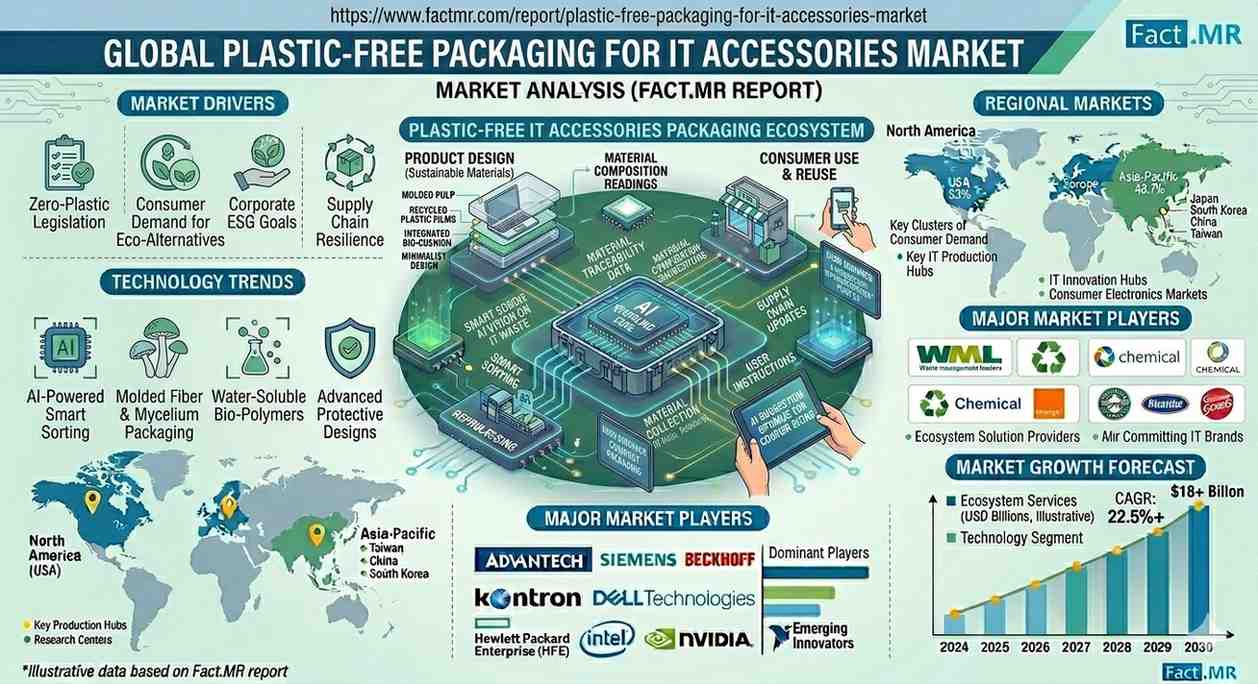
According to Fact.MR’s latest analysis, the global plastic-free packaging for IT accessories market is undergoing a structural transformation, driven by sustainability commitments and the rapid growth of e-commerce electronics distribution.
- Market Size (2026): USD 762.2 million
- Estimated (2027): ~USD 810 million
- Forecast Value (2036): USD 1,444.2 million
- CAGR (2026–2036): 6.6%
- Incremental Opportunity: ~USD 682 million
The market is shifting from conventional plastic-based packaging toward fiber-based, recyclable, and biodegradable alternatives, as IT brands prioritize eco-friendly packaging for accessories such as chargers, cables, keyboards, and peripherals. This transformation is further reinforced by regulatory pressure, ESG commitments, and consumer expectations for sustainable unboxing experiences.
Quick Stats
- Market Size (2026): USD 762.2 million
- Market Size (2027): ~USD 810 million
- Forecast Value (2036): USD 1,444.2 million
- CAGR: 6.6%
- Incremental Opportunity: USD 682 million
- Leading Material: Molded fiber & pulp (39.1%)
- Leading Format: Folding cartons (35%)
- Leading Channel: E-commerce (45.3%)
- Leading Region: Asia-Pacific
- Key Players: Mondi, Pregis, Avery Dennison, Ranpak, NEFAB, Smurfit Kappa, WestRock, International Paper
Executive Insight for Decision Makers
The market is witnessing a strategic shift from cost-driven packaging to sustainability-led value engineering.
What industry stakeholders must do:
- Invest in fiber molding technology and automation-ready designs
- Align packaging with global sustainability certifications (FSC/PEFC)
- Optimize packaging for e-commerce logistics efficiency
Risks of inaction:
- Loss of contracts with global OEMs enforcing plastic bans
- Higher regulatory compliance costs
- Reduced brand competitiveness in environmentally conscious markets
Market Dynamics
Key Growth Drivers
- Surge in e-commerce shipments of IT accessories
- Increasing consumer demand for eco-friendly packaging
- Corporate ESG commitments and plastic reduction targets
- Advancements in molded fiber engineering and paper-based cushioning
Key Restraints
- Limited moisture resistance and durability vs plastic
- Higher costs in high-volume applications
- Performance trade-offs in fragile electronics protection
Emerging Trends
- Custom-fit molded pulp inserts replacing plastic trays
- Growth of lightweight paper mailers for last-mile delivery
- Integration of branding and sustainability messaging in packaging
- Automation-friendly folding carton designs for fulfillment centers
Segment Analysis
- Leading Segment:
Molded fiber & pulp holds 39.1% share, driven by its balance of protection, recyclability, and scalability. - Fastest-Growing Segment:
Paper mailers and molded inserts for e-commerce shipments
By Packaging Format
- Folding cartons: 35% (dominant for retail-ready packaging)
- Molded inserts/trays: High growth for protective packaging
- Mailers & envelopes: Rising adoption in e-commerce
By Product Type
- Cables & chargers packaging (high-volume demand)
- Keyboards & mice packaging
- Storage devices and peripheral accessories
Strategic Importance:
Segments aligned with high-volume, low-weight IT accessories offer the highest scalability for plastic-free solutions.
Supply Chain Analysis (Critical Insight)
- Raw Material Suppliers
- Pulp producers
- Recycled paper processors
- Cellulose-based material suppliers
- Manufacturers / Producers
- Fiber molding companies
- Paperboard packaging manufacturers
- Specialized sustainable packaging firms
- Distributors
- Packaging solution providers
- Logistics-integrated packaging vendors
- End-Users
- IT accessory OEMs (chargers, cables, peripherals)
- E-commerce platforms
- Electronics retailers
Who Supplies Whom
- Pulp suppliers → Packaging manufacturers → IT brands → E-commerce platforms → End consumers
- Packaging firms increasingly collaborate directly with OEMs and fulfillment centers to co-design solutions optimized for shipping efficiency and sustainability.
Pricing Trends
- Commodity Tier: Standard folding cartons and paperboard solutions
- Premium Tier: Custom molded fiber inserts and branded eco-packaging
Key Pricing Influencers
- Raw material costs (pulp, recycled paper)
- Design complexity and tooling
- Sustainability certifications (FSC/PEFC)
- E-commerce packaging requirements
Margin Insights
- Higher margins in custom-engineered molded fiber solutions
- Cost pressure in high-volume standardized packaging
Regional Analysis
Top Growth Countries (CAGR)
- India – 8.4%
- Vietnam – 7.8%
- Indonesia – 7.4%
- China – 6.2%
- Mexico – 5.8%
Regional Insights
- Asia-Pacific:
Manufacturing hub + fastest adoption due to electronics production and export demand - North America:
Stable growth driven by e-commerce and sustainability commitments - Europe:
Regulatory-driven demand with strong emphasis on recyclability standards
Developed vs Emerging Markets
- Developed markets: Focus on compliance and brand sustainability
- Emerging markets: Driven by cost efficiency and scalability
Competitive Landscape
- Market Structure: Moderately fragmented with global and regional players
Key Companies
- Mondi
- Pregis
- Avery Dennison
- Ranpak
- NEFAB
- Smurfit Kappa
- WestRock
- International Paper
Competitive Strategies
- Investment in fiber innovation and design engineering
- Expansion of global production capacity
- Strategic partnerships with electronics OEMs
- Focus on lightweight, cost-efficient packaging solutions
Strategic Takeaways
For Manufacturers
- Prioritize fiber-based material innovation
- Develop automation-compatible packaging designs
For Investors
- Target companies with scalable molded fiber capabilities
- Focus on Asia-Pacific growth markets
For Marketers & Distributors
- Emphasize sustainability branding
- Align packaging with consumer eco-conscious expectations
Future Outlook
The market is expected to evolve into a standardized sustainable packaging ecosystem, where plastic-free solutions become the default across IT accessory categories.
- Advancements in bio-based materials and coatings will address durability concerns
- Increased adoption of circular packaging systems
- Integration of AI-driven packaging optimization for logistics efficiency
Long-term Opportunity:
High-volume IT accessory shipments present a multi-billion-dollar sustainable packaging opportunity beyond 2036.
Conclusion
The global plastic-free packaging for IT accessories market is transitioning from a niche sustainability initiative to a core supply chain requirement. Companies that invest early in fiber innovation, scalable production, and e-commerce optimization will secure long-term competitive advantage.
Why This Market Matters
As global electronics consumption rises, packaging waste becomes a critical environmental concern. The shift toward plastic-free packaging is not just regulatory—it is a strategic imperative shaping the future of sustainable supply chains in the electronics industry.
Browse Full Report –
https://www.factmr.com/report/plastic-free-packaging-for-it-accessories-market