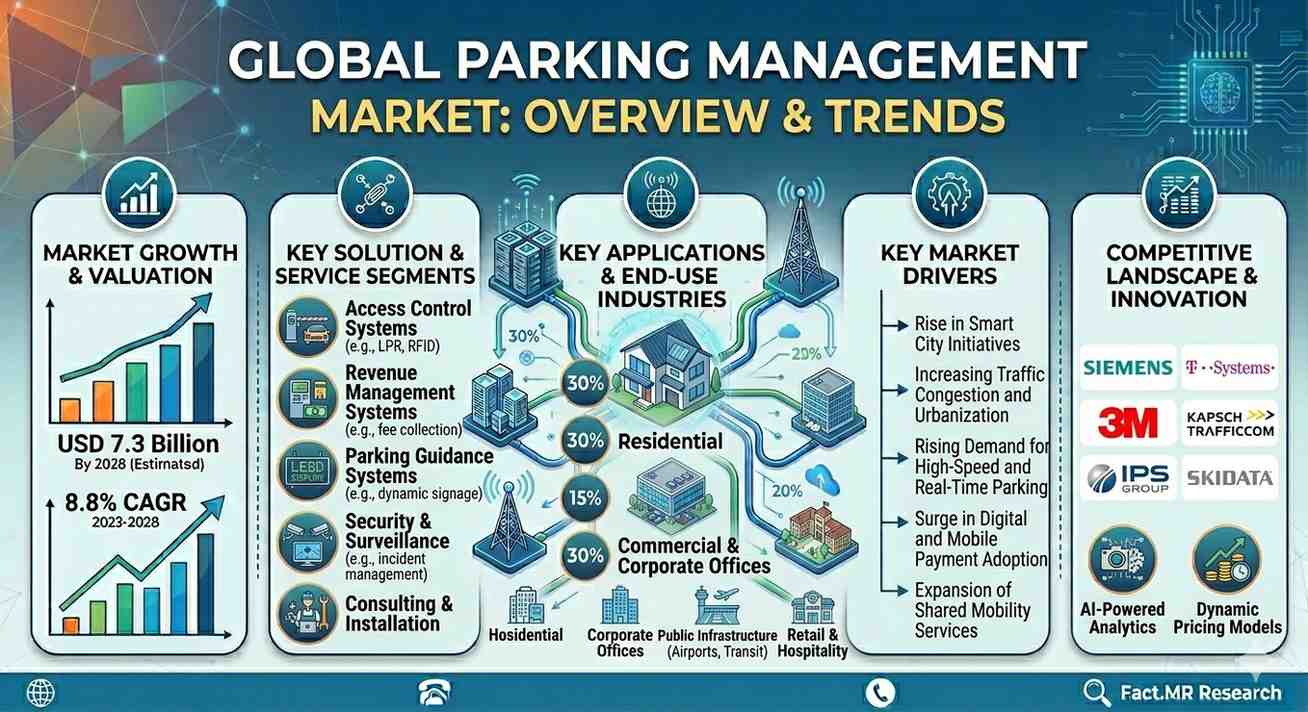
According to Fact.MR’s latest analysis, the global parking management market is valued at approximately USD 5.8 billion in 2026, projected to reach USD 6.6 billion in 2027, and expand to USD 28.5 billion by 2036, reflecting a robust CAGR of 17.6% during the forecast period.
The market is set to generate an incremental opportunity of over USD 22 billion, driven by rapid urbanization, smart city investments, and the transition toward platform-based, software-led parking ecosystems.
The industry is undergoing a structural transformation—from hardware replacement cycles to integrated digital platforms combining access control, analytics, payments, and mobility services. This shift is redefining value creation across the parking infrastructure landscape.
Quick Stats
- Market Size (2026): USD 5.8 Billion
- Market Size (2027): USD 6.6 Billion
- Forecast Value (2036): USD 28.5 Billion
- CAGR (2026–2036): 17.6%
- Incremental Opportunity: USD 22+ Billion
- Leading Segment: Parking Access Control Systems (37% share)
- Leading Region: Asia-Pacific (China & India)
- Key Players: Siemens AG, Amano Corporation, SKIDATA AG, SWARCO AG, Cubic Corporation
Executive Insight for Decision Makers
The market is shifting from asset-heavy hardware models to recurring revenue-driven platforms.
Strategic Imperatives:
- Transition to SaaS-based parking platforms
- Integrate AI analytics, EV charging, and mobility apps
- Enable open API ecosystems for interoperability
For OEMs & Investors:
- Prioritize software integration over standalone hardware
- Invest in data monetization and mobility partnerships
Risk of Inaction:
- Hardware-only providers risk margin erosion
- Lack of platform capabilities may result in loss of long-term contracts
Market Dynamics
Key Growth Drivers
- Smart City Initiatives: Government-led urban digitization programs accelerating adoption
- EV Infrastructure Integration: Parking systems evolving into EV charging hubs
- Contactless & Mobile Payments: Rapid shift away from ticket-based systems
- Urban Congestion Management: Demand for real-time parking analytics and optimization
Key Restraints
- High Initial Deployment Costs for integrated systems
- Legacy Infrastructure Lock-in limiting upgrades
- Data Privacy & Regulatory Compliance challenges
Emerging Trends
- Cloud-native Parking Platforms replacing on-premise systems
- AI-based Occupancy Prediction & Dynamic Pricing
- License Plate Recognition (ANPR) Expansion
- Integration with Mobility-as-a-Service (MaaS) platforms
Segment Analysis
- Leading Segment:
- Parking Access Control Systems hold 37% market share
- Acts as the foundation layer for all digital parking operations
- Fastest-Growing Segment:
- Software & SaaS platforms, driven by recurring revenue models
Breakdown
- By Component:
- Hardware (42%), Software, Services
- By Solution:
- Access Control, Parking Guidance, Payment Systems, Analytics
Strategic Importance
- Access control enables data capture and monetization
- Software platforms drive lifetime customer value and retention
Supply Chain Analysis (Critical Insight)
- Raw Material Suppliers
- Steel, aluminum (barriers, mounts)
- Semiconductors (sensors, processors)
- Optical components (cameras, ANPR systems)
- Manufacturers / Producers
- Hardware OEMs producing barriers, sensors, kiosks
- Technology firms developing software platforms and analytics tools
- Distributors & Integrators
- System integrators and contractors deploy end-to-end parking solutions
- Mobility solution providers bundle parking into urban transport ecosystems
- End-Users
- Municipal authorities
- Airports and transport hubs
- Commercial real estate developers
- Hospitals, retail centers, stadiums
Who Supplies Whom
- Component suppliers → OEMs (hardware production)
- OEMs → Integrators (system deployment)
- Integrators → End-users (full solution delivery)
- Software providers → All layers (platform integration and analytics)
Pricing Trends
- Commodity Layer:
- Hardware components (barriers, sensors) face price pressure and commoditization
- Premium Layer:
- AI-enabled software and SaaS platforms command high-margin recurring revenue
Key Pricing Factors
- Raw material costs (metals, chips)
- Software licensing and cloud infrastructure
- Regulatory compliance and certifications
- Customization and integration complexity
Margin Insights
- Hardware margins declining
- Software and services delivering 60%+ recurring revenue share for leading players
Regional Analysis
Top 5 Countries by CAGR (2026–2036)
- China – 14.2%
- India – 12.8%
- Australia – 11.9%
- United States – 9.8%
- United Kingdom – 6.7%
Regional Insights
- Asia-Pacific: Fastest growth driven by smart city investments and urban density
- North America: Advanced monetization models and enterprise deployments
- Europe: Regulatory-driven innovation and EV integration
Developed vs Emerging Markets
- Developed markets: Focus on optimization & analytics
- Emerging markets: Focus on infrastructure deployment & digitization
Competitive Landscape
- Market Structure: Moderately consolidated at the enterprise level; fragmented regionally
Key Players
- Siemens AG
- Amano Corporation
- SKIDATA AG
- SWARCO AG
- Cubic Corporation
- Q-Free ASA
- IBM
- SAP SE
- Nedap Identification Systems
Competitive Strategies
- Transition to platform-based business models
- Investment in AI, cloud, and analytics
- Expansion through public-private partnerships
- Focus on multi-site enterprise contracts
Strategic Takeaways
For Manufacturers
- Shift from hardware to integrated smart solutions
- Build certified, interoperable systems
For Investors
- Focus on companies with recurring SaaS revenues
- Target firms integrated into smart city ecosystems
For Marketers / Distributors
- Emphasize ROI, efficiency, and automation benefits
- Position solutions as part of urban mobility platforms
Future Outlook
The market is heading toward fully integrated mobility platforms, where parking becomes a data-driven service layer within broader smart city ecosystems.
Key Transformations
- AI-driven decision-making
- Integration with EV charging and mobility apps
- Cloud-native infrastructure replacing legacy systems
Long-Term Opportunity
- Parking evolving into a strategic revenue and data asset
- Expansion into Mobility-as-a-Service ecosystems
Conclusion
The global parking management market is no longer defined by physical infrastructure alone. It is rapidly evolving into a digital, platform-driven ecosystem where software, analytics, and integration capabilities determine competitive advantage.
For decision-makers, the opportunity lies in embracing platform transformation, investing in data-centric solutions, and aligning with smart city and mobility trends.
Why This Market Matters
- Critical to urban mobility efficiency and congestion reduction
- Enables new revenue streams for cities and infrastructure operators
- Supports sustainability goals through optimized parking and EV integration
- Acts as a foundational layer in the smart city ecosystem
Browse Full Report –
https://www.factmr.com/report/parking-management-market