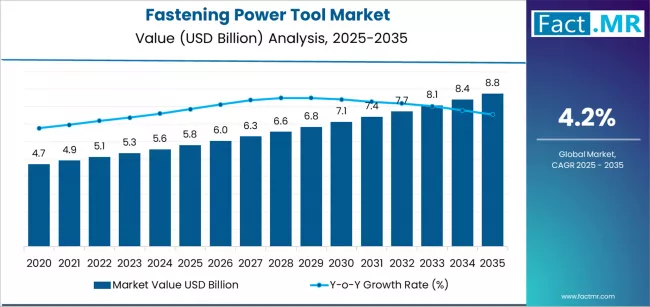
The global manufacturing and construction landscape is undergoing rapid transformation, driven by automation, infrastructure expansion, and the need for faster project execution. In this evolving environment, the Fastening Power Tool Market plays a crucial role in improving operational efficiency and ensuring high-quality assembly across multiple sectors. Fastening power tools are engineered to deliver speed, consistency, and precision, making them indispensable in modern industrial and commercial applications.
As industries move toward smarter manufacturing and ergonomic tool solutions, the demand for advanced fastening power tools continues to gain momentum. From large-scale construction sites to precision-driven automotive assembly lines, these tools are central to achieving productivity targets and maintaining safety standards.
Market Overview
Fastening power tools are mechanical or electrically powered devices designed to drive fasteners such as screws, bolts, and nails into various materials. They significantly reduce manual effort while improving fastening accuracy and repeatability. The market includes a wide range of tools such as impact wrenches, screwdrivers, nut runners, drills, and torque-controlled fastening systems.
The growing emphasis on automation and industrial efficiency has expanded the role of fastening tools beyond traditional construction activities. Manufacturers are increasingly integrating smart technologies, torque monitoring systems, and battery-powered solutions to enhance tool performance and reliability.
In addition, rising investments in residential and commercial infrastructure development are contributing to market growth. The shift toward cordless and lightweight tools is further reshaping the competitive landscape, as end users seek portability without compromising on power output.
Key Market Drivers
- Expansion of Construction Activities
Urbanization and infrastructure modernization projects are fueling demand for high-performance fastening tools. Contractors require durable and efficient tools that can withstand heavy-duty operations while delivering consistent results. - Growth of the Automotive Sector
Automotive manufacturing relies heavily on precision fastening to ensure safety and structural integrity. The increasing adoption of automated assembly lines has accelerated demand for advanced fastening systems equipped with torque control and monitoring features. - Rising Adoption of Cordless Tools
Battery-powered fastening tools are gaining traction due to their mobility, reduced maintenance requirements, and improved energy efficiency. Technological advancements in lithium-ion batteries have significantly enhanced runtime and charging speed, making cordless tools more attractive to professionals. - Emphasis on Worker Safety and Ergonomics
Manufacturers are designing ergonomic fastening tools that reduce operator fatigue and improve comfort. Enhanced grip designs, vibration control, and lightweight construction contribute to safer and more efficient work environments.
Regional Insights
North America remains a prominent market due to its strong construction sector and advanced manufacturing infrastructure. The region’s focus on automation and smart factory initiatives supports steady demand for innovative fastening technologies.
Europe demonstrates significant adoption, particularly in automotive and industrial manufacturing hubs. Stringent quality and safety standards in the region encourage the use of precision-driven fastening systems.
Asia-Pacific is emerging as a high-growth region, supported by rapid industrialization, expanding construction projects, and increasing automotive production. Growing investments in infrastructure development and manufacturing modernization continue to boost market potential.
Technology and Innovation Trends
Technological innovation is reshaping the fastening power tool landscape. The integration of smart sensors and digital torque monitoring enables real-time performance tracking and quality control. These advancements reduce errors, enhance traceability, and ensure compliance with strict manufacturing standards.
Another notable trend is the rise of brushless motor technology. Brushless motors offer improved efficiency, longer tool lifespan, and reduced maintenance compared to conventional motors. This innovation is particularly valuable in industrial settings where tools are subjected to continuous usage.
Connectivity is also becoming a defining feature in modern fastening systems. Some tools now offer data logging and wireless communication capabilities, allowing supervisors to monitor productivity and performance metrics remotely.
Applications Across Industries
Fastening power tools are widely used across multiple end-use sectors:
- Construction: Structural assembly, drywall installation, roofing, and framing applications.
- Automotive: Engine assembly, chassis fastening, and interior component installation.
- Aerospace: Precision fastening in aircraft component assembly.
- Manufacturing: Production line assembly and machinery fabrication.
- Electronics: Assembly of devices requiring precise torque control.
The versatility of fastening tools ensures their relevance in both heavy-duty industrial applications and light commercial or residential projects.
Competitive Landscape
The fastening power tool market is characterized by intense competition among global and regional manufacturers. Companies focus on product innovation, strategic partnerships, and portfolio expansion to strengthen their market presence.
Key players invest heavily in research and development to introduce high-performance, energy-efficient, and durable tools. The emphasis on cordless technology, enhanced battery life, and digital integration is shaping competitive differentiation strategies.
Manufacturers are also prioritizing after-sales services and customer support to build long-term relationships with industrial clients. Customization options and tailored solutions are becoming important value propositions in enterprise-level contracts.
Sustainability and Future Outlook
Sustainability is increasingly influencing product development strategies. Manufacturers are exploring energy-efficient designs, recyclable materials, and eco-friendly production processes to reduce environmental impact.
The growing trend of smart manufacturing and Industry 4.0 adoption is expected to further drive demand for digitally integrated fastening solutions. As businesses continue to automate operations and seek higher productivity levels, advanced fastening tools will remain essential components of industrial ecosystems.
Additionally, expanding infrastructure projects in developing economies and the continuous modernization of manufacturing facilities are likely to create new growth avenues for market participants.
Conclusion
The Fastening Power Tool Market is evolving in response to technological advancements, industrial automation, and expanding infrastructure development worldwide. With increasing emphasis on precision, efficiency, and safety, fastening tools are becoming smarter, more ergonomic, and highly reliable.
As industries across construction, automotive, aerospace, and manufacturing continue to demand enhanced performance and productivity, the role of advanced fastening power tools will only grow stronger. Organizations seeking long-term operational efficiency can benefit from exploring comprehensive market insights and understanding emerging trends that shape this dynamic industry.
For businesses aiming to stay competitive in a rapidly modernizing industrial landscape, investing in innovative fastening power tool solutions represents a strategic step toward sustainable growth and operational excellence.
Browse Full Report – https://www.factmr.com/report/fastening-power-tool-market