The busbar trunking system market is witnessing significant growth as industries and commercial facilities demand reliable, compact, and flexible power distribution solutions. Busbar trunking systems provide an alternative to conventional cable distribution by offering enhanced current-carrying capacity, modular design, and simplified installation. With urbanization, industrialization, and the expansion of smart infrastructure, busbar trunking systems are becoming a critical component of modern electrical networks.
Market Overview:
A busbar trunking system is an advanced electrical distribution solution designed to efficiently transfer power within industrial, commercial, and residential facilities. Unlike traditional cabling, busbar systems consolidate power distribution into compact and modular units, allowing for streamlined installation, easier maintenance, and reduced voltage drop. These systems typically include copper or aluminum conductors encased in air or sandwich insulation, with options tailored for different current ratings and safety requirements.
Modern busbar trunking systems offer several operational benefits. They occupy less space than traditional cable systems, provide tap-off flexibility for connecting electrical loads, and support high current densities without overheating. In addition, advanced features such as predictive monitoring, energy management integration, and fire-resistant designs further enhance their value for high-demand applications.
Regional Insights:
The Asia-Pacific region is experiencing rapid growth in the busbar trunking system market, fueled by industrialization, urban infrastructure projects, and smart city initiatives. Countries such as China and India are leading in market adoption due to expanding manufacturing facilities and commercial construction projects. North America and Europe continue to hold significant shares, driven by grid modernization, commercial building upgrades, and industrial electrification initiatives. Emerging markets in Latin America and the Middle East & Africa are also witnessing gradual adoption as infrastructure development accelerates.
Key Market Trends:
- Copper Dominance:Copper conductors lead the market due to superior electrical conductivity, thermal management, and reliability, making them ideal for industrial and high-load commercial applications.
- Insulation Innovations:Sandwich-insulated busbar systems are preferred for their enhanced safety, compact design, and space efficiency, enabling installation in modern building layouts.
- Sustainability Integration:Manufacturers are increasingly designing eco-friendly busbar systems, focusing on reducing energy losses and using recyclable materials.
- Technological Advancements:Intelligent busbar systems with integrated energy management, monitoring capabilities, and plug-and-play design features are gaining traction for smart infrastructure applications.
- High-Current Applications:Industrial automation, data centers, and electric vehicle infrastructure require busbar systems capable of supporting high-current distribution with minimal space footprint.
Applications & End-Use Outlook:
Busbar trunking systems are deployed across diverse end-use sectors:
- Industrial:Busbar systems are widely used for manufacturing plant electrification, heavy machinery power supply, and automation systems, providing reliable and efficient electrical distribution.
- Commercial:Large commercial buildings, shopping malls, and office complexes benefit from modular busbar systems, which simplify reconfiguration and expansion while ensuring consistent power delivery.
- Residential:High-rise buildings and multi-dwelling units are increasingly adopting compact busbar solutions to optimize space and improve electrical safety.
- Infrastructure:Transportation hubs, hospitals, and data centers use busbar trunking systems for high-reliability power distribution, ensuring operational continuity.
Challenges:
Despite significant advantages, the busbar trunking system market faces certain challenges. High initial capital costs and installation expertise requirements may limit adoption, particularly in budget-constrained projects or smaller facilities. Furthermore, a lack of regional standardization can create compatibility issues and hinder widespread deployment. Building owners and electrical contractors must balance upfront investment with long-term performance benefits to justify adoption.
Future Outlook:
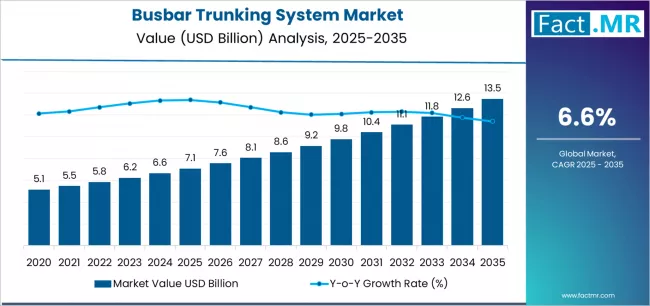
The busbar trunking system market is expected to maintain steady growth driven by increasing industrialization, commercial construction, and demand for energy-efficient infrastructure. The rise of data centers, renewable energy integration, and electric vehicle charging networks presents new opportunities for specialized busbar solutions. Manufacturers are likely to focus on technological innovation, digital integration, and sustainability to meet evolving market needs. Strategic collaborations between busbar producers, contractors, and building developers will further enhance market penetration and adoption.
Conclusion:
Busbar trunking systems are revolutionizing power distribution in industrial, commercial, and residential applications by offering compact, reliable, and flexible alternatives to traditional cabling. Their advantages in current capacity, modular design, and operational safety position them as a preferred solution in modern electrical networks. With continued technological innovation, sustainable design approaches, and expanding infrastructure projects, the busbar trunking system market is set to remain a cornerstone of efficient power distribution in the years ahead.
Browse Full Report – https://www.factmr.com/report/busbar-trunking-system-market