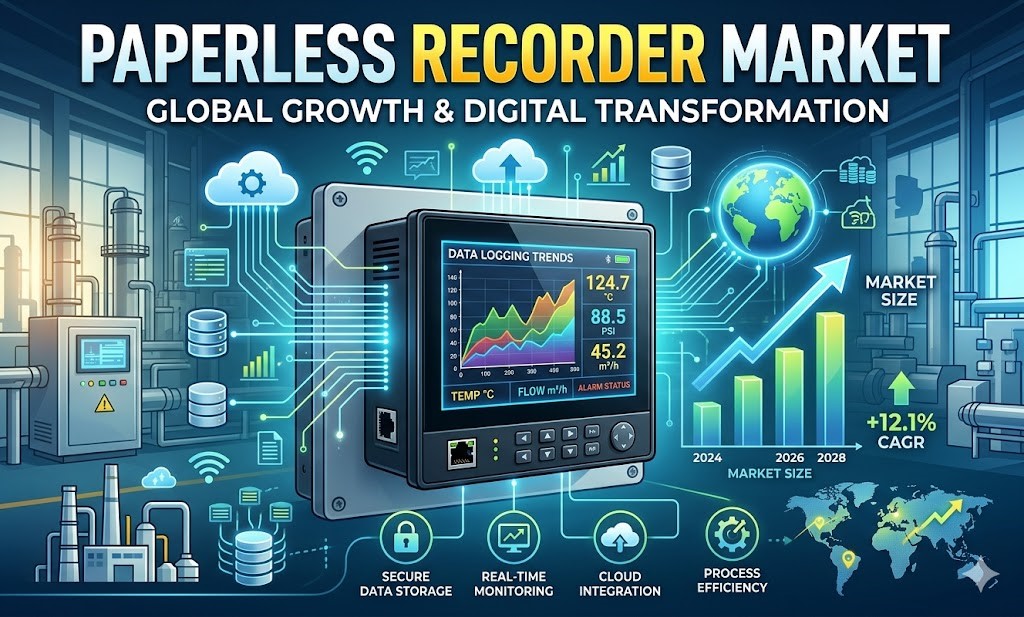
The Paperless Recorder Market is gaining strong momentum as industries shift toward digitalization and smarter data management practices. Traditional chart recorders, which rely on paper-based documentation, are increasingly being replaced by advanced paperless systems that offer real-time data recording, storage, and analysis. This transition reflects a broader movement toward efficiency, accuracy, and sustainability in industrial operations, making paperless recorders an essential component of modern process monitoring.
Market Overview:
Paperless recorders are electronic devices used to capture, display, and store data from various industrial processes. These systems collect inputs such as temperature, pressure, flow rate, and voltage, converting them into digital formats for easy analysis and long-term storage. Unlike conventional recorders, paperless solutions eliminate the need for physical charts, reducing operational costs and minimizing human error.
The market is evolving rapidly with the integration of advanced technologies such as cloud computing, Internet of Things (IoT), and data analytics. Modern paperless recorders are equipped with intuitive interfaces, high-resolution displays, and remote access capabilities, enabling users to monitor and control processes from virtually anywhere. This level of connectivity is transforming how industries manage critical data and respond to operational challenges.
As industries increasingly prioritize automation and regulatory compliance, paperless recorders are becoming indispensable tools. Their ability to provide accurate, tamper-proof data records supports quality assurance and ensures adherence to industry standards.
Regional Insights:
North America remains a leading market for paperless recorders, driven by the early adoption of advanced industrial technologies and a strong focus on process optimization. Industries in this region are investing in digital solutions to enhance productivity and maintain competitive advantages.
Europe follows closely, supported by stringent regulatory requirements and a growing emphasis on environmental sustainability. The shift away from paper-based systems aligns with regional goals to reduce waste and improve operational efficiency.
Asia-Pacific is emerging as a high-growth region, fueled by rapid industrialization and increasing investments in manufacturing and infrastructure. Countries such as China, India, and Japan are adopting paperless technologies to modernize their industrial processes and improve data management capabilities.
Key Trends & Forecast:
One of the most significant trends in the paperless recorder market is the integration of IoT-enabled devices. These systems allow seamless communication between equipment, enabling real-time monitoring and predictive maintenance. By analyzing data patterns, industries can identify potential issues before they escalate, reducing downtime and improving operational efficiency.
Cloud-based data storage is another key development shaping the market. Paperless recorders are increasingly connected to cloud platforms, allowing secure data storage and easy access from remote locations. This capability is particularly valuable for organizations with multiple facilities, as it enables centralized monitoring and decision-making.
The adoption of advanced visualization tools is also enhancing the usability of paperless recorders. High-resolution displays and user-friendly interfaces make it easier for operators to interpret complex data, improving response times and decision accuracy.
Cybersecurity is becoming a critical focus area as digital systems become more interconnected. Manufacturers are incorporating robust security features to protect sensitive data and ensure system integrity. This is especially important in industries where data accuracy and confidentiality are paramount.
Sustainability is another driving force behind market growth. By eliminating the need for paper charts, paperless recorders contribute to environmental conservation and support corporate sustainability initiatives.
Applications & End-Use Outlook:
Paperless recorders are widely used across various industries, including oil and gas, pharmaceuticals, food and beverages, power generation, and chemical processing. These sectors rely on precise data monitoring to ensure safety, quality, and efficiency.
In the oil and gas industry, paperless recorders are used to monitor critical parameters such as pressure and temperature, helping maintain safe and efficient operations. In pharmaceuticals, they play a vital role in ensuring compliance with regulatory standards by providing accurate and traceable data records.
The food and beverage industry uses paperless recorders to maintain quality control and ensure adherence to safety standards. These systems help monitor production processes and prevent contamination or spoilage.
In power generation, paperless recorders support the monitoring of equipment performance and energy output, contributing to efficient and reliable operations. Similarly, in chemical processing, they enable precise control of complex processes, reducing risks and improving productivity.
The versatility of paperless recorders makes them suitable for a wide range of applications, driving their adoption across diverse industries.
Challenges and Opportunities:
Despite the numerous advantages, the paperless recorder market faces certain challenges. High initial investment costs can be a barrier for small and medium-sized enterprises. Additionally, the transition from traditional systems to digital solutions may require training and changes in operational workflows.
However, these challenges are outweighed by the long-term benefits of improved efficiency, reduced operational costs, and enhanced data accuracy. As technology continues to advance, the cost of paperless systems is expected to decrease, making them more accessible to a broader range of users.
Opportunities are also emerging from the increasing adoption of Industry 4.0 practices. As industries embrace automation and digital transformation, the demand for advanced data recording and monitoring solutions is expected to grow. Innovations in connectivity, analytics, and user experience will further enhance the capabilities of paperless recorders.
Conclusion:
The Paperless Recorder Market is playing a pivotal role in the digital transformation of industrial operations. By replacing traditional paper-based systems with advanced digital solutions, these devices are improving efficiency, accuracy, and sustainability across industries.
With ongoing technological advancements and growing demand for real-time data management, the market is poised for continued growth. Organizations that adopt paperless recorders can benefit from enhanced operational insights, better compliance, and reduced environmental impact, positioning themselves for success in an increasingly digital and data-driven world.
Browse Full Report – https://www.factmr.com/report/paperless-recorder-market