As industries evolve toward greater flexibility, efficiency, and sustainability, modular solutions are gaining widespread attention. Modular containers, known for their adaptability and cost-effectiveness, are emerging as a preferred choice across sectors ranging from construction and logistics to healthcare and retail. These container-based structures offer rapid deployment, scalability, and ease of customization, making them ideal for modern infrastructure needs. The modular containers market is steadily expanding as businesses seek innovative ways to optimize space and reduce operational complexity.
Market Overview
Modular containers are prefabricated units that can be easily transported, assembled, and repurposed for various applications. Built using durable materials such as steel, these containers are designed to withstand harsh environmental conditions while providing reliable performance. Their modular nature allows users to configure and reconfigure spaces according to specific requirements.
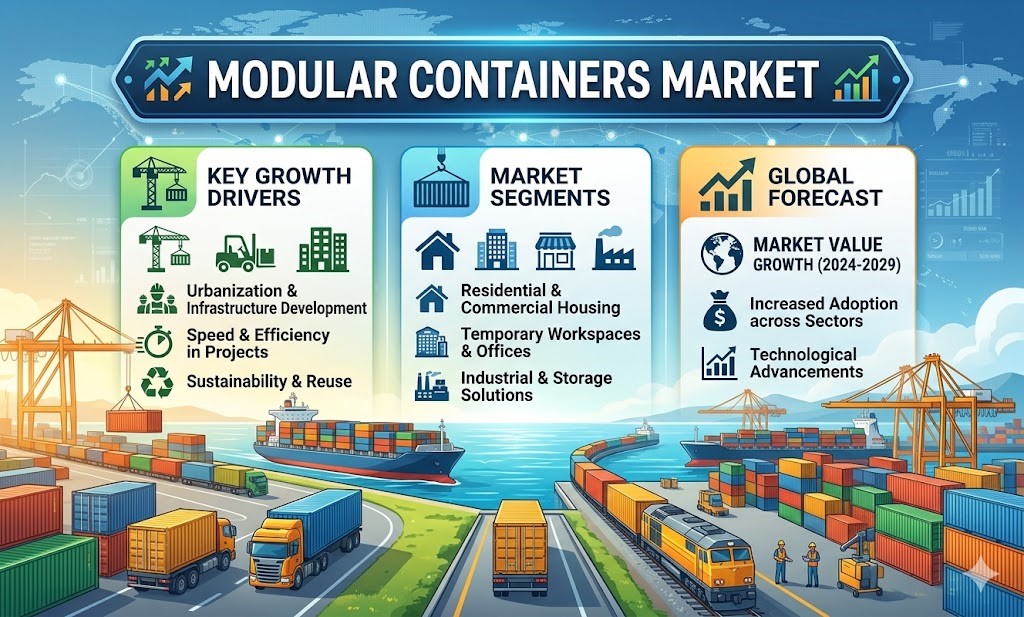
The market is driven by the increasing demand for portable and flexible infrastructure solutions. Industries are moving away from traditional construction methods toward modular alternatives that offer faster installation and lower costs. Additionally, the growing emphasis on sustainability is encouraging the adoption of reusable and recyclable building components, further boosting the demand for modular containers.
Technological advancements are also playing a key role in shaping the market. Innovations in design, insulation, and energy efficiency are enhancing the functionality of modular containers, making them suitable for a wider range of applications. From temporary offices and storage units to fully functional living and working spaces, these containers are becoming increasingly versatile.
Regional Insights
The modular containers market exhibits strong growth potential across various regions, influenced by economic development, urbanization, and industrial activity.
North America remains a leading market, driven by the widespread adoption of modular construction practices and the need for efficient storage and workspace solutions. The region’s focus on innovation and sustainability is supporting the growth of advanced modular container systems.
Europe is also a significant market, characterized by stringent environmental regulations and a strong emphasis on energy-efficient infrastructure. The use of modular containers in construction, particularly for temporary and emergency housing, is gaining traction in this region.
Asia-Pacific is emerging as a high-growth market, fueled by rapid urbanization and industrial expansion. Countries in this region are increasingly adopting modular containers to address infrastructure challenges and support economic growth. The demand for cost-effective and scalable solutions is particularly strong in developing economies.
Other regions, including the Middle East and Africa, are witnessing growing interest in modular containers due to increasing investments in construction and infrastructure development. These regions offer promising opportunities for market expansion as they seek efficient and adaptable solutions.
Key Trends and Forecast
Several key trends are shaping the future of the modular containers market, reflecting broader shifts in industry and technology.
One of the most prominent trends is the rising adoption of modular construction techniques. Businesses and governments are increasingly turning to modular containers for building temporary and permanent structures, reducing construction time and costs.
Another important trend is the integration of smart technologies. Modular containers are being equipped with advanced features such as IoT-enabled monitoring systems, energy-efficient lighting, and climate control solutions. These enhancements improve functionality and user experience.
Sustainability is a major driver in the market, with a growing focus on eco-friendly materials and energy-efficient designs. Modular containers, often made from repurposed shipping containers, contribute to waste reduction and resource conservation.
Customization is also gaining importance, as users seek tailored solutions to meet specific needs. Manufacturers are offering a wide range of design options, allowing customers to create spaces that align with their operational requirements.
Applications and End-Use Outlook
Modular containers are used across a diverse range of applications, highlighting their versatility and practicality.
In the construction industry, they are widely used as site offices, worker accommodations, and storage units. Their portability and ease of installation make them ideal for temporary setups in remote or rapidly changing environments.
The logistics and transportation sector relies on modular containers for efficient storage and movement of goods. Their standardized design ensures compatibility with various transport systems, enhancing operational efficiency.
In the healthcare sector, modular containers are used to create temporary clinics, testing facilities, and emergency response units. Their rapid deployment capabilities make them invaluable in situations requiring immediate infrastructure.
Retail and commercial sectors are also embracing modular containers for pop-up stores, kiosks, and mobile offices. These applications allow businesses to reach customers in new locations and adapt to changing market conditions.
Additionally, modular containers are being used in residential applications, including affordable housing and disaster relief shelters. Their flexibility and cost-effectiveness make them a viable solution for addressing housing challenges.
Challenges and Opportunities
Despite its strong growth potential, the modular containers market faces certain challenges. Regulatory constraints and building code compliance can pose hurdles in some regions. Additionally, concerns about durability and insulation in extreme climates may impact adoption.
However, these challenges are driving innovation and improvement. Advances in materials and design are addressing performance concerns, while evolving regulations are gradually accommodating modular construction methods.
The market also presents significant opportunities, particularly in emerging economies where infrastructure development is a priority. Increasing awareness of the benefits of modular solutions is expected to drive adoption across various sectors.
Furthermore, the growing emphasis on sustainability and resource efficiency is likely to boost demand for modular containers. Companies that focus on innovation, quality, and customization will be well-positioned to capitalize on these opportunities.
Conclusion
The modular containers market is redefining how industries approach infrastructure and storage solutions. With their flexibility, efficiency, and sustainability, modular containers are becoming an integral part of modern operations.
As demand for adaptable and cost-effective solutions continues to rise, the market is set to witness sustained growth. For businesses and stakeholders, staying ahead of trends and embracing innovation will be key to unlocking the full potential of modular containers in the years to come.
Browse Full Report – https://www.factmr.com/report/modular-containers-market