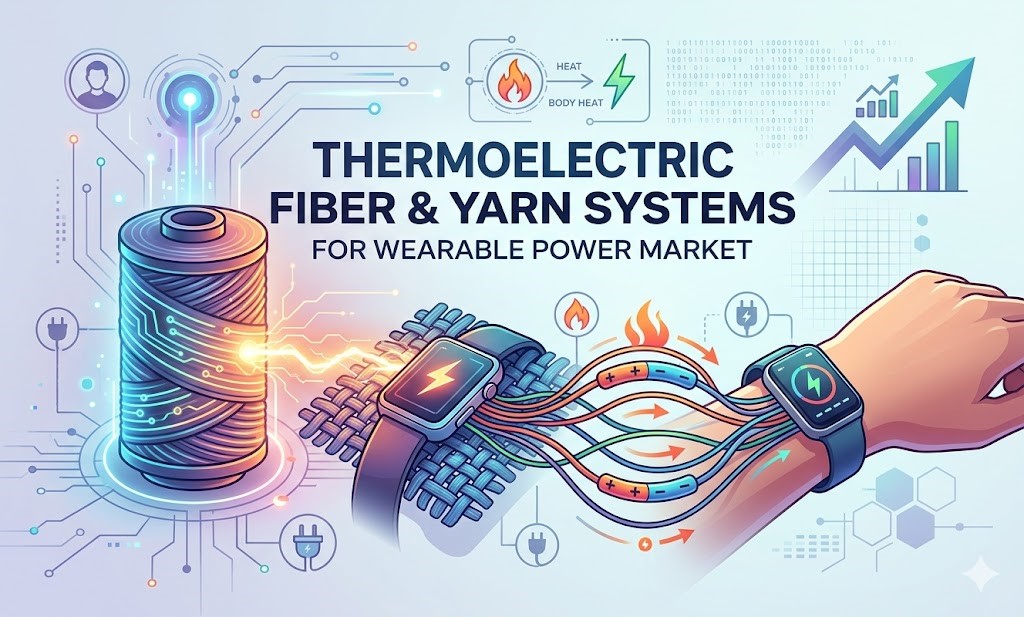
The Thermoelectric Fiber & Yarn Systems for Wearable Power Market is emerging as a transformative segment within the wearable technology landscape. As the demand for smart wearables continues to grow, the need for sustainable and continuous power sources has become increasingly critical. Thermoelectric fibers and yarn systems offer a breakthrough solution by converting body heat into electrical energy, enabling wearable devices to operate without relying heavily on conventional batteries. This innovation is paving the way for next-generation, self-powered wearable electronics.
Market Overview:
Thermoelectric fiber and yarn systems are advanced materials designed to generate electricity through temperature differences, typically between the human body and the surrounding environment. These systems are integrated into textiles, allowing fabrics to act as power generators while maintaining flexibility, comfort, and durability.
The market is driven by the rapid evolution of wearable electronics, including smartwatches, fitness trackers, medical monitoring devices, and smart clothing. As consumers and industries seek more efficient and eco-friendly energy solutions, thermoelectric technology is gaining traction as a viable alternative to traditional power sources.
Advancements in nanotechnology and material science have significantly improved the efficiency and scalability of thermoelectric fibers. Manufacturers are focusing on enhancing energy conversion rates while ensuring that the fibers remain lightweight and suitable for everyday use. This convergence of technology and textiles is creating new opportunities across multiple sectors.
Regional Insights:
North America is at the forefront of innovation in thermoelectric fiber and yarn systems, supported by strong research and development activities and the presence of leading technology companies. The region’s focus on advanced materials and wearable technology is driving early adoption and commercialization.
Europe is also playing a key role in market development, with an emphasis on sustainability and energy-efficient solutions. Collaborative efforts between research institutions and industry players are accelerating the development of high-performance thermoelectric textiles.
Asia-Pacific is emerging as a high-growth region, driven by its robust textile manufacturing base and increasing investments in wearable technology. Countries such as China, Japan, and South Korea are leveraging their expertise in electronics and materials science to advance thermoelectric fiber production and integration.
Key Trends & Forecast:
One of the most significant trends in this market is the integration of thermoelectric systems into smart textiles. These textiles are capable of generating power while simultaneously performing other functions, such as monitoring health metrics or providing connectivity. This multifunctionality is enhancing the value proposition of wearable devices.
Another key trend is the focus on improving energy conversion efficiency. Researchers and manufacturers are exploring new materials and fabrication techniques to maximize power output from minimal temperature differences. Innovations in flexible and stretchable thermoelectric materials are making it possible to seamlessly integrate these systems into clothing.
The growing adoption of wearable medical devices is also contributing to market growth. Thermoelectric fibers can power sensors that monitor vital signs, reducing the need for frequent battery replacements and enabling continuous health monitoring.
Sustainability is a major driver influencing market dynamics. As concerns about electronic waste and battery disposal increase, thermoelectric systems offer an environmentally friendly alternative by reducing dependence on disposable batteries.
Additionally, collaborations between technology companies, textile manufacturers, and research institutions are accelerating product development and commercialization. These partnerships are helping to bridge the gap between laboratory innovations and real-world applications.
Applications & End-Use Outlook:
Thermoelectric fiber and yarn systems are finding applications across a wide range of industries. In the consumer electronics sector, they are being integrated into smart clothing and accessories to power devices such as fitness trackers and smartwatches.
In healthcare, these systems are enabling the development of self-powered wearable medical devices that can continuously monitor parameters such as heart rate, temperature, and activity levels. This is particularly beneficial for remote patient monitoring and long-term health management.
The sports and fitness industry is also leveraging thermoelectric textiles to enhance performance tracking and provide real-time feedback to athletes. These systems eliminate the need for bulky batteries, improving comfort and usability.
Military and defense applications represent another important segment. Thermoelectric wearables can provide reliable power for communication devices and sensors in remote or challenging environments, reducing the logistical burden of carrying spare batteries.
Furthermore, industrial applications are emerging, where workers can use smart garments equipped with thermoelectric systems for safety monitoring and communication in hazardous conditions.
Challenges and Opportunities:
Despite its promising potential, the market faces several challenges. One of the primary concerns is the relatively low energy output compared to traditional power sources, which can limit the range of applications. Additionally, the cost of advanced materials and manufacturing processes may hinder widespread adoption.
Durability and washability of thermoelectric textiles are also critical considerations, as these products must withstand regular use and maintenance without compromising performance.
However, these challenges present significant opportunities for innovation. Ongoing research is focused on developing more efficient materials and scalable production techniques to reduce costs and improve performance. As technology advances, the gap between energy generation and device requirements is expected to narrow.
The increasing demand for sustainable and self-powered solutions is creating a favorable environment for market growth. As consumers become more environmentally conscious, the adoption of thermoelectric wearable technologies is likely to accelerate.
Conclusion:
The Thermoelectric Fiber & Yarn Systems for Wearable Power Market represents a cutting-edge intersection of textiles, electronics, and energy innovation. By harnessing body heat as a power source, these systems are redefining how wearable devices are powered, offering a sustainable and convenient alternative to traditional batteries.
With continuous advancements in materials and technology, along with growing demand across consumer, healthcare, and industrial sectors, the market is poised for substantial growth. As the ecosystem matures, thermoelectric fibers and yarn systems are expected to play a pivotal role in shaping the future of self-powered wearable technology.
Browse Full Report – https://www.factmr.com/report/thermoelectric-fiber-yarn-systems-for-wearable-power-market