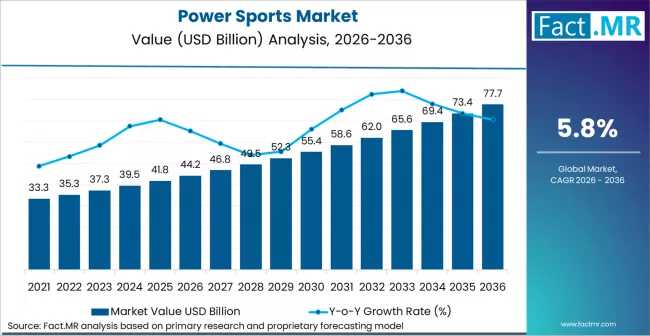
The global power sports landscape is undergoing a profound structural transformation, moving beyond traditional internal combustion engines toward a digitally integrated, electrified future. According to the latest market analysis by Fact.MR, the power sports market is valued at USD 44.2 billion in 2026 and is projected to surge to USD 77.5 billion by 2036. This trajectory represents an incremental value opportunity of approximately USD 36.2 billion over the next decade.
As discretionary spending rises and the “adventure economy” matures, the industry is witnessing a pivot from simple model refreshes to deep-tech integration. The market is currently buoyed by a 5.8% CAGR, fueled by a robust appetite for side-by-side (SxS) vehicles, personal watercraft, and high-performance all-terrain vehicles (ATVs) that bridge the gap between pure recreation and rugged utility.
Propulsion Transition: The Rise of Electric Power Sports
The most significant trend shaping the 2026-2036 forecast period is the gradual penetration of electric drivetrains into segments once dominated by fossil fuels. Industry leaders are no longer viewing electrification as a niche experiment but as a competitive necessity.
-
Strategic Synergies: Alliances, such as the transformative partnership between Polaris Inc. and Zero Motorcycles, are accelerating the deployment of electric powertrains, effectively “leapfrogging” traditional technological hurdles regarding range and cost.
-
Regulatory Tailwinds: Tightening emission frameworks for two-stroke engines and new noise pollution standards in Europe and North America are pushing OEMs to diversify their portfolios.
-
Premium Value Realization: While unit volumes grow steadily, the integration of advanced battery systems and digital connectivity is driving higher per-unit realized value, particularly in the premium enthusiast segments.
Market Drivers and Segment Velocity
The versatility of power sports vehicles remains the primary engine of growth. All-terrain vehicles (ATVs) currently command a dominant 60% share of the market, prized for their multi-season utility across agriculture, ranching, and trail riding.
-
Utility-Recreation Hybridization: The blurring lines between work and play have made SxS and ATVs indispensable in rural and undeveloped regions.
-
Performance Engineering: Despite the electric shift, two-stroke engines retain a 36% market share, particularly in lightweight racing and high-acceleration applications where power-to-weight ratios are paramount.
-
Financial Ecosystems: The expansion of dealer financing networks, highlighted by recent partnerships between firms like Synchrony and BRP US Inc., is lowering the barrier to entry for new consumers.
Regional Outlook: North America Leads, Asia Pacific Accelerates
The appetite for power sports varies significantly by geography, dictated by infrastructure, climate, and local riding cultures:
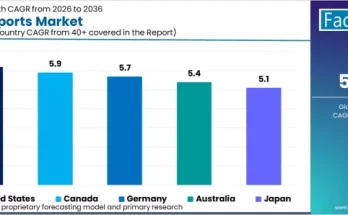
| Country | Projected CAGR (2026-2036) | Primary Growth Drivers |
| United States | 6.2% | Strong dealer networks, high RV ownership, and established trail systems. |
| Canada | 5.9% | Heavy demand for snowmobiles and ATVs in seasonal recreational hubs. |
| Germany | 5.7% | Touring culture, organized riding clubs, and strict safety/emission compliance. |
| Australia | 5.4% | Rural off-road usage and coastal personal watercraft (PWC) demand. |
| Japan | 5.1% | Sophisticated domestic motorcycle demand and early-stage urban electrification. |
Competitive Landscape & Tactical Moves
The competitive arena is defined by a race for reliability and regulatory compliance. Key players are increasingly focusing on after-sales infrastructure to ensure long-term brand loyalty.
Industry Frontrunners include:
-
Polaris Industries Inc., BRP Inc. (Can-Am), Yamaha Motor Co., Honda Motor Co., Kawasaki Heavy Industries, KTM AG, Arctic Cat Inc., Suzuki Motor Corporation, and Textron Inc.
Recent developments, such as Yamaha Motor Co.’s acquisition of Brose’s e-bicycle drive unit business, signal a broader strategic intent to dominate the “e-mobility” space across all recreational categories.
Analyst Perspective
“CXOs will find that long-term competitiveness in power sports depends on propulsion transition readiness, dealer financing resilience, and regulatory alignment rather than incremental model refresh cycles alone,” says Shambhu Nath Jha, Principal Consultant at Fact.MR. “The winners of the next decade will be those who can balance the raw performance of internal combustion with the digital sophistication of electric platforms.”
Browse Full Report : https://www.factmr.com/report/power-sports-market
About the Research Company
Fact.MR is a distinguished market research and consulting agency, recognized for its deep-dive sectoral reports and data-driven insights. With a focus on emerging technologies and shifting consumer behaviors, Fact.MR provides decision-makers with the intelligence required to navigate complex global markets.