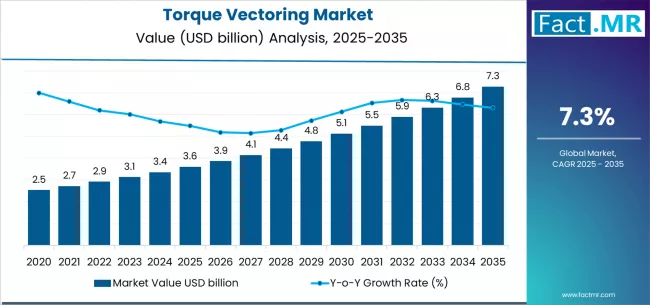
As the automotive industry accelerates toward electrification, advanced driver assistance systems, and enhanced vehicle performance, torque vectoring technology is emerging as a critical innovation. Designed to optimize traction, cornering stability, and overall driving dynamics, torque vectoring systems distribute torque independently to individual wheels. This capability improves handling precision, safety, and efficiency across various vehicle categories. With the rising demand for high-performance vehicles and electric mobility solutions, the torque vectoring market is gaining significant traction globally.
Market Overview
Torque vectoring is an advanced drivetrain technology that adjusts the distribution of torque between wheels or axles to enhance vehicle stability and control. By actively managing power delivery, the system reduces understeer and oversteer, especially during cornering or driving on slippery surfaces.
The market includes mechanical torque vectoring systems and electronic torque vectoring systems integrated with advanced vehicle control units. Increasing adoption of all-wheel drive (AWD) and electric vehicles (EVs) has strengthened demand for torque vectoring solutions. In EVs, independent electric motors on each axle or wheel allow more precise torque control, making torque vectoring an essential feature in next-generation vehicle architectures.
Growing consumer expectations for safety, comfort, and high-performance driving are driving automakers to incorporate torque vectoring technologies across premium and mid-range vehicle segments.
Key Market Drivers
Rising Demand for Enhanced Vehicle Safety and Stability
Torque vectoring improves traction control and reduces the risk of skidding, particularly in adverse weather conditions. As road safety regulations become more stringent, automotive manufacturers are integrating advanced stability systems to meet compliance requirements.
Growth of Electric and Hybrid Vehicles
Electric vehicles inherently support more precise torque distribution due to their motor configuration. The expansion of EV production globally is creating substantial opportunities for torque vectoring technology providers.
Increasing Popularity of All-Wheel Drive Vehicles
Consumers are showing a preference for AWD and performance-oriented vehicles that offer superior handling and stability. Torque vectoring enhances these attributes, making it a key differentiator in competitive automotive markets.
Advancements in Automotive Electronics
The integration of sophisticated sensors, control algorithms, and electronic control units enables real-time torque adjustments. Continuous innovation in automotive electronics is strengthening the adoption of torque vectoring systems.
Regional Insights
North America represents a strong market for torque vectoring technology due to the high demand for SUVs, pickup trucks, and performance vehicles. The region’s growing electric vehicle market further supports expansion.
Europe is a significant contributor to market growth, driven by the presence of leading automotive manufacturers and a strong focus on vehicle safety and performance. Increasing investments in electric mobility are also boosting demand for advanced drivetrain technologies.
Asia-Pacific is emerging as a rapidly expanding region, supported by high vehicle production volumes and growing consumer demand for technologically advanced vehicles. Countries such as China, Japan, and South Korea are leading automotive innovation, particularly in electric mobility.
Latin America and the Middle East & Africa are gradually adopting advanced vehicle technologies as automotive markets evolve and infrastructure improves.
Key Trends & Innovations
Integration with Electric Drivetrains
The shift toward electric mobility is accelerating the development of torque vectoring systems tailored for EV platforms. Independent motor configurations enable precise torque distribution, improving efficiency and handling.
Software-Driven Control Systems
Advanced software algorithms are enhancing system responsiveness and adaptability. Real-time data analysis from sensors allows dynamic torque adjustment for optimal vehicle performance.
Lightweight and Compact Designs
Manufacturers are focusing on reducing system weight and improving compactness to align with fuel efficiency and performance standards.
Collaboration Between Automakers and Technology Providers
Strategic partnerships are fostering innovation and enabling seamless integration of torque vectoring systems into new vehicle platforms.
Expansion into Mid-Range Vehicle Segments
While initially limited to high-performance and luxury vehicles, torque vectoring is gradually penetrating mid-range segments as costs decrease and consumer awareness increases.
Applications & End-Use Outlook
Passenger Vehicles
Premium sedans, sports cars, SUVs, and crossovers are major adopters of torque vectoring technology. Enhanced handling and improved driving experience are key selling points in this segment.
Electric Vehicles
EV manufacturers leverage torque vectoring to optimize performance and efficiency. The technology supports regenerative braking systems and improves energy utilization.
Commercial Vehicles
Advanced stability and traction control are becoming increasingly important in commercial fleets, particularly in regions with challenging road conditions.
High-Performance and Motorsport Vehicles
Torque vectoring is widely used in performance-oriented vehicles and motorsports to achieve superior cornering and acceleration capabilities.
Competitive Landscape
The torque vectoring market comprises automotive component manufacturers, drivetrain system providers, and technology innovators. Companies are focusing on research and development to enhance system efficiency, reduce costs, and improve integration with electric powertrains.
Strategic collaborations, product launches, and expansion into emerging markets are common growth strategies. Automotive manufacturers are increasingly investing in in-house technology development to gain a competitive edge.
Challenges
Despite promising growth, certain challenges exist. High development and integration costs can limit adoption in lower-priced vehicle segments. Additionally, the complexity of electronic systems requires specialized expertise for maintenance and servicing.
However, ongoing technological advancements and economies of scale are expected to address these challenges. As EV adoption accelerates and advanced driver assistance systems become standard, torque vectoring technology is likely to witness broader acceptance.
Future Outlook
The torque vectoring market is set to experience sustained growth as the automotive industry evolves toward electrification and automation. Increasing investments in electric vehicles, autonomous driving technologies, and smart mobility solutions will drive further innovation.
As consumers demand safer and more dynamic driving experiences, torque vectoring systems will become increasingly integral to vehicle design. Expanding adoption across various vehicle categories and regions will strengthen the market’s growth trajectory.
Conclusion
Torque vectoring technology represents a significant advancement in automotive engineering. By enhancing stability, traction, and driving performance, it addresses key consumer expectations and regulatory requirements.
With the ongoing shift toward electric mobility, advanced safety systems, and performance optimization, the torque vectoring market is poised for steady expansion over the coming decade. Automotive manufacturers and technology providers investing in innovative torque management solutions today will be well-positioned to capitalize on future mobility trends.
Browse Full Report – https://www.factmr.com/report/torque-vectoring-market