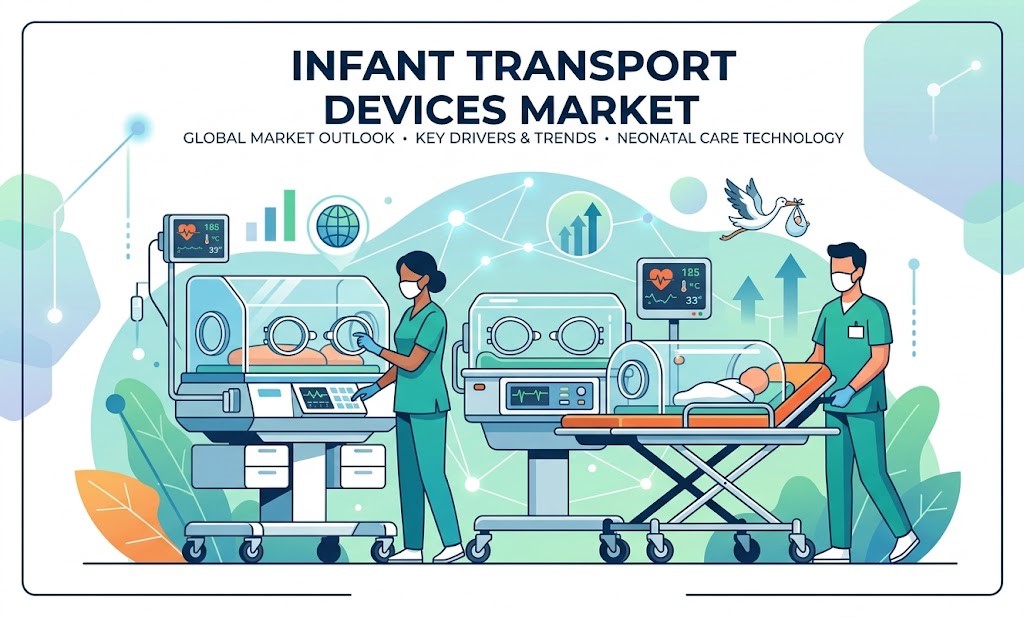
With growing awareness around neonatal health and the increasing need for specialized medical infrastructure, the infant transport devices market is gaining significant momentum. These devices play a critical role in ensuring the safe and stable transfer of newborns, particularly premature or critically ill infants, between healthcare facilities or within hospitals. As healthcare systems continue to prioritize patient safety and advanced neonatal care, the demand for reliable and efficient infant transport solutions is steadily rising.
Market Overview:
Infant transport devices are specially designed systems used to move newborns while maintaining a controlled and protective environment. These devices typically include transport incubators, neonatal stretchers, and mobile care units equipped with life-support features such as temperature regulation, ventilation support, and monitoring systems. Their primary purpose is to ensure that infants remain stable during transit, minimizing risks associated with movement and environmental changes.
The market is being driven by the increasing incidence of preterm births and the rising demand for advanced neonatal care units. Healthcare providers are investing in modern equipment that enhances patient outcomes while improving operational efficiency. Technological advancements have also contributed to the evolution of infant transport devices, with manufacturers focusing on integrating smart monitoring systems, lightweight materials, and user-friendly designs.
Regional Insights:
North America holds a dominant position in the infant transport devices market, supported by its well-established healthcare infrastructure and high adoption of advanced medical technologies. The region’s focus on neonatal care and continuous investments in healthcare innovation have further strengthened its market presence.
Europe follows closely, driven by strong regulatory frameworks and an emphasis on patient safety and quality care. Countries in this region are actively adopting advanced neonatal transport solutions to improve healthcare delivery and reduce infant mortality rates.
The Asia-Pacific region is emerging as a key growth area, fueled by improving healthcare facilities, rising birth rates, and increasing awareness about neonatal care. Governments and private healthcare providers in countries such as India and China are investing in better medical infrastructure, creating opportunities for market expansion.
Key Trends & Forecast:
One of the most prominent trends in the infant transport devices market is the integration of advanced monitoring and life-support technologies. Modern devices are equipped with features that allow continuous tracking of vital signs, ensuring timely intervention during transport.
Another important development is the shift toward portable and lightweight designs. Manufacturers are focusing on creating devices that are easy to handle and transport without compromising on safety or functionality. This is particularly beneficial in emergency situations where quick response times are critical.
The growing adoption of air and ground ambulance services has also influenced market dynamics. Infant transport devices are increasingly being designed to be compatible with different modes of transportation, ensuring seamless and safe transfers across varying distances.
Additionally, there is a rising emphasis on infection control and hygiene. With healthcare-associated infections being a major concern, modern devices are being designed with materials and features that support easy cleaning and sterilization.
Applications & End-Use Outlook:
Infant transport devices are widely used across hospitals, neonatal intensive care units (NICUs), and specialized pediatric care centers. They are essential for transferring infants between departments within a hospital, as well as for inter-hospital transfers where advanced care is required.
In emergency medical services, these devices play a vital role in stabilizing infants during transit. Whether it is a ground ambulance or an air transport system, ensuring the safety and comfort of the infant is a top priority.
Specialized maternity hospitals and pediatric clinics are also key end users, as they require reliable transport solutions to handle critical cases and referrals. The increasing focus on improving neonatal outcomes has led to higher adoption of advanced transport devices in these settings.
Furthermore, the rise of home healthcare services and mobile medical units is creating new opportunities for the use of compact and efficient infant transport solutions. These applications highlight the growing importance of flexibility and adaptability in device design.
Conclusion:
The infant transport devices market is evolving rapidly, driven by the need for enhanced neonatal care and safe patient handling. As healthcare providers continue to prioritize the well-being of newborns, the adoption of advanced transport solutions is expected to increase.
Innovations in technology, combined with a growing focus on safety, portability, and efficiency, are shaping the future of this market. Manufacturers that invest in research and development to create high-performance, user-friendly devices will be well-positioned to meet the changing demands of the healthcare industry.
For healthcare organizations, adopting modern infant transport devices is not just about improving operational capabilities—it is about ensuring that every newborn receives the best possible care, even during critical moments of transfer.
Browse Full Report – https://www.factmr.com/report/infant-transport-devices-market