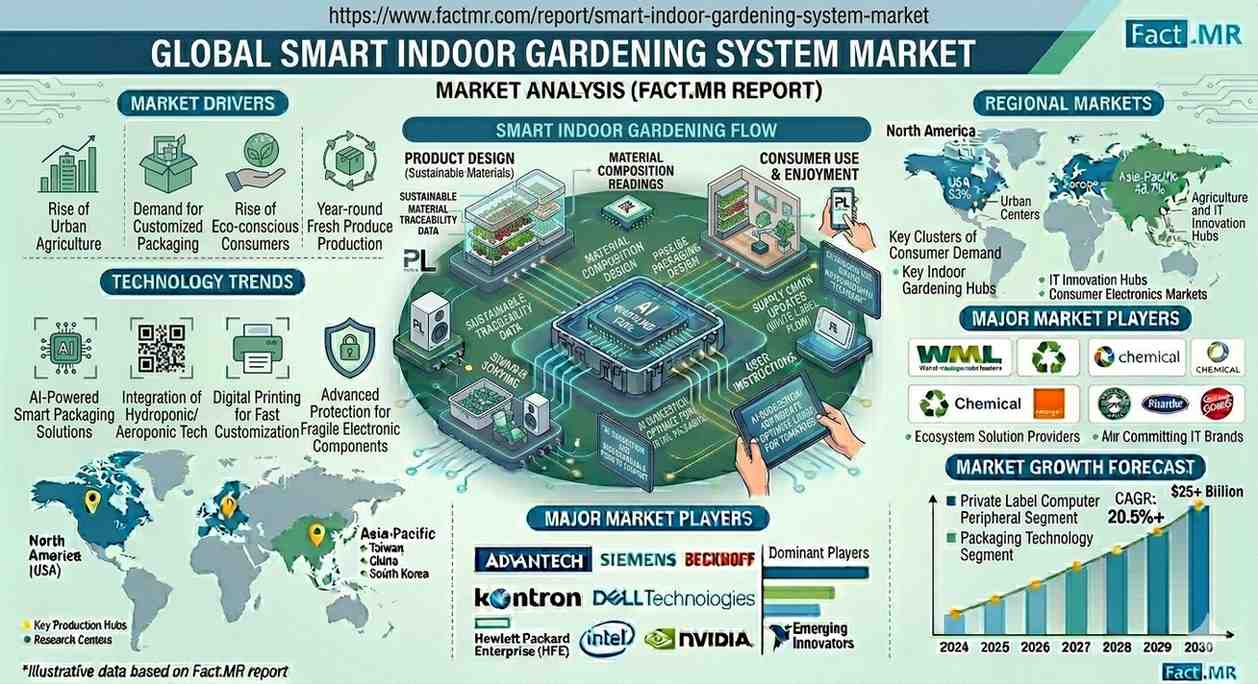
According to Fact.MR’s latest analysis, the global smart indoor gardening system market is valued at approximately USD 3.2 billion in 2026 and is projected to reach USD 3.5 billion in 2027, expanding to nearly USD 7.4 billion by 2036. The market is set to grow at a CAGR of 8.6% from 2026 to 2036, generating an incremental opportunity of USD 4.2 billion.
The market is undergoing a significant transformation from a niche hobbyist segment into a mainstream smart home and wellness category. Driven by urbanization, sustainability concerns, and IoT integration, smart indoor gardening systems are evolving into automated, space-efficient food production units for residential and commercial environments.
Quick Stats
- Market Size (2026): USD 3.2 billion
- Market Size (2027): USD 3.5 billion
- Forecast Value (2036): USD 7.4 billion
- CAGR (2026–2036): 8.6%
- Incremental Opportunity: USD 4.2 billion
- Leading Segment: Small Garden Systems (47% share)
- Leading Deployment: Self-Watering Systems (40% share)
- Leading Region: Asia-Pacific (China & India growth hubs)
- Key Players: LG Electronics, CLICK & GROW, AeroGarden, Gardyn, Rise Gardens
Executive Insight for Decision Makers
The market is shifting toward ecosystem-driven smart gardening platforms, where hardware, software, and consumables (seed pods, nutrients) create recurring revenue models.
Strategic Imperatives:
- Develop connected ecosystems with mobile app integration and automation
- Expand subscription-based seed and nutrient models
- Focus on compact, modular designs for urban living spaces
Risk of Inaction:
Companies that fail to innovate risk losing share to digitally integrated, design-focused brands offering seamless user experiences and recurring value.
Market Dynamics
Key Growth Drivers
- Rapid urbanization and shrinking living spaces
- Rising demand for localized food production and food security
- Increasing consumer focus on wellness and biophilic design
- Advancements in AI, IoT, and energy-efficient LED lighting
Key Restraints
- High upfront cost of premium smart systems
- Energy consumption concerns, particularly in Europe
- Competition from low-cost non-connected alternatives
Emerging Trends
- AI-driven plant monitoring and automated nutrient dosing
- Growth of subscription-based gardening ecosystems
- Integration with smart home platforms (Alexa, Google Home)
- Development of compact, aesthetic, and modular designs
Segment Analysis
- Leading Segment: Small garden systems dominate with 47% share, driven by affordability and compact design
- Fastest-Growing Segment: Modular and wall-mounted systems for urban and commercial applications
Breakdown:
- By Type: Small garden, modular systems, vertical gardens
- By Deployment: Self-watering (40%), fully automated, manual-assisted
- By End-Use: Residential, hospitality, corporate offices, educational institutions
Strategic Importance:
Small and self-watering systems reduce entry barriers, enabling mass adoption among urban consumers, while modular systems unlock B2B and institutional opportunities.
Supply Chain Analysis (Critical Insight)
Value Chain Structure
- Raw Material Suppliers:
LED component manufacturers, plastics, hydroponic nutrients, IoT sensors - System Manufacturers:
Design and assemble indoor gardening units with integrated software and hardware - Distributors & Retailers:
E-commerce platforms, home improvement stores, smart home retailers - End-Users:
- Urban households
- Restaurants and hospitality chains
- Offices and wellness-focused institutions
- Educational and research organizations
Who Supplies Whom
- Component suppliers provide LEDs, sensors, and materials to system manufacturers
- Companies like LG Electronics and CLICK & GROW supply finished systems to retailers and direct consumers
- Subscription services deliver seed pods and nutrients directly to end-users
Insight:
The supply chain is increasingly ecosystem-driven, with recurring revenue streams tied to consumables and software services.
Pricing Trends
- Entry-level systems follow a mid-range pricing model
- Premium connected systems command high margins with bundled services
Key Influencers
- Technology integration (IoT, AI features)
- Material quality and design aesthetics
- Subscription services and consumables
- Energy efficiency and sustainability certifications
Margin Insight:
Higher margins are achieved through lifetime customer value via subscriptions, rather than one-time hardware sales.
Regional Analysis
Top Countries by CAGR (2026–2036)
- China: 8.0%
- India: 7.6%
- Germany: 7.0%
- Brazil: 6.5%
- United States: 5.8%
Regional Insights
- Asia-Pacific: Fastest-growing region driven by urban density and IoT adoption
- Europe: Sustainability-focused demand with ESG alignment
- North America: Premium market with strong smart home integration
- Latin America: Emerging adoption linked to urbanization
Developed vs Emerging Markets:
- Developed markets emphasize technology integration and sustainability
- Emerging markets prioritize affordability and accessibility
Competitive Landscape
- Market Structure: Moderately fragmented with a mix of startups and global appliance brands
Key Players
- CLICK & GROW LLC
- BSH Home Appliances Group (Bosch)
- AeroFarms
- Rise Gardens
- Gardyn
- Plantui
- AeroGarden
- The Scotts Company LLC
- LG Electronics
- Plenty Unlimited Inc.
Competitive Strategies
- Ecosystem development with apps and subscriptions
- Product innovation in automation and AI diagnostics
- Expansion through e-commerce and retail partnerships
- Focus on design aesthetics and space efficiency
Strategic Takeaways
For Manufacturers
- Build integrated hardware-software ecosystems
- Focus on compact, scalable product designs
For Investors
- Target companies with subscription-based revenue models
- Invest in IoT-enabled and AI-driven platforms
For Marketers & Distributors
- Position products as wellness and sustainability solutions
- Leverage direct-to-consumer and e-commerce channels
Future Outlook
The market is expected to evolve into a fully automated, AI-powered indoor farming ecosystem, with strong integration into smart homes and urban infrastructure.
Key opportunities include:
- Expansion of B2B institutional adoption
- Development of energy-efficient and sustainable systems
- Integration with urban farming and smart city initiatives
Conclusion
The global smart indoor gardening system market is transitioning into a high-growth, innovation-driven segment at the intersection of technology, sustainability, and lifestyle transformation. Companies that align with automation, design, and ecosystem strategies will capture long-term value.
Why This Market Matters
Smart indoor gardening systems represent a fundamental shift toward decentralized, technology-driven food production. As urban populations grow and sustainability becomes critical, this market will play a key role in shaping the future of food, wellness, and smart living environments.
Browse Full Report –
https://www.factmr.com/report/smart-indoor-gardening-system-market