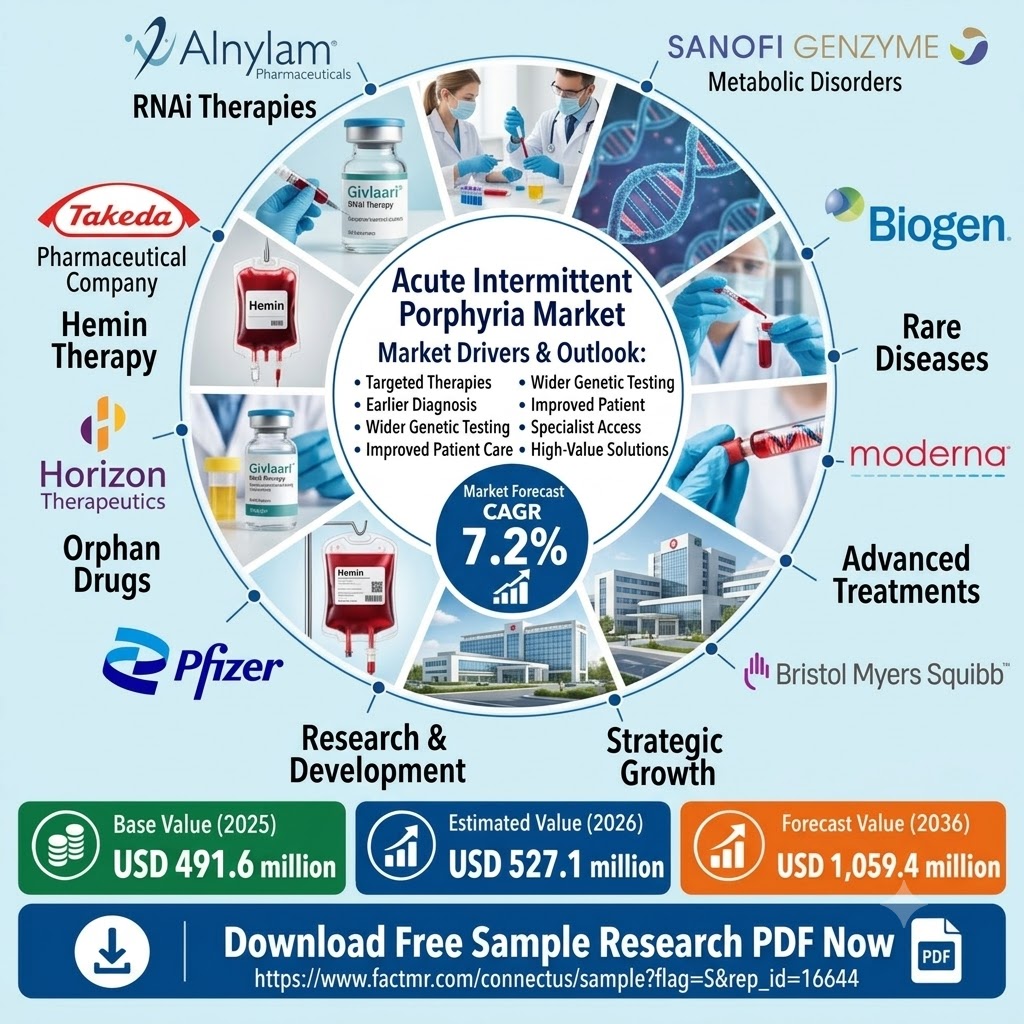
The global acute intermittent porphyria market is projected to reach USD 1,059.4 million by 2036, rising from USD 527.1 million in 2026 at a compound annual growth rate (CAGR) of 7.2%, according to Fact.MR analysis. The market was valued at USD 491.6 million in 2025. The forecast represents an absolute opportunity of USD 532.3 million over the next decade, as improved diagnosis and preventive treatment reshape care for patients with this rare inherited disorder.
The outlook reflects a shift in how acute intermittent porphyria is managed. RNA interference (RNAi) therapies are expanding treatment beyond individual attacks, while broader biochemical and genetic testing can help identify patients who might otherwise remain undiagnosed. However, high treatment costs and limited access to specialist care continue to restrict market expansion.
Get detailed market forecasts, competitive benchmarking, and pricing trends: https://www.factmr.com/connectus/sample?flag=S&rep_id=16644
Targeted Therapies Reshape the Acute Intermittent Porphyria Market
Acute intermittent porphyria is an inherited metabolic disorder associated with reduced activity of the enzyme porphobilinogen deaminase. The resulting accumulation of porphyrin precursors can trigger acute attacks involving severe abdominal pain, neurological complications, and psychiatric symptoms. Because these symptoms overlap with those of other conditions, patients may experience delays before receiving an accurate diagnosis.
RNAi therapy is changing the treatment model. Givlaari (givosiran), developed by Alnylam Pharmaceuticals, targets the underlying pathway responsible for the accumulation of toxic precursors. The U.S. Food and Drug Administration approved the treatment in November 2019, establishing a new option for preventing attacks in adults with acute hepatic porphyria.
The commercial implications extend beyond drug sales. Treatment developers face growing pressure to demonstrate reductions in attack frequency and hospital admissions, alongside improvements in quality of life. These outcomes can influence reimbursement decisions when healthcare payers assess the cost of long-term therapy against repeated acute-care expenses.
Intravenous hemin remains central to hospital-based treatment for severe attacks. Its established clinical role sustains demand for reliable product supply, inpatient pharmacy services, and trained clinical teams.
Medications and Hospitals Lead Market Segments
Fact.MR projects medications to account for 48.3% of the acute intermittent porphyria market by treatment type in 2026. Their leading position reflects their use in acute attack management, recurrence prevention, and symptom control. Intravenous hemin serves patients requiring urgent treatment, while liver transplantation remains an option for rare cases involving severe, recurrent attacks that do not respond to other interventions.
Blood tests are expected to represent 55.0% of the diagnosis segment in 2026. Initial investigations can assess liver function and electrolyte balance, helping clinicians determine the need for more specific testing. Urine testing remains essential for detecting elevated porphobilinogen and delta-aminolevulinic acid levels during an attack, while genetic testing can confirm disease-associated HMBS variants and support family screening.
Hospitals are forecast to capture 50.0% of the market by end user in 2026. Acute attacks may require intravenous hemin, pain management, glucose administration, electrolyte correction, and close monitoring of neurological or respiratory complications. Hospitals also combine emergency assessment, laboratory testing, and inpatient treatment within a single care setting.
Fact.MR Analyst Highlights Diagnostic Priorities
Shambhu Nath Jha, Principal Consultant at Fact.MR, said, “Acute intermittent porphyria is a rare disease, yet its commercial potential will depend on how quickly patients are identified and how effectively attacks are prevented. Earlier diagnosis will bring more patients into specialist care, while targeted therapy will continue to reshape recurring attack management.”
Jha added that stakeholders should strengthen diagnostic capabilities and invest in prevention-focused treatment models to capture long-term growth.
Fact.MR is a market research and consulting company that provides industry analysis, market forecasts, and strategic insights to businesses. Its [LINK: acute intermittent porphyria market report] examines treatment options, diagnostic methods, end-user demand, regional outlooks, and competitive positioning.
Mexico Leads Country Growth Through 2036
Mexico is projected to record the fastest growth among the six profiled countries, with a CAGR of 9.0% from 2026 to 2036. Wider diagnostic access and increasing awareness of rare diseases support this outlook. South Korea follows at 8.1%, backed by hospital infrastructure and dedicated rare-disease programs.
The United States is forecast to grow at 7.8%, supported by its established orphan drug framework and access to targeted therapies. The Netherlands is projected to expand at 6.8%, reflecting specialist expertise and organized referral pathways. Canada follows at 6.1%, while Germany records a 5.3% CAGR as established diagnosis and treatment pathways moderate further expansion.
These differences matter for market entry. Companies must assess diagnostic capacity, reimbursement conditions, specialist availability, and patient access before deciding where to expand.
Cost and Diagnostic Delays Remain Market Barriers
High targeted-therapy costs and reimbursement restrictions remain immediate challenges. Fact.MR’s analysis estimates a negative 0.9 percentage-point impact on CAGR from these constraints. Symptom overlap and delayed diagnosis are associated with a further negative 0.8 percentage-point impact, while shortages of trained clinicians and specialist centers contribute another negative 0.6 percentage points.
Diagnostic providers can address part of this gap by establishing clearer testing pathways that combine biochemical analysis with genetic confirmation. Hospitals and specialty clinics also need reliable access to intravenous hemin and stronger referral links with centers experienced in porphyria management.
View Related Reports :
Electron Beam Curable Ink Market
About Fact.MR
Fact.MR is a market research and consulting firm that delivers market intelligence, industry forecasts, and strategic analysis across multiple sectors. Its research combines primary interviews, desk research, market sizing, and data validation to assess market opportunities, competitive dynamics, and emerging industry developments.