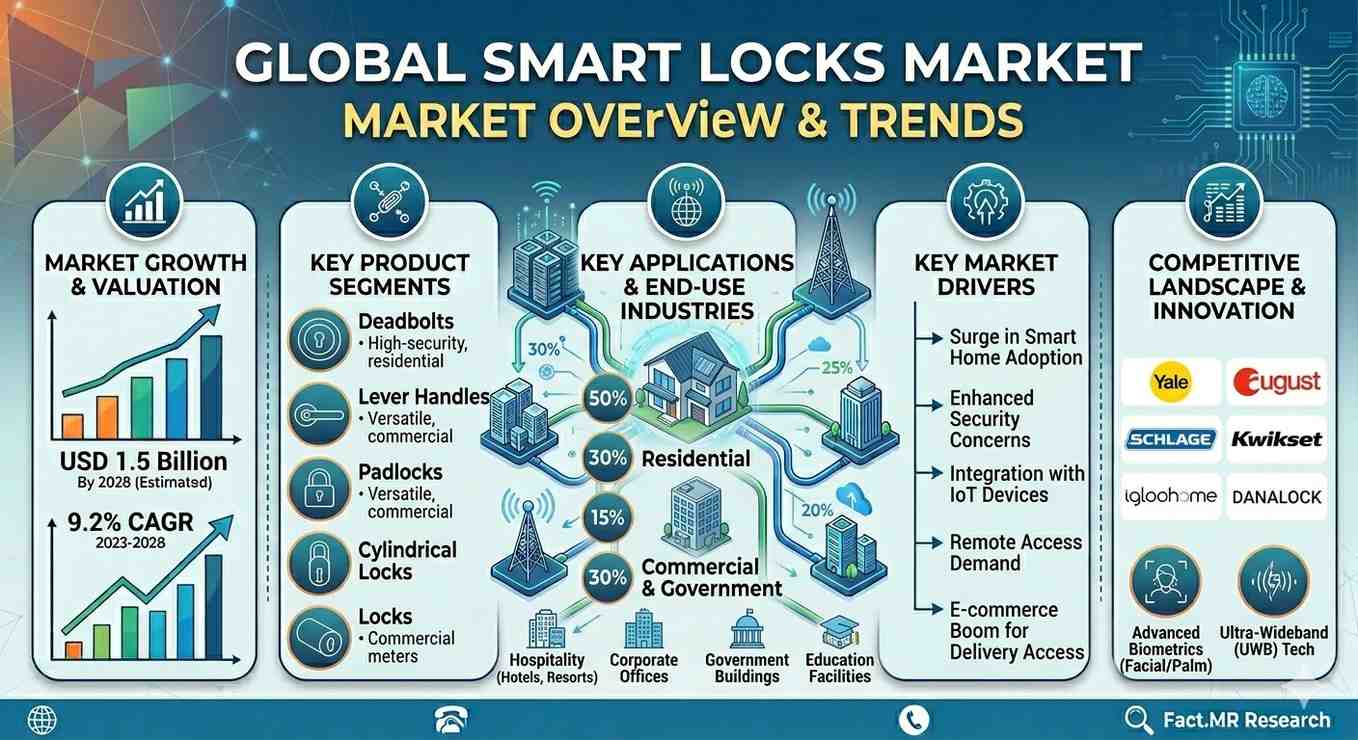
According to Fact.MR’s latest analysis, the global smart locks market is valued at USD 3.5 billion in 2026 and is projected to reach USD 11.2 billion by 2036, expanding at a CAGR of 12.3%. The market is expected to reach approximately USD 3.9 billion in 2027, generating an incremental opportunity of USD 7.7 billion over the forecast period.
The industry is undergoing a rapid transformation from mechanical locking systems to intelligent, connected access solutions, driven by the convergence of IoT, cybersecurity frameworks, and mobile-first consumer behavior. Smart locks are increasingly integrated into broader smart home ecosystems, shifting from standalone security devices to data-driven access management platforms.
Quick Stats
- Market Size (2026): USD 3.5 Billion
- Market Size (2027): USD 3.9 Billion
- Forecast Value (2036): USD 11.2 Billion
- CAGR (2026–2036): 12.3%
- Incremental Opportunity: USD 7.7 Billion
- Leading Segment: Deadbolt Smart Locks (71% share)
- Leading Region: Asia Pacific (China, India)
- Key Players: ASSA ABLOY, Allegion, Samsung Electronics, Dormakaba, Honeywell
Executive Insight for Decision Makers
The smart locks market is shifting from hardware-centric security products to software-enabled access ecosystems.
Strategic Imperatives:
- Invest in multi-factor authentication (biometric + mobile + PIN)
- Develop cybersecure, standards-compliant devices
- Integrate with smart home platforms and property management systems
Risks of Inaction:
- Exposure to cybersecurity vulnerabilities
- Loss of relevance in connected home ecosystems
- Margin pressure from low-cost, non-differentiated products
Market Dynamics
Key Growth Drivers
- Smart Home Penetration: Increasing adoption of connected home devices globally
- Demand for Keyless Convenience: Mobile-based access and remote control
- Urban Housing Growth: Expansion of apartments and rental properties
- Security Awareness: Rising concerns around physical and digital safety
Key Restraints
- Cybersecurity Concerns: Risk of hacking and unauthorized access
- High Initial Cost: Compared to traditional locks
- Compatibility Issues: Integration challenges across platforms
Emerging Trends
- Biometric Authentication: Face, fingerprint, and palm recognition
- AI-Based Access Monitoring: Behavior-based anomaly detection
- Offline Smart Locks: Bluetooth-based systems reducing cyber risk
- Matter Protocol Integration: Cross-platform interoperability
Segment Analysis
- Leading Segment: Deadbolt Smart Locks (71% share)
- Combines mechanical strength with digital control
- Compatible with existing door infrastructure
- Fastest-Growing Segment: Bluetooth-Enabled Locks (52% share)
- Low power consumption and offline functionality
- Ideal for residential and retrofit applications
Breakdown
- By Authentication: Bluetooth, Wi-Fi, Biometric, Keypad
- By Lock Type: Deadbolt, Lever Handle, Padlock
- By End-Use: Residential, Commercial, Hospitality
Strategic Importance:
Deadbolt smart locks serve as the bridge between traditional security and digital transformation, ensuring user trust while enabling smart functionality.
Supply Chain Analysis (Critical Insight)
- Raw Material Suppliers
- Metal components (steel, brass, alloys)
- Electronic components (chips, sensors, batteries)
- Manufacturers / Producers
- Smart lock OEMs and security solution providers
- Electronics companies integrating IoT capabilities
- Distributors
- E-commerce platforms
- Retail chains and smart home installers
- Security system integrators
- End-Users
- Homeowners and tenants
- Property managers and landlords
- Hotels and commercial facilities
Who Supplies Whom
- Component suppliers → Smart lock manufacturers
- Manufacturers → Retailers / installers / online platforms
- Distributors → Residential and commercial buyers
- Integrators → Enterprise and hospitality clients
Key Insight:
The market is evolving toward direct-to-consumer and subscription-based ecosystems, especially for access control management.
Pricing Trends
- Commodity vs Premium:
- Entry-level locks: Affordable, limited connectivity
- Premium locks: High price due to biometrics and AI integration
- Key Influencing Factors:
- Connectivity features (Wi-Fi, Bluetooth)
- Security certifications and encryption standards
- Brand reputation and ecosystem compatibility
- Margin Insights:
- Premium smart locks deliver 30–40% higher margins
- Subscription services enhance lifetime value
Regional Analysis
Top 5 Countries by CAGR (2026–2036)
- India – 13.1%
- China – 12.8%
- United States – 10.0%
- Germany – 9.5%
- Canada – 9.5%
Regional Growth Drivers
- India & China: Rapid urban housing and smartphone adoption
- United States: High smart home penetration
- Germany & UK: Retrofit demand and regulatory compliance
Developed vs Emerging Markets
- Developed Markets: Focus on advanced features and integration
- Emerging Markets: Focus on affordability and basic connectivity
Competitive Landscape
- Market Structure: Moderately fragmented with strong global leaders
Key Players
- ASSA ABLOY AB
- Allegion plc
- Samsung Electronics Co., Ltd.
- Dormakaba Holding AG
- Honeywell International Inc.
- Spectrum Brands (Kwikset)
- Salto Systems
- Godrej & Boyce
- MIWA Lock Co.
- UniKey Technologies
Competitive Strategies
- Product innovation (biometric and AI-enabled locks)
- Ecosystem integration (smart home compatibility)
- Direct-to-consumer channels
- Strategic acquisitions and partnerships
Strategic Takeaways
For Manufacturers
- Focus on cybersecurity and encryption capabilities
- Expand AI and biometric authentication features
For Investors
- Target firms with strong IoT ecosystems and recurring revenue models
- Invest in high-growth Asia Pacific markets
For Marketers / Distributors
- Highlight convenience, security, and integration benefits
- Leverage e-commerce and smart home bundling strategies
Future Outlook
The smart locks market is evolving toward fully integrated digital access ecosystems, where locks function as nodes in a connected security network.
- AI and predictive analytics will redefine access control
- Sustainability will drive energy-efficient designs
- Smart cities and rental ecosystems will expand adoption
Long-Term Opportunity:
Integration with identity management systems and digital keys will unlock new enterprise and urban infrastructure applications.
Conclusion
The global smart locks market is transitioning from mechanical security to intelligent access control, driven by IoT adoption, urbanization, and evolving consumer expectations. As connectivity and cybersecurity become central to modern living, smart locks are emerging as critical components of next-generation security ecosystems.
Companies that invest in innovation, interoperability, and secure design will be best positioned to capitalize on this high-growth market.
Why This Market Matters
Smart locks represent the frontline of digital security in homes and businesses. As physical and digital security converge, they enable safer, smarter, and more connected living environments—making this market a cornerstone of the global smart home and IoT revolution.
Browse Full Report –
https://www.factmr.com/report/smart-locks-market