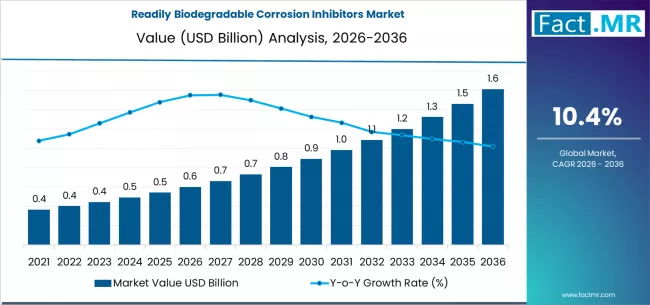
The global readily biodegradable corrosion inhibitors market is set for strong and sustained growth, driven by tightening environmental regulations, rising adoption of green chemistry solutions, and increasing demand from oil & gas, water treatment, and industrial manufacturing sectors. According to a new study by Fact.MR, the market is projected to expand from USD 0.60 billion in 2026 to USD 1.61 billion by 2036, registering a robust CAGR of 10.4% during the assessment period.
This rapid expansion reflects a global shift toward eco-friendly corrosion protection solutions that minimize environmental impact while maintaining high performance in aggressive operating conditions.
Browse Full Report:
https://www.factmr.com/report/readily-biodegradable-corrosion-inhibitors-market
Strategic Market Drivers
Stringent Environmental Regulations Propel Adoption
Governments and regulatory bodies worldwide are enforcing strict controls on toxic and non-biodegradable chemicals. Industries are increasingly transitioning to readily biodegradable corrosion inhibitors to comply with environmental standards such as REACH, EPA guidelines, and offshore discharge regulations.
These inhibitors offer effective corrosion protection while rapidly decomposing into non-toxic byproducts, making them ideal for environmentally sensitive applications.
Oil & Gas Industry Embraces Green Corrosion Protection
The oil & gas sector remains a major consumer of corrosion inhibitors, particularly in drilling fluids, pipelines, and offshore platforms. Rising exploration activities—combined with sustainability commitments—are driving demand for biodegradable inhibitors that reduce ecological risks without compromising asset integrity.
Offshore drilling operations, in particular, are accelerating adoption due to strict marine environmental regulations.
Growth in Water Treatment and Industrial Infrastructure
Expanding investments in water treatment facilities, desalination plants, and industrial infrastructure are boosting the use of biodegradable corrosion inhibitors. These solutions help extend equipment life while ensuring compliance with wastewater discharge and environmental safety norms.
Industries such as power generation, chemicals, and food processing are also shifting toward greener corrosion control alternatives.
Advancements in Green Chemistry and Bio-Based Formulations
Innovations in bio-based raw materials, plant-derived compounds, and organic acids are significantly improving the performance and cost-effectiveness of biodegradable corrosion inhibitors. Enhanced thermal stability, higher inhibition efficiency, and compatibility with diverse systems are expanding their industrial applicability.
Regional Growth Highlights
North America: Regulatory Compliance and Industrial Modernization
North America holds a significant market share due to strong regulatory enforcement, advanced industrial infrastructure, and high awareness of sustainable chemical solutions. The U.S. leads adoption across oil & gas, water treatment, and manufacturing sectors.
Europe: Sustainability Leadership Drives Market Expansion
Europe remains a frontrunner in biodegradable corrosion inhibitor adoption, supported by stringent EU environmental regulations and a strong push toward circular economy practices. Germany, the U.K., France, and Nordic countries are key growth markets.
East Asia: Industrial Growth Meets Environmental Responsibility
China, Japan, and South Korea are witnessing rising demand as industrial expansion aligns with stricter environmental policies. Rapid infrastructure development and increasing investments in sustainable industrial chemicals are driving regional growth.
Emerging Markets: Industrialization and Environmental Awareness
Countries across India, Southeast Asia, Latin America, and the Middle East are emerging as high-growth markets due to:
- Expanding oil & gas operations
- Rising water treatment investments
- Increasing regulatory focus on biodegradable chemicals
Market Segmentation Insights
By Product Type
- Organic-Based Inhibitors – Dominant segment due to high biodegradability and low toxicity
- Inorganic Biodegradable Inhibitors – Used in specialized industrial applications
By Application
- Oil & Gas – Largest segment driven by drilling and pipeline protection
- Water Treatment – Fast-growing due to environmental discharge norms
- Power Generation – Increasing use in boilers and cooling systems
- Chemical Processing – Rising adoption for equipment protection
By End Use
- Industrial Manufacturing
- Marine & Offshore
- Infrastructure & Utilities
Challenges Impacting Market Growth
Higher Cost Compared to Conventional Inhibitors
Biodegradable corrosion inhibitors often have higher production costs than traditional chemical inhibitors, which can limit adoption in cost-sensitive markets.
Performance Limitations in Extreme Conditions
In highly aggressive environments, biodegradable formulations may require optimization to match the durability of conventional inhibitors.
Limited Awareness in Developing Regions
Lack of awareness and technical expertise in some regions slows penetration, though education and regulatory pressure are closing this gap.
Competitive Landscape
The readily biodegradable corrosion inhibitors market is moderately fragmented, with manufacturers focusing on product innovation, bio-based raw materials, and strategic partnerships.
Key Companies Profiled
- BASF SE
- Nouryon
- Cortec Corporation
- LANXESS AG
- Ecolab Inc.
- Baker Hughes
- Clariant AG
- Arkema
- Solenis LLC
Companies are investing in renewable feedstocks, high-performance eco-formulations, and customized solutions for offshore and industrial applications.
Recent Developments
- 2024: Introduction of plant-based corrosion inhibitors with enhanced thermal stability
- 2023: Increased adoption of biodegradable inhibitors in offshore oil & gas projects
- 2022: Water treatment operators shift toward green corrosion control solutions to meet discharge regulations
Future Outlook: Sustainable Protection for a Greener Industrial Future
The global readily biodegradable corrosion inhibitors market is poised for accelerated growth through 2036, driven by:
- Rising environmental compliance requirements
- Expansion of oil & gas and water treatment industries
- Innovations in green chemistry
- Corporate sustainability initiatives
- Growing preference for non-toxic industrial chemicals
As industries increasingly prioritize environmental responsibility without compromising operational efficiency, readily biodegradable corrosion inhibitors are set to become a cornerstone of sustainable corrosion management worldwide.