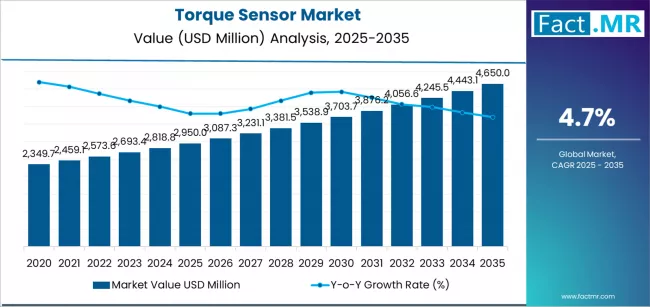
Precision measurement has become a cornerstone of modern engineering and industrial operations. Among the critical technologies enabling accurate mechanical monitoring, torque sensors play a vital role. The Torque Sensor Market is witnessing steady expansion as industries increasingly rely on precise torque measurement for quality control, performance optimization, and safety assurance.
With the rapid growth of automation, electric mobility, robotics, and smart manufacturing, torque sensors are becoming indispensable components in industrial systems. Their ability to measure rotational force accurately helps manufacturers maintain consistency, improve efficiency, and reduce equipment failure risks.
Market Overview
Torque sensors are devices used to measure and monitor the torque applied to a rotating system such as engines, motors, gearboxes, and drive shafts. These sensors convert mechanical torque into measurable electrical signals, allowing real-time monitoring and analysis.
The market encompasses various types of torque sensors, including rotary torque sensors and reaction torque sensors, each designed for specific applications. Advancements in sensing technologies have improved accuracy, durability, and integration capabilities, making torque sensors suitable for a wide range of industries.
The increasing integration of automation systems and digital monitoring platforms has further strengthened demand. Modern torque sensors often feature advanced connectivity options, enabling seamless integration with data acquisition systems and industrial control networks.
Key Market Drivers
- Growth of Industrial Automation
As factories transition toward smart manufacturing and Industry 4.0 practices, precise torque measurement becomes critical for automated assembly lines and machinery calibration. Torque sensors ensure optimal tightening, prevent overloading, and maintain product consistency. - Expansion of Electric Vehicle Production
The rapid adoption of electric vehicles has significantly influenced torque sensor demand. Electric drivetrains require accurate torque monitoring to optimize motor performance, enhance energy efficiency, and improve overall vehicle safety. - Rising Demand in Aerospace and Automotive Sectors
Both aerospace and automotive industries rely on torque sensors for testing engines, transmissions, and structural components. High-precision measurement ensures compliance with strict safety and quality standards. - Increasing Focus on Quality Control and Safety
Manufacturers are placing greater emphasis on product reliability and workplace safety. Torque sensors help detect irregularities in mechanical systems, reducing the likelihood of equipment failure and costly downtime.
Regional Insights
North America holds a significant share of the torque sensor market, supported by strong automotive, aerospace, and industrial automation sectors. The region’s early adoption of advanced manufacturing technologies continues to drive growth.
Europe demonstrates steady demand, particularly in countries with established automotive and machinery industries. Strict quality and regulatory standards in the region encourage the use of high-precision measurement devices.
Asia-Pacific is emerging as a high-growth market due to rapid industrialization, expanding automotive production, and increasing investments in automation. Manufacturing hubs in the region are integrating torque sensors into production lines to enhance efficiency and competitiveness.
Other regions are also witnessing gradual adoption as industries modernize and prioritize operational accuracy.
Technology and Innovation Trends
Technological advancements are transforming the torque sensor landscape. The integration of digital signal processing has enhanced measurement accuracy and reduced noise interference. Compact designs and lightweight materials make modern sensors easier to install in confined spaces.
Wireless torque sensors are gaining popularity, eliminating the need for complex wiring and enabling greater flexibility in rotating applications. These solutions are particularly beneficial in testing environments and research facilities.
Another key trend is the development of non-contact torque sensors. These devices reduce wear and tear, extending operational lifespan and minimizing maintenance requirements. The growing emphasis on real-time data monitoring and predictive maintenance further supports innovation in sensor connectivity and analytics capabilities.
Applications Across Industries
Torque sensors are widely utilized across diverse sectors, including:
- Automotive: Engine testing, transmission analysis, and electric drivetrain monitoring.
- Aerospace: Turbine testing and structural component validation.
- Industrial Machinery: Monitoring of motors, gear systems, and rotating equipment.
- Energy and Power Generation: Performance analysis of turbines and generators.
- Robotics: Ensuring precise motion control and mechanical accuracy.
- Medical Devices: Calibration of surgical equipment and rehabilitation systems.
Their versatility makes torque sensors essential wherever rotational force measurement is critical.
Competitive Landscape
The torque sensor market features a mix of global manufacturers and specialized sensor technology providers. Companies compete by focusing on innovation, accuracy, durability, and customization capabilities.
Strategic collaborations with automotive and industrial automation companies are common, enabling sensor manufacturers to develop application-specific solutions. Continuous research and development efforts aim to enhance measurement precision, reduce response time, and improve compatibility with digital control systems.
After-sales support and technical services are important differentiators in this market, as industrial clients require reliable performance and minimal downtime.
Sustainability and Future Outlook
Sustainability considerations are influencing product development strategies. Energy-efficient manufacturing processes and durable sensor designs contribute to reduced environmental impact. Additionally, torque sensors support sustainability indirectly by optimizing machinery performance and minimizing energy waste.
The continued expansion of electric mobility, renewable energy systems, and automated manufacturing facilities is expected to create substantial growth opportunities. As industries increasingly rely on data-driven decision-making, the demand for accurate and real-time torque measurement will strengthen.
Emerging trends such as smart factories and connected devices will further integrate torque sensors into digital ecosystems. Advanced analytics and cloud-based monitoring solutions are likely to redefine how torque data is utilized for predictive maintenance and performance optimization.
Conclusion
The Torque Sensor Market is evolving in response to the growing need for precision, efficiency, and safety across industrial applications. From automotive and aerospace to robotics and energy systems, torque sensors play a critical role in ensuring reliable mechanical performance.
Technological advancements, increasing automation, and expanding electric vehicle production are shaping the future of this dynamic market. Organizations seeking enhanced operational accuracy and improved product quality can benefit from understanding emerging trends and investing in advanced torque measurement solutions.
As industries continue to modernize and embrace digital transformation, torque sensors will remain fundamental components in achieving high-performance, sustainable, and data-driven operations.
Browse Full Report – https://www.factmr.com/report/torque-sensor-market