As the automotive industry accelerates toward electrification and smarter mobility solutions, the in-cabin energy harvesting systems market is gaining increasing attention. These systems are designed to capture and convert ambient energy generated within vehicles into usable electrical power, supporting various in-cabin electronic components. With the growing integration of advanced electronics, sensors, and infotainment systems in modern vehicles, the demand for efficient and sustainable power solutions is rising. In-cabin energy harvesting offers a promising approach to reduce reliance on conventional power sources while enhancing overall vehicle efficiency and sustainability.
Market Overview:
In-cabin energy harvesting systems refer to technologies that collect energy from sources such as vibrations, thermal gradients, light, and electromagnetic waves inside a vehicle cabin. This harvested energy is then converted into electrical power to operate low-energy devices like sensors, wireless modules, and monitoring systems. These systems play a crucial role in reducing battery load and extending the lifespan of vehicle power systems.
The market is being driven by the increasing adoption of connected and autonomous vehicles, which rely heavily on electronic components for communication, safety, and user experience. As the number of electronic devices within vehicles continues to grow, so does the need for efficient energy management solutions. In-cabin energy harvesting systems provide an innovative way to meet these demands while minimizing energy consumption.
Manufacturers are focusing on developing compact, efficient, and cost-effective energy harvesting solutions that can be seamlessly integrated into vehicle interiors. Advances in materials science and microelectronics are enabling the creation of highly efficient energy harvesters capable of operating under varying conditions. These innovations are helping to expand the scope of applications and improve overall system performance.
Regional Insights:
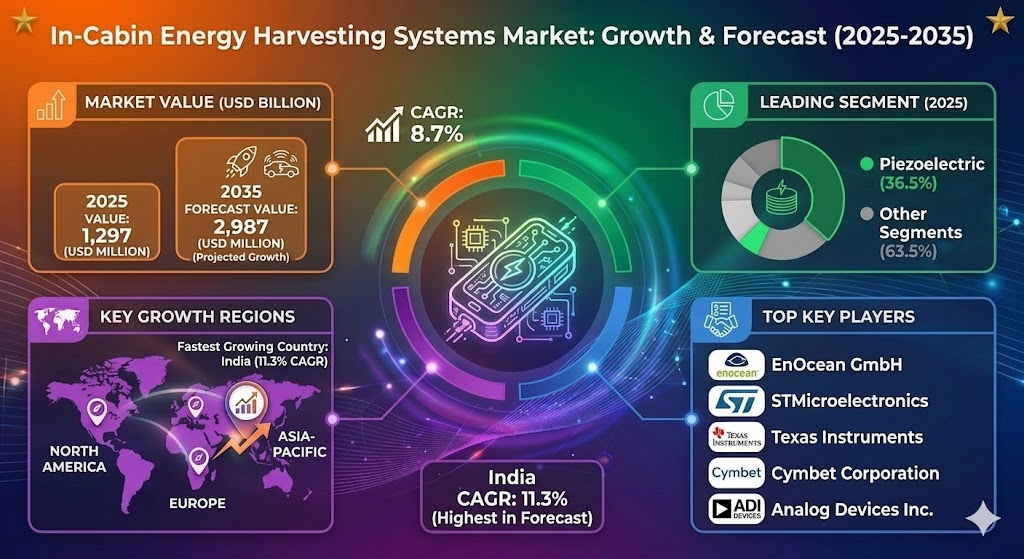
North America is a key market for in-cabin energy harvesting systems, driven by strong investments in automotive innovation and the presence of leading technology providers. The region’s focus on electric and autonomous vehicles is encouraging the adoption of advanced energy solutions within vehicle cabins.
Europe is also witnessing significant growth, supported by stringent environmental regulations and a strong push toward sustainable mobility. Automakers in this region are actively exploring energy-efficient technologies to reduce emissions and enhance vehicle performance.
The Asia-Pacific region is emerging as a major growth hub, fueled by rapid automotive production, increasing adoption of electric vehicles, and rising consumer demand for advanced in-car features. Countries in this region are investing heavily in research and development to support the integration of innovative technologies in vehicles, creating new opportunities for market expansion.
Key Trends & Forecast:
- Increasing focus on sustainability and energy efficiency in automotive design and manufacturing.
- Integration of Internet of Things (IoT) and smart connectivity within vehicles, enabling wireless and battery-free sensor systems.
- Advancements in energy harvesting technologies such as piezoelectric, thermoelectric, and photovoltaic systems.
- Rising demand for autonomous and connected vehicles, driving the need for reliable and continuous power sources.
These trends are expected to shape the future of the market, encouraging innovation and broader adoption of in-cabin energy harvesting solutions.
Applications & End-Use Outlook:
In-cabin energy harvesting systems are used across various automotive applications, each benefiting from their ability to provide sustainable and efficient power. In modern vehicles, these systems are commonly used to power wireless sensors that monitor temperature, humidity, seat occupancy, and other environmental conditions inside the cabin.
Infotainment systems and user interface components also benefit from energy harvesting technologies, as they help reduce the load on the main vehicle battery. This is particularly important in electric vehicles, where efficient energy management is critical to maximizing driving range.
Advanced driver assistance systems (ADAS) and safety features represent another important application area. Energy harvesting systems support the operation of sensors and devices that enhance vehicle safety and performance. By providing a reliable source of power, these systems help ensure continuous monitoring and functionality.
In addition, energy harvesting technologies are being used in premium vehicles to support advanced features such as ambient lighting, smart controls, and personalized user experiences. The growing demand for enhanced in-cabin comfort and convenience is further driving the adoption of these systems.
Conclusion:
The in-cabin energy harvesting systems market is poised to play a vital role in the future of automotive technology, offering innovative solutions for sustainable and efficient energy management. As vehicles become more connected, autonomous, and feature-rich, the need for reliable power sources within the cabin will continue to grow.
With ongoing advancements in technology and increasing focus on sustainability, in-cabin energy harvesting systems are set to become an integral part of next-generation vehicles. Access to comprehensive market insights can help stakeholders understand emerging trends, identify opportunities, and develop effective strategies to succeed in this evolving market landscape.
Browse Full Report – https://www.factmr.com/report/in-cabin-energy-harvesting-systems-market