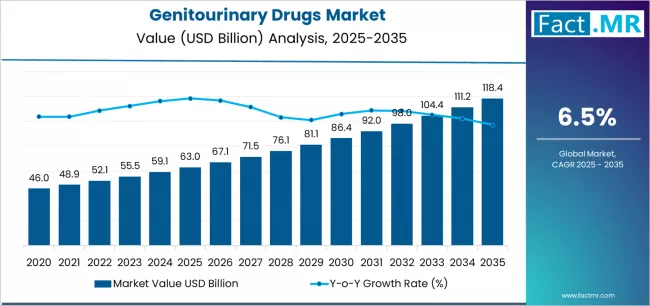
The global genitourinary drugs market is set for strong and sustained expansion over the next decade, fueled by the rising prevalence of urinary and reproductive system disorders, increasing aging populations, and continuous advancements in pharmaceutical therapies. According to a new study by Fact.MR, the market is projected to grow from USD 63.0 billion in 2025 to approximately USD 118.4 billion by 2035, registering an absolute growth of USD 55.4 billion during the forecast period.
This represents a total market expansion of 87.9%, with the industry expected to grow at a compound annual growth rate (CAGR) of 6.5% from 2025 to 2035. Increasing awareness of urological health, improved access to treatment, and growing investment in novel drug development are shaping long-term market momentum.
Strategic Market Drivers
Rising Prevalence of Genitourinary Disorders
The global incidence of conditions such as urinary tract infections (UTIs), chronic kidney disease (CKD), benign prostatic hyperplasia (BPH), overactive bladder (OAB), erectile dysfunction (ED), and interstitial cystitis is rising steadily. Aging demographics, lifestyle-related risk factors, and increased diagnosis rates are driving demand for long-term pharmacological treatments.
Expanding Geriatric Population
Older adults are more susceptible to genitourinary disorders due to hormonal changes, weakened immune systems, and chronic comorbidities. The rapidly growing geriatric population—particularly in North America, Europe, and East Asia—is significantly increasing prescription volumes for genitourinary drugs.
Browse Full Report: https://www.factmr.com/report/genitourinary-drugs-market
Advancements in Drug Development & Precision Medicine
Innovations in biologics, targeted therapies, hormone-based treatments, and combination drugs are improving treatment efficacy and patient outcomes. Precision medicine approaches are enabling more personalized therapies for complex urological and reproductive conditions.
Improved Healthcare Access & Awareness
Rising healthcare expenditure, improved diagnostic capabilities, and government-led health awareness initiatives are encouraging early diagnosis and timely treatment of genitourinary diseases, especially in emerging economies.
Therapeutic Area Expansion Fuels Market Growth
Urology Segment Leads Demand
Urological drugs—used for treating BPH, OAB, UTIs, kidney disorders, and urinary incontinence—continue to dominate market revenue. Increasing male urology concerns and higher diagnosis rates are key contributors.
Sexual & Reproductive Health Medications Gain Traction
Drugs targeting erectile dysfunction, infertility, and hormonal disorders are experiencing rising adoption due to increased awareness, reduced social stigma, and expanding online pharmacy channels.
Chronic Kidney Disease & Dialysis-Related Treatments
The growing global burden of diabetes and hypertension is increasing CKD prevalence, driving demand for nephrology drugs, immunosuppressants, and supportive therapies.
Regional Growth Highlights
North America: Strong R&D and High Treatment Adoption
North America holds a leading share of the global market due to advanced healthcare infrastructure, strong pharmaceutical R&D investment, and high awareness of urological health. The U.S. remains the largest contributor, supported by favorable reimbursement policies and rapid drug approvals.
Europe: Aging Population and Regulatory Support
Europe’s expanding elderly population and rising chronic disease burden are fueling demand. Countries such as Germany, France, Italy, and the U.K. benefit from strong public healthcare systems and continuous innovation in urology and nephrology treatments.
East Asia: Rapid Healthcare Modernization
Japan, China, and South Korea are witnessing rapid growth due to improving healthcare access, rising diagnosis rates, and government-backed healthcare reforms. Increasing investment in specialty drugs further supports regional expansion.
Emerging Markets: Untapped Growth Potential
India, Southeast Asia, Latin America, and the Middle East are emerging as high-growth markets due to:
- Expanding healthcare infrastructure
- Rising urbanization and lifestyle-related disorders
- Growing pharmaceutical manufacturing capacity
Market Segmentation Insights
By Drug Class
- Antibiotics & Antimicrobials – Dominant for UTI treatment
- Hormonal Therapy Drugs – High demand in reproductive health
- Alpha-blockers & PDE5 inhibitors – Widely used for BPH and ED
- Immunosuppressants – Critical for kidney disease management
By Indication
- Urinary Tract Infections
- Benign Prostatic Hyperplasia
- Chronic Kidney Disease
- Erectile Dysfunction
- Overactive Bladder
- Interstitial Cystitis
By Distribution Channel
- Hospital Pharmacies
- Retail Pharmacies
- Online Pharmacies – Fastest-growing segment due to convenience and privacy
Challenges Impacting Market Growth
High Cost of Advanced Therapies
Biologic drugs and specialty treatments often come with high costs, limiting accessibility in price-sensitive regions.
Side Effects & Long-Term Drug Use Concerns
Certain genitourinary medications may cause adverse effects, impacting patient compliance and long-term therapy adoption.
Regulatory and Approval Complexities
Strict regulatory requirements for new drug approvals can slow market entry and increase development costs.
Competitive Landscape
The genitourinary drugs market is moderately competitive, with leading pharmaceutical companies focusing on new drug approvals, patent extensions, geographic expansion, and strategic collaborations.
Key Companies Profiled
- Pfizer Inc.
- Johnson & Johnson
- GlaxoSmithKline plc
- AstraZeneca
- Eli Lilly and Company
- Merck & Co., Inc.
- Bayer AG
- Sanofi
- AbbVie Inc.
- Astellas Pharma
Companies are actively investing in novel formulations, extended-release drugs, biologics, and digital health integration to strengthen their market position.
Recent Developments
- 2024: Increased approvals for next-generation urology drugs with improved safety profiles
- 2023: Expansion of online pharmacy platforms for discreet genitourinary treatments
- 2022: Strategic collaborations between pharma companies and research institutes for kidney disease therapies
Future Outlook: Sustained Growth Through Therapeutic Innovation
The global genitourinary drugs market is poised for consistent growth through 2035, supported by:
- Rising chronic disease prevalence
- Aging global population
- Innovation in targeted and biologic therapies
- Improved healthcare access in emerging economies
- Increased focus on patient-centric treatment approaches
As pharmaceutical companies continue to advance treatment efficacy and expand global reach, the genitourinary drugs market is expected to remain a vital and high-growth segment of the global healthcare industry.