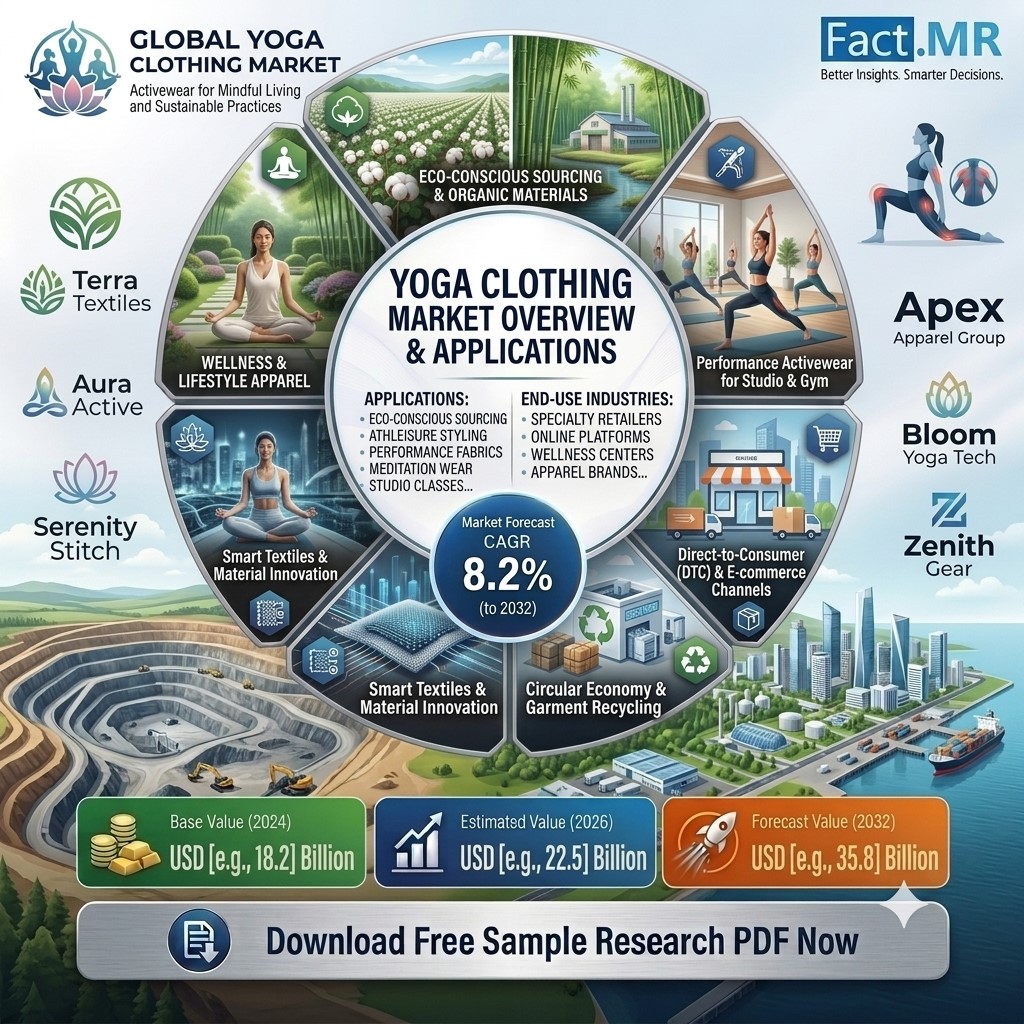
Rockville, MD., October 1, 2026 — The Yoga Clothing Market is projected to rise from USD 56.7 billion in 2026 to USD 114.6 billion by 2036, advancing at a 7.3% CAGR, according to Fact.MR. The market crossed USD 52.8 billion in 2025 and is expected to create an incremental revenue opportunity of USD 57.9 billion between 2026 and 2036.
India is projected to record the fastest growth among the seven countries analyzed, with an 11.6% CAGR through 2036. Japan is expected to record the lowest growth at 6.8%. Studio sessions account for 42.4% of the market by activity format in 2026, while women represent 73.1% of demand by end user.
Get detailed market forecasts, competitive benchmarking, and pricing trends
Yoga practice supports repeat apparel purchases
The Yoga Clothing Market covers tops, bottoms, outerwear, and accessories designed for stretch movement, sweat control, comfort, and repeated washing. Products are sold across mass, mid-range, premium, and luxury price tiers through specialty stores, online channels, hypermarkets, and supermarkets.
Why now? Yoga participation is supporting apparel demand across studio sessions and home routines. The Press Information Bureau reported that 24.53 crore people joined International Day of Yoga celebrations worldwide in 2024. Fact.MR links this participation base with recurring apparel requirements within the yoga practice ecosystem.
Extractable fact: Yoga clothing is apparel designed for yoga practice across studio sessions, home routines, outdoor practice, and travel use, with products focused on stretch movement, sweat control, and comfort.
The World Health Organization reported in June 2024 that 31% of adults were not meeting recommended activity levels. Fact.MR identifies wellness participation, repeat studio use, home yoga routines, and online apparel discovery as factors shaping demand.
Top wear and polyester hold major positions
Top wear is projected to account for 23.7% of the market in 2026. T-shirts and sports bras see regular replacement because sweat exposure and repeated washing can shorten garment life. Bottom wear remains important as leggings and pants depend on stretch recovery and opacity for repeat purchases.
Polyester is expected to hold 29.5% share in 2026. Fact.MR associates the material with wash durability, accessible pricing, stable color, and quick drying across mass-market yoga apparel. Nylon retains demand in premium leggings where smooth feel and stretch recovery influence purchasing.
Women are projected to hold 73.1% share in 2026, with leggings and sports bras forming a central purchase set. Mass-price apparel accounts for 50.7%, as affordable tops and leggings support consumers entering yoga routines.
Specialty stores are forecast to capture 33.6% share in 2026. Consumers can check garment fit and fabric before purchasing, while online channels benefit from product reviews and repeat orders after shoppers establish preferred sizes and materials. The U.S. Census Bureau reported that e-commerce represented 16.9% of U.S. retail sales during the first quarter of 2026.
India records the fastest country growth
India is projected to expand at an 11.6% CAGR from 2026 to 2036. Fact.MR attributes this trajectory to public yoga programs and domestic wellness apparel labels, with government-backed promotion supporting community and school yoga activity.
Canada follows at 9.1% CAGR, supported by seasonal exercise habits and demand for layered tops and warm leggings. The United Kingdom is projected to grow at 8.7%, with boutique studios and online activewear retail influencing purchasing patterns.
China is forecast to advance at 8.6% CAGR. lululemon reported that China Mainland revenue represented 13% of total revenue in 2024, providing a specific indicator of premium activewear demand in the market.
Germany is expected to grow at 7.9%, while the United States is projected at 7.1%. Japan records the lowest country CAGR in the report at 6.8%, with comfort-focused apparel supporting demand among low-impact exercise users.
Competitive landscape
Key companies profiled in the Yoga Clothing Market include lululemon athletica inc., Alo Yoga LLC, Athleta LLC, Beyond Yoga, Nike Inc., Adidas AG, H&M Move, and Vuori Inc.
lululemon ended fiscal 2024 with 767 company-operated stores. Alo Yoga and Vuori use studio culture and community events to build customer engagement, while value-focused retailers compete through scale and faster product refresh cycles.
Shambhu Nath Jha, Principal Consultant at Fact.MR, said, “CXOs will see yoga clothing demand shift toward comfort-focused fabrics and repeat purchase apparel. Studio practice, home yoga routines and online retail channels are expanding purchases beyond basic activewear replacement.”
Fact.MR’s analysis covers more than 40 countries and evaluates the market by product, material, end user, price tier, distribution channel, and activity format. The research uses company disclosures, apparel pricing reviews, public fitness participation data, and primary interviews with industry participants.
Top Reports:
Waste Management Equipment Market
About Fact.MR
Fact.MR is a market research and consulting firm providing syndicated and custom research across industries and geographies. Its research combines primary interviews, secondary research, market modeling, and data validation to support business decisions.