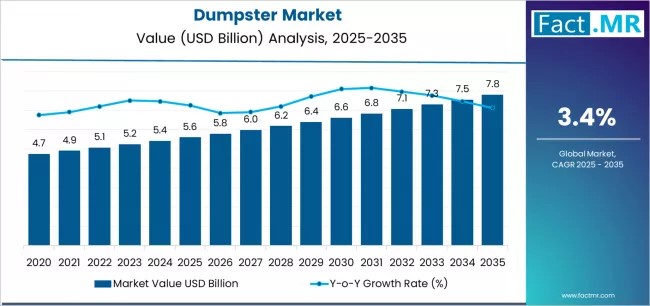
With rapid urbanization, industrial expansion, and rising environmental awareness, effective waste management has become a global priority. At the center of this evolving ecosystem is the dumpster market, which plays a vital role in collecting, storing, and transporting waste across residential, commercial, and industrial sectors. As cities grow and sustainability initiatives gain traction, the demand for efficient, durable, and innovative waste handling solutions continues to rise, positioning dumpsters as essential infrastructure in modern waste management systems.
Market Overview
The dumpster market includes a wide range of waste containers designed to handle different types of waste, including municipal solid waste, construction debris, industrial waste, and recyclable materials. Dumpsters are available in various sizes, designs, and materials, catering to diverse end-user requirements.
Common types include front-load dumpsters, rear-load dumpsters, roll-off containers, and specialized dumpsters for recycling or hazardous waste. Each type is designed for specific applications, offering flexibility and efficiency in waste collection and disposal.
Materials such as steel and high-density plastics are widely used in dumpster manufacturing, ensuring durability and resistance to harsh environmental conditions. Steel dumpsters are particularly favored for heavy-duty applications, while plastic variants are gaining popularity for their lightweight and corrosion-resistant properties.
The market is driven by increasing waste generation, stricter environmental regulations, and the growing adoption of organized waste management practices. Governments and municipalities are investing in improved waste collection infrastructure, while private waste management companies are expanding their fleets to meet rising demand.
Regional Insights
The dumpster market exhibits varied growth patterns across different regions, influenced by levels of urban development, regulatory frameworks, and waste management practices.
North America remains a mature market, characterized by well-established waste management systems and high adoption of advanced dumpster solutions. The region emphasizes recycling and sustainability, driving demand for specialized dumpsters designed for waste segregation.
Europe follows closely, with strong environmental regulations and a focus on circular economy principles. Countries in this region are actively promoting recycling and waste reduction, leading to increased use of innovative dumpster designs that support efficient sorting and disposal.
Asia-Pacific is emerging as a high-growth region, fueled by rapid urbanization, population growth, and expanding industrial activities. Governments in countries such as India and China are implementing large-scale waste management initiatives, creating significant opportunities for dumpster manufacturers and service providers.
Other regions, including Latin America and the Middle East, are also witnessing steady growth as they invest in improving waste management infrastructure and addressing environmental challenges.
Key Trends & Forecast
The dumpster market is evolving in response to changing environmental priorities and technological advancements.
One of the key trends is the integration of smart technologies into dumpsters. Smart dumpsters equipped with sensors can monitor fill levels in real time, enabling optimized collection routes and reducing operational costs. This technology is particularly valuable in urban areas where efficient waste collection is critical.
Sustainability is another major focus area. Manufacturers are developing eco-friendly dumpsters using recyclable materials and designs that facilitate waste segregation. The push toward zero-waste initiatives is encouraging the adoption of dumpsters that support recycling and composting.
The construction and demolition sector is also driving demand for roll-off dumpsters, which are ideal for handling large volumes of debris. As infrastructure development projects increase globally, the need for robust waste handling solutions continues to grow.
Additionally, there is a rising emphasis on aesthetics and space optimization, especially in urban and residential settings. Compact and visually appealing dumpster designs are gaining popularity, aligning with modern urban planning requirements.
Automation and digitalization are further transforming the market, with waste management companies leveraging data analytics to improve efficiency and service quality.
Applications & End-Use Outlook
Dumpsters are widely used across various sectors, each with specific waste management needs. In the residential sector, dumpsters support community waste collection and recycling programs, ensuring efficient disposal of household waste.
The commercial sector, including retail stores, restaurants, and office complexes, relies heavily on dumpsters for managing daily waste generation. These businesses often require customized solutions to handle different types of waste, including organic and recyclable materials.
The industrial sector represents a significant end-user segment, with factories and manufacturing units generating large volumes of waste that require specialized handling. Heavy-duty dumpsters are essential in these environments to ensure safe and efficient waste disposal.
The construction and demolition sector is another major contributor to market demand. Roll-off dumpsters are commonly used at construction sites to manage debris, including concrete, wood, and metal, supporting efficient site operations and compliance with environmental regulations.
Public sector organizations, including municipalities and government agencies, also play a key role in driving demand. Their investments in waste management infrastructure and sustainability initiatives are crucial for market growth.
Conclusion
The dumpster market is an integral part of the global waste management ecosystem, supporting efficient and sustainable waste handling across diverse sectors. As urbanization continues and environmental concerns intensify, the importance of reliable and innovative dumpster solutions will only increase.
Advancements in technology, coupled with a strong focus on sustainability, are shaping the future of the market. Smart dumpsters, eco-friendly materials, and improved design features are transforming traditional waste management practices, making them more efficient and environmentally responsible.
For businesses and municipalities, investing in modern dumpster solutions is not just about managing waste—it is about contributing to a cleaner, more sustainable future. As the market continues to evolve, stakeholders who embrace innovation and prioritize sustainability will be well-positioned to capitalize on emerging opportunities.
Browse Full Report – https://www.factmr.com/report/dumpster-market