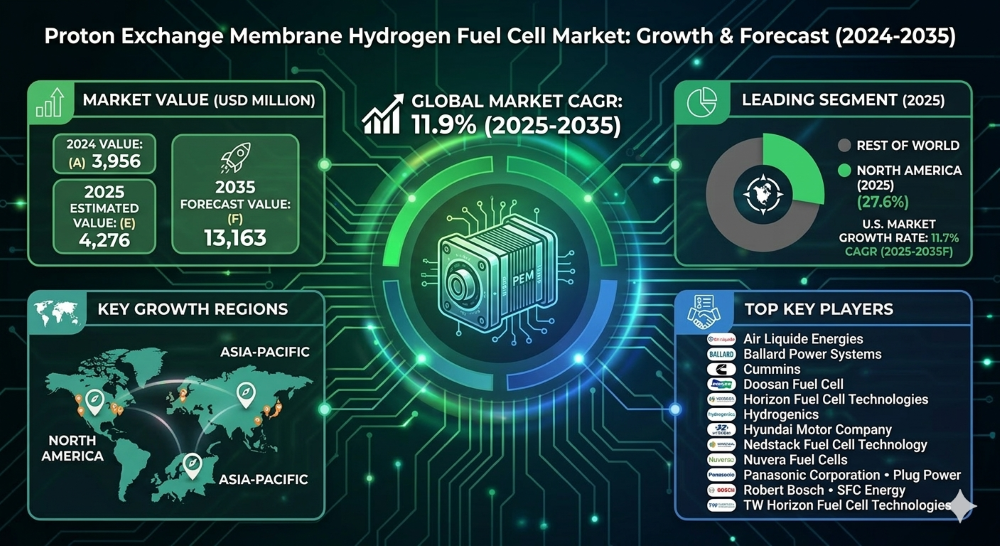
The Proton Exchange Membrane (PEM) hydrogen fuel cell market is emerging as a key component of the global transition toward clean and sustainable energy solutions. PEM fuel cells are widely recognized for their ability to convert hydrogen into electricity efficiently while producing only water and heat as byproducts. This environmentally friendly technology is gaining attention across industries seeking to reduce carbon emissions and improve energy efficiency.
As governments, industries, and energy providers focus on decarbonization and renewable energy adoption, hydrogen fuel cell technologies are becoming increasingly important. Proton exchange membrane fuel cells, in particular, are valued for their compact design, quick start-up capabilities, and high efficiency. These characteristics make them suitable for various applications, including transportation, stationary power generation, and portable power systems. The growing emphasis on sustainable energy infrastructure is expected to drive the expansion of the PEM hydrogen fuel cell market.
Market Overview
Proton exchange membrane hydrogen fuel cells are electrochemical devices that generate electricity through a chemical reaction between hydrogen and oxygen. The system uses a specialized polymer membrane that allows protons to pass through while blocking electrons. This process creates an electrical current that can be used to power vehicles, equipment, or stationary energy systems.
One of the major advantages of PEM fuel cells is their ability to operate at relatively low temperatures while delivering high power density. This feature makes them particularly suitable for applications that require rapid start-up and efficient energy conversion. In addition, PEM fuel cells offer quiet operation and minimal environmental impact compared to traditional combustion-based power generation systems.
Manufacturers are investing heavily in research and development to improve fuel cell performance, durability, and cost efficiency. Advances in catalyst materials, membrane technology, and system integration are helping enhance the overall efficiency of PEM fuel cells. As a result, industries are increasingly adopting this technology as part of their clean energy strategies.
Regional Insights
The proton exchange membrane hydrogen fuel cell market is experiencing varying levels of growth across different regions, influenced by government policies, technological advancements, and investments in hydrogen infrastructure.
North America represents a significant market for PEM hydrogen fuel cells due to strong research initiatives, supportive government policies, and increasing investments in clean energy technologies. The region’s focus on reducing carbon emissions and promoting sustainable transportation is driving the adoption of hydrogen fuel cell systems.
Europe is also playing a crucial role in advancing hydrogen energy technologies. Governments across the region are implementing policies that support hydrogen development and promote the use of fuel cell systems in transportation and energy sectors. The emphasis on achieving climate neutrality and reducing greenhouse gas emissions is encouraging the expansion of hydrogen fuel cell projects.
The Asia-Pacific region is emerging as a major growth hub for the PEM hydrogen fuel cell market. Countries such as Japan, South Korea, and China are heavily investing in hydrogen energy infrastructure and fuel cell technologies. These nations are promoting hydrogen-powered vehicles and energy systems as part of their long-term sustainability strategies.
Other regions, including the Middle East and parts of Latin America, are gradually exploring hydrogen energy solutions as they seek to diversify their energy sources and reduce reliance on fossil fuels.
Key Trends & Forecast
Several technological and industry trends are shaping the development of the proton exchange membrane hydrogen fuel cell market.
One of the most significant trends is the increasing adoption of hydrogen-powered vehicles. Automakers and transportation companies are exploring fuel cell technologies as an alternative to conventional internal combustion engines and battery-powered systems. PEM fuel cells provide longer driving ranges and faster refueling times, making them attractive for commercial and heavy-duty transportation applications.
Another key trend is the expansion of hydrogen infrastructure, including hydrogen production facilities and refueling stations. Governments and private companies are investing in infrastructure development to support the growing use of hydrogen fuel cell technologies. These investments are expected to accelerate the commercialization of PEM fuel cell systems.
Advancements in material science and fuel cell design are also contributing to market growth. Researchers are working on improving membrane durability, reducing catalyst costs, and enhancing system efficiency. These innovations are expected to make PEM fuel cells more affordable and accessible for a wider range of applications.
In addition, collaborations between technology companies, energy providers, and automotive manufacturers are playing a crucial role in advancing fuel cell technologies. Strategic partnerships are helping accelerate research efforts and facilitate the deployment of hydrogen energy solutions.
Applications & End-Use Outlook
Proton exchange membrane hydrogen fuel cells are used across several industries due to their versatility and environmental benefits.
The transportation sector is one of the largest application areas for PEM fuel cells. Hydrogen-powered vehicles, including cars, buses, and trucks, rely on fuel cell systems to generate electricity that powers electric motors. These vehicles offer zero-emission operation and are gaining popularity as part of global efforts to reduce transportation-related emissions.
Stationary power generation is another important application for PEM fuel cells. These systems can provide reliable backup power for commercial buildings, data centers, hospitals, and critical infrastructure facilities. Their ability to deliver clean and efficient energy makes them an attractive alternative to conventional backup power solutions.
Portable power applications are also expanding as industries seek compact and efficient energy solutions. PEM fuel cells are used in portable generators, remote power systems, and specialized equipment that require reliable energy in off-grid environments.
Additionally, industrial sectors are exploring the use of hydrogen fuel cells to support energy-intensive operations while reducing environmental impact. The versatility of PEM fuel cell technology makes it suitable for a wide range of energy applications.
Conclusion
The proton exchange membrane hydrogen fuel cell market is becoming a vital part of the global transition toward sustainable and low-carbon energy systems. With growing concerns about climate change and the need for cleaner energy alternatives, hydrogen fuel cell technologies are gaining significant attention from governments, industries, and investors.
Advancements in fuel cell technology, expanding hydrogen infrastructure, and increasing adoption across transportation and power generation sectors are expected to drive the growth of this market. As research and innovation continue to improve system efficiency and reduce costs, PEM hydrogen fuel cells are likely to play an increasingly important role in the future energy landscape.
Organizations that invest in hydrogen fuel cell technologies today will be better positioned to participate in the evolving clean energy economy. The proton exchange membrane hydrogen fuel cell market is therefore set to contribute significantly to the development of sustainable energy systems and the global effort to reduce carbon emissions.
Browse Full Report – https://www.factmr.com/report/proton-exchange-membrane-hydrogen-fuel-cell-market