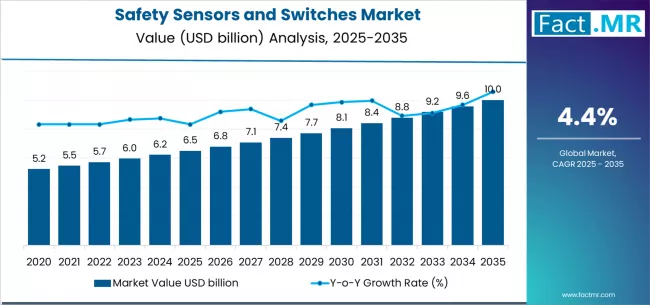
The safety sensors and switches market is gaining increasing importance as industries prioritize worker safety, operational efficiency, and regulatory compliance. Safety sensors and switches are critical components used to monitor machine operations and prevent accidents in industrial environments. As manufacturing facilities continue to adopt automation and smart production systems, the demand for reliable safety solutions is growing rapidly. These devices help detect hazardous conditions, stop machinery during emergencies, and ensure that safety standards are maintained across various industrial operations.
Market Overview:
Safety sensors and switches are designed to protect workers and equipment by monitoring machine activities and detecting unsafe conditions. These devices function by identifying motion, presence, pressure, or position changes in industrial machinery. When a potential risk is detected, the sensors or switches immediately trigger safety responses such as stopping the machine or activating warning signals.
These safety components are widely used in automated production environments where machines operate at high speed and require constant monitoring. By preventing accidents and reducing the likelihood of equipment damage, safety sensors and switches contribute significantly to improving workplace safety and operational reliability.
Modern industrial facilities are increasingly integrating safety technologies into their manufacturing processes. The expansion of smart factories and Industry 4.0 initiatives has further strengthened the role of safety sensors in industrial automation systems. Many advanced sensors now include digital connectivity features that allow real-time monitoring and integration with broader control systems. According to insights from market research reports, the growing focus on machine safety standards and workplace protection is a key factor supporting the adoption of these devices across industries.
Regional Insights:
The demand for safety sensors and switches is influenced by industrial development and safety regulations across different regions.
North America represents a prominent market due to strong industrial safety standards and the presence of well-established manufacturing sectors. Companies in this region place a high emphasis on compliance with safety regulations, which encourages the adoption of advanced safety technologies in production environments.
Europe also holds a significant share in the market, driven by strict worker safety regulations and advanced manufacturing infrastructure. Many European industries have implemented comprehensive safety management systems that rely on sensors and switches to maintain safe operational conditions.
The Asia-Pacific region is emerging as a rapidly expanding market due to industrial growth and increasing adoption of automation technologies. Countries such as China, Japan, South Korea, and India are witnessing rising investments in manufacturing facilities and industrial modernization. As these industries expand, the need for effective safety monitoring solutions is increasing.
Other regions including Latin America and the Middle East are also gradually adopting industrial safety technologies as manufacturing and infrastructure development activities continue to grow.
Key Trends & Forecast:
Several technological advancements and industry developments are shaping the future of the safety sensors and switches market.
One major trend is the growing integration of safety systems with industrial automation technologies. Modern factories are incorporating sensors and switches into centralized control systems that allow operators to monitor equipment performance and safety conditions from a single interface. This integration enhances operational efficiency while ensuring safer working environments.
Another important trend is the adoption of advanced sensing technologies. Manufacturers are developing more accurate and responsive sensors capable of detecting even minor changes in machine operations. These innovations improve the ability of safety systems to identify potential hazards before they lead to accidents.
Wireless connectivity and smart monitoring solutions are also becoming more common. Many modern safety sensors now include communication capabilities that allow them to transmit real-time data to control systems. This enables predictive maintenance, remote monitoring, and faster response to safety incidents.
Additionally, compact and energy-efficient safety devices are gaining popularity. Manufacturers are designing smaller sensors and switches that can be easily integrated into modern machinery without requiring extensive modifications. These compact devices are particularly useful in highly automated production lines where space and efficiency are critical factors.
The increasing adoption of robotics and automated production systems is another factor contributing to market growth. As robotic systems become more common in manufacturing environments, reliable safety sensors and switches are essential to prevent collisions and protect workers operating near automated equipment.
Applications & End-Use Outlook:
Safety sensors and switches are widely used across various industrial sectors where machinery operation involves potential risks.
Manufacturing Industry:
The manufacturing sector is one of the largest users of safety sensors and switches. These devices are commonly installed in production lines to monitor machine movements, detect abnormal conditions, and stop equipment when necessary. Industries such as automotive manufacturing rely heavily on these technologies to maintain safe production environments.
Automotive Sector:
Automotive production facilities involve complex assembly lines and robotic systems. Safety sensors and switches play a crucial role in protecting workers and ensuring the safe operation of automated equipment used in vehicle manufacturing.
Food and Beverage Industry:
Food processing plants use safety sensors and switches to ensure safe machinery operation while maintaining strict hygiene standards. These devices help monitor production equipment and prevent accidents that could disrupt processing operations.
Packaging Industry:
Packaging facilities operate high-speed machines that require reliable safety systems. Sensors and switches are used to detect obstructions, control machine movement, and prevent equipment damage during packaging operations.
Electronics Manufacturing:
In electronics production, precision and safety are equally important. Safety sensors help monitor delicate machinery and protect workers involved in assembling electronic components.
Energy and Utilities:
Industrial facilities within the energy sector also rely on safety sensors and switches to monitor equipment conditions and maintain operational safety in complex systems such as power plants and processing facilities.
Conclusion:
The safety sensors and switches market is becoming increasingly important as industries focus on improving workplace safety and operational reliability. With the expansion of automation and smart manufacturing technologies, the role of advanced safety monitoring solutions continues to grow.
Technological innovations such as intelligent sensing systems, wireless connectivity, and compact device designs are transforming the capabilities of safety equipment used in modern industries. These advancements are helping organizations reduce workplace risks, improve productivity, and comply with stringent safety regulations.
As industrial automation continues to expand globally, safety sensors and switches will remain essential components for maintaining safe and efficient manufacturing environments. Access to detailed market insights can help businesses understand emerging trends, technological developments, and strategic opportunities within the evolving safety sensors and switches market.
Browse Full Report – https://www.factmr.com/report/safety-sensors-and-switches-market