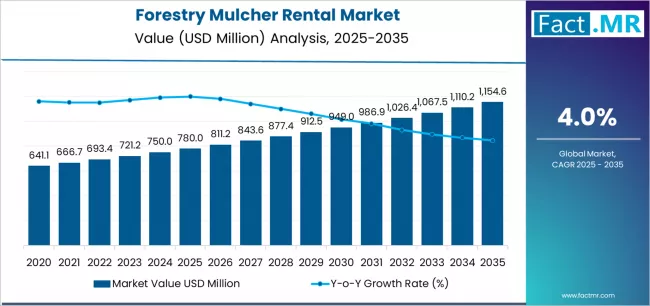
The Forestry Mulcher Rental Market is gaining strong momentum as demand rises for efficient land clearing, vegetation control, and sustainable forestry practices. With increasing infrastructure development, agricultural expansion, and wildfire risk management initiatives, forestry mulchers have become essential equipment across multiple industries. Renting these machines offers contractors and landowners a cost-effective and flexible solution, eliminating the high capital investment associated with equipment ownership.
As land development projects grow in scale and environmental regulations become stricter, rental services are emerging as a practical option for accessing advanced mulching technology without long-term financial commitments.
Market Overview
Forestry mulchers are powerful machines designed to clear trees, brush, shrubs, and vegetation by grinding them into mulch. These machines are widely used in forestry operations, right-of-way maintenance, agricultural land preparation, pipeline construction, and disaster recovery projects.
The rental market provides access to different types of mulchers, including skid steer mulchers, excavator-mounted mulchers, and dedicated forestry mulching machines. Rental providers typically offer short-term and long-term leasing options, maintenance support, and equipment upgrades to meet diverse project requirements.
Contractors increasingly prefer rental models due to fluctuating project demands and seasonal requirements. Instead of purchasing equipment that may remain idle during off-peak periods, renting allows businesses to optimize operational costs while maintaining productivity.
Key Growth Drivers
- Infrastructure and Land Development Projects
Expanding road networks, residential construction, renewable energy projects, and pipeline installations require extensive land clearing. Forestry mulchers provide a fast and environmentally responsible method for vegetation management, driving demand for rental services. - Wildfire Prevention and Vegetation Management
Growing concerns over wildfires have increased government and municipal efforts toward fuel reduction and forest management. Mulching helps reduce combustible materials and maintain safer landscapes, encouraging public and private sector investments in rental equipment. - Cost Efficiency and Flexibility
Purchasing forestry mulchers involves significant capital expenditure, maintenance costs, and storage requirements. Rental solutions allow contractors to scale equipment usage according to project size and duration, improving financial flexibility. - Technological Advancements
Modern forestry mulchers are equipped with enhanced cutting systems, improved fuel efficiency, remote-control capabilities, and advanced safety features. Rental companies frequently update their fleets, enabling users to access the latest technology without ownership risks.
Regional Insights
North America represents a prominent market due to extensive forestry activities, land development projects, and wildfire management programs. Strong demand from the construction and agriculture sectors supports rental growth in this region.
Europe follows with increasing emphasis on sustainable forestry practices and environmental conservation. Government regulations promoting responsible land management contribute to steady adoption of forestry mulching equipment.
The Asia-Pacific region is emerging as a high-growth area driven by infrastructure expansion, agricultural modernization, and rising awareness of efficient land-clearing methods. Rapid industrialization and rural development initiatives further stimulate market demand.
Other regions, including Latin America and parts of the Middle East & Africa, are experiencing gradual growth due to expanding agricultural operations and infrastructure investments.
Market Segmentation
The Forestry Mulcher Rental Market can be segmented based on equipment type, application, and end-use industry.
By Equipment Type:
- Skid steer mulchers
- Excavator-mounted mulchers
- Dedicated forestry mulchers
- Tractor-mounted mulchers
Skid steer mulchers are widely preferred for small to medium-scale projects due to their maneuverability and cost-effectiveness, while dedicated forestry mulchers are suitable for large-scale operations.
By Application:
- Land clearing
- Right-of-way maintenance
- Agricultural field preparation
- Forest management
- Disaster recovery
Land clearing and right-of-way maintenance represent major application areas, especially for transportation and utility infrastructure projects.
By End-Use Industry:
- Construction
- Agriculture
- Forestry
- Government and municipalities
- Energy and utilities
The construction and agriculture sectors account for a significant share of rental demand, driven by increasing development activities and farm expansion projects.
Emerging Trends
Sustainable Land Management Practices
Environmental sustainability is becoming a core focus in forestry operations. Mulching supports soil health by returning organic material to the ground, reducing erosion and minimizing environmental impact.
Equipment Modernization and Efficiency
Rental companies are investing in fuel-efficient and low-emission mulchers to align with environmental regulations. Advanced hydraulic systems and improved cutting technologies enhance productivity while reducing operational costs.
Digital Integration and Fleet Management
Telematics and digital monitoring systems are being integrated into rental fleets, enabling real-time performance tracking, preventive maintenance, and improved asset utilization.
Customized Rental Solutions
Flexible rental contracts, including daily, weekly, and long-term leasing options, allow contractors to tailor equipment access to specific project needs.
Applications & End-Use Outlook
Forestry mulcher rentals play a vital role in multiple industries. In construction, they facilitate site preparation by clearing vegetation quickly and efficiently. Agricultural users rely on mulchers to prepare land for cultivation and manage crop residue.
Energy and utility companies use mulching equipment for maintaining transmission lines, pipelines, and solar farm sites. Government agencies utilize mulchers for public land maintenance, wildfire mitigation, and environmental restoration projects.
The forestry sector remains a primary end user, focusing on forest thinning, habitat restoration, and sustainable land management practices.
Competitive Landscape
The market comprises regional rental providers and large equipment rental companies expanding their service portfolios. Key players focus on fleet expansion, technological upgrades, and strategic partnerships to strengthen their market presence.
Service quality, equipment availability, and maintenance support are critical competitive factors. Companies that offer well-maintained, technologically advanced machinery and flexible rental terms are better positioned to attract repeat customers.
Future Outlook
The Forestry Mulcher Rental Market is poised for steady growth as global land development and environmental management initiatives expand. Increasing awareness of sustainable vegetation control methods and the financial advantages of rental models will continue to drive market demand.
Technological innovation, regulatory compliance, and rising infrastructure investments are expected to shape the future landscape of this market. As industries prioritize efficiency, cost control, and environmental responsibility, forestry mulcher rentals will remain an essential component of modern land management strategies.
Conclusion
The Forestry Mulcher Rental Market supports critical activities across construction, agriculture, forestry, and infrastructure sectors. By providing flexible access to advanced mulching equipment, rental services enable efficient land clearing while promoting sustainable practices. As global development accelerates and environmental considerations become more prominent, the demand for forestry mulcher rentals is set to grow steadily in the years ahead.
Browse Full Report – https://www.factmr.com/report/forestry-mulcher-rental-market