The water truck rental market is gaining increasing prominence across global infrastructure, industrial, and municipal sectors. As construction, mining, agriculture, and urban development activities continue to expand, the demand for flexible and cost-effective water transportation solutions has surged. Unlike owning a fleet of specialized trucks — which requires high capital investment and maintenance — rental services offer businesses operational agility and access to modern equipment without long-term commitments.
At its core, water truck rental involves providing specialized vehicles equipped to transport, distribute, and spray water for various applications. These trucks play a pivotal role in dust control, soil compaction, irrigation, firefighting support, and emergency water supply — making them indispensable tools for modern infrastructure development.
Market Dynamics and Growth Drivers
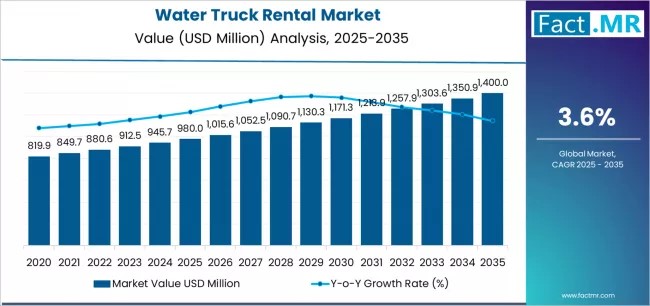
The global water truck rental market is expected to witness steady expansion over the coming years, supported by growing investments in infrastructure and industrial development. Rental options allow companies to optimize project logistics while keeping operational costs manageable, making them an attractive alternative to ownership.
One of the primary growth drivers is the construction industry. Rapid urbanization, rising investments in road networks, residential complexes, and industrial facilities have increased the adoption of water trucks for dust suppression, soil stabilization, concrete curing, and site preparation. These applications are becoming increasingly essential in large-scale construction projects where regulatory compliance for environmental and safety standards is critical.
Another key driver is the expansion of mining and industrial sectors. Mining operations often require water trucks for dust control, equipment cooling, and material processing — particularly in remote areas where permanent water infrastructure is unavailable. By renting water trucks, mining companies can scale their operations efficiently while maintaining environmental and workplace safety standards.
Emergencies such as droughts and water scarcity also contribute to market growth. In regions facing water shortages, water truck services are frequently deployed to deliver potable water, support firefighting efforts, and assist in disaster response. This versatility significantly broadens the market’s scope and relevance.
Market Forecast and Future Outlook
The water truck rental market is poised for consistent growth, supported by rising infrastructure investments, expanding industrial applications, and ongoing urban development worldwide. Businesses are increasingly favoring rental solutions due to their flexibility and the ability to access advanced vehicles without heavy upfront expenditure.
Technological advancements are further enhancing the appeal of rental fleets. Many modern water trucks now feature GPS tracking, telematics, and remote monitoring capabilities that improve route planning, fleet utilization, and operational efficiency. These innovations enable service providers to deliver reliable and cost-effective solutions while helping clients streamline project execution.
Emerging economies, particularly across the Asia-Pacific region, are expected to create substantial opportunities for market participants. Countries experiencing rapid urban expansion are launching ambitious infrastructure projects, from highways to smart cities, all of which require dependable water transportation for dust control and soil treatment.
Meanwhile, mature markets such as North America and Europe continue to demonstrate stable demand, driven by established rental ecosystems, regulatory compliance requirements, and ongoing investments in public infrastructure. As environmental regulations become more stringent, the need for efficient and sustainable water distribution solutions is likely to intensify.
Key Market Segments
The water truck rental market can be segmented across several dimensions that highlight its adaptability to diverse operational needs.
By Capacity
- Below 5,000 liters – Widely used due to maneuverability and suitability for smaller job sites.
- 5,000–10,000 liters – Ideal for medium-scale construction and industrial applications.
- Above 10,000 liters – Designed for heavy-duty mining projects and large infrastructure developments.
By Application
- Construction – Represents a major share of the market, driven by continuous infrastructure development.
- Mining – A significant segment due to the water-intensive nature of mining activities.
- Agriculture and Others – Includes irrigation, landscaping, municipal services, and emergency water delivery.
This segmentation allows rental providers to tailor their offerings to specific industry requirements, whether supporting short-term construction projects or long-term industrial operations.
Regional Insights
Regional dynamics play a crucial role in shaping the adoption of water truck rental services.
- Asia-Pacific is emerging as one of the fastest-growing regions, fueled by large-scale infrastructure initiatives, industrial expansion, and increasing government investments in transportation and urban development.
- North America and Europe maintain strong market positions due to mature rental industries, strict environmental standards, and continuous infrastructure maintenance projects.
- Latin America, the Middle East, and Africa present promising growth potential as both public and private sectors invest in water management systems and construction activities.
These regional trends emphasize how economic development, policy frameworks, and industrial growth influence market demand globally.
Competitive Landscape
The water truck rental market features a mix of global and regional players competing on factors such as fleet size, technological capabilities, service quality, and geographic reach. Companies that maintain well-serviced fleets and offer flexible rental terms are better positioned to attract long-term clients.
Providers delivering value-added services — including fleet maintenance, operator support, and real-time monitoring — often gain a competitive edge. Such services not only enhance operational efficiency but also strengthen customer relationships and improve retention rates.
Strategic partnerships, fleet expansion, and investments in advanced vehicle technologies are expected to remain key competitive strategies as companies aim to meet evolving customer expectations.
Conclusion
The water truck rental market has become an essential component of modern infrastructure and industrial ecosystems. By enabling organizations to access specialized equipment without significant capital investment, rental services support efficient project execution while promoting cost control and operational flexibility.
As infrastructure projects grow in scale and environmental considerations become increasingly important, the demand for reliable water transportation solutions is expected to rise. With technological innovation, expanding urbanization, and sustained industrial growth shaping the future, the water truck rental market is well-positioned to deliver long-term opportunities for service providers and end users alike.
Browse Full Report: https://www.factmr.com/report/water-truck-rental-market