The Trencher Rental Market is gaining strong momentum as construction, utility, and infrastructure projects increasingly require efficient excavation solutions without the financial burden of equipment ownership. Trenchers—machines designed to dig trenches for pipelines, cables, drainage systems, and irrigation—have become indispensable across industries. However, purchasing such heavy equipment can be costly and impractical for short-term or project-based work. As a result, rental services are emerging as a preferred option, enabling businesses to access high-performance machinery while maintaining operational flexibility.
With global infrastructure expansion and growing urban development, the demand for trenching equipment is rising steadily. Rental providers are responding by offering modern fleets, flexible contracts, and value-added services that support both large-scale contractors and smaller project teams.
Market Overview
The trencher rental market revolves around providing specialized excavation equipment on a temporary basis to meet diverse project requirements. These machines are widely used for installing underground utilities such as water lines, gas pipes, fiber-optic cables, and electrical conduits. Rental services allow companies to deploy trenchers only when needed, avoiding long-term maintenance, storage, and depreciation costs.
Customers can choose from a variety of trenchers depending on soil conditions, trench depth, and project scale. From compact walk-behind models suitable for residential landscaping to heavy-duty chain and wheel trenchers designed for large infrastructure projects, rental fleets cater to a broad spectrum of operational needs.
The growing emphasis on cost control and project efficiency is accelerating the shift toward rental models. Organizations are increasingly prioritizing asset-light strategies that reduce capital expenditure while ensuring access to reliable equipment.
Key Market Drivers
Expanding Infrastructure Development
Rapid investments in infrastructure—particularly in transportation networks, telecommunications, and energy distribution—are major contributors to the growth of the trencher rental market. Underground utility installations require precision trenching, making these machines essential for modern construction projects. Rental solutions allow contractors to scale equipment usage according to project timelines without overinvesting in machinery.
Rising Utility Installation Projects
The ongoing expansion of broadband connectivity, smart grids, and pipeline networks has significantly increased the need for trenching equipment. As governments and private players work to modernize utility infrastructure, trenchers are being deployed for both urban and rural developments. Renting provides a practical approach for contractors managing multiple short-term projects across different locations.
Cost Savings and Financial Flexibility
Purchasing heavy excavation equipment involves substantial upfront investment along with ongoing maintenance expenses. Rental services help companies preserve capital and improve cash flow while gaining access to modern, well-maintained machines. This financial flexibility is particularly valuable for small and mid-sized contractors that must carefully manage project budgets.
Technological Advancements in Equipment
Modern trenchers are equipped with enhanced safety features, improved operator controls, and higher fuel efficiency. Some machines incorporate advanced monitoring systems that support predictive maintenance and optimize performance. Rental companies frequently update their fleets to remain competitive, ensuring customers benefit from the latest technological improvements without the need for ownership.
Market Segmentation
By Trencher Type
The trencher rental market includes several equipment categories designed for specific applications:
- Chain Trenchers: Known for their ability to cut through tough soil and rocky terrain, these machines are commonly used in large construction and pipeline projects.
- Wheel Trenchers: Designed for faster excavation in softer ground conditions, wheel trenchers are ideal for roadwork and utility installations requiring consistent trench widths.
- Micro and Walk-Behind Trenchers: Compact models are gaining popularity for residential projects, landscaping tasks, and confined job sites where maneuverability is essential.
This variety ensures that contractors can select equipment tailored to precise operational needs.
By Application
Construction remains one of the primary application areas for trencher rentals, driven by continuous development of residential, commercial, and industrial spaces. Utility installation is another major segment, as trenchers play a critical role in laying cables and pipelines efficiently.
Agricultural projects also contribute to demand, particularly for irrigation system installation and land drainage improvements. Additionally, landscaping professionals rely on trenchers for tasks such as edging and underground sprinkler placement.
Regional Insights
The trencher rental market demonstrates strong growth potential across multiple regions:
- North America maintains a leading position due to established rental ecosystems, ongoing infrastructure upgrades, and widespread adoption of advanced construction equipment.
- Europe benefits from steady investments in urban redevelopment and energy infrastructure, supporting consistent demand for trenching machinery.
- Asia-Pacific is emerging as a high-growth region, fueled by rapid urbanization, expanding telecommunications networks, and government-led infrastructure initiatives. Countries such as India and China are witnessing increased reliance on rental equipment to support large-scale projects.
- Latin America and the Middle East & Africa are also experiencing gradual growth as infrastructure modernization accelerates and construction activities expand.
These regional dynamics highlight the global relevance of trenching equipment rentals in supporting development projects.
Challenges Facing the Market
Despite promising growth prospects, the trencher rental market faces several operational challenges:
High Maintenance Requirements: Trenchers operate in demanding environments, leading to wear and tear that requires regular servicing. Rental providers must invest in maintenance programs to ensure equipment reliability and safety.
Skilled Operator Availability: Handling trenching equipment often requires trained operators. A shortage of skilled labor in some regions can impact project timelines and equipment utilization.
Logistics and Transportation: Moving heavy machinery between job sites can be complex and costly. Efficient logistics management is essential for rental companies aiming to deliver equipment promptly.
Market Competition: The presence of numerous rental providers increases competition, pushing companies to differentiate through service quality, fleet diversity, and pricing strategies.
Future Outlook
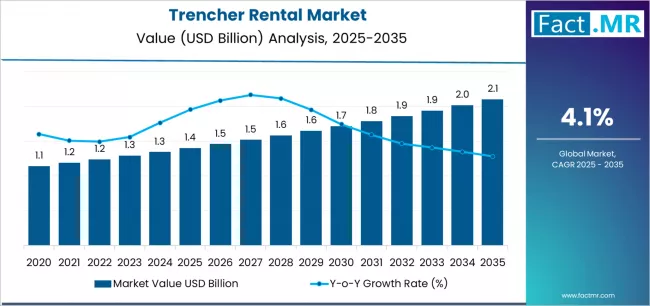
The Trencher Rental Market is expected to expand steadily as industries continue to prioritize efficiency, flexibility, and cost optimization. Growing infrastructure investments, combined with the expansion of utility networks and smart city initiatives, will sustain long-term demand for trenching equipment.
Rental models are likely to evolve further with the integration of digital platforms that streamline booking, tracking, and fleet management. As sustainability becomes a greater focus, equipment manufacturers and rental providers may also introduce more fuel-efficient and environmentally friendly machines.
Ultimately, businesses are recognizing that renting heavy equipment offers strategic advantages—allowing them to adapt quickly to changing project requirements while minimizing financial risk. Providers that focus on technological innovation, strong service networks, and customer-centric solutions will be well positioned to capitalize on emerging opportunities.
The trencher rental market, supported by ongoing construction and infrastructure transformation, is set to remain a vital component of modern project execution—helping industries dig deeper, work smarter, and build more efficiently.
Read More: https://www.factmr.com/report/trencher-rental-market