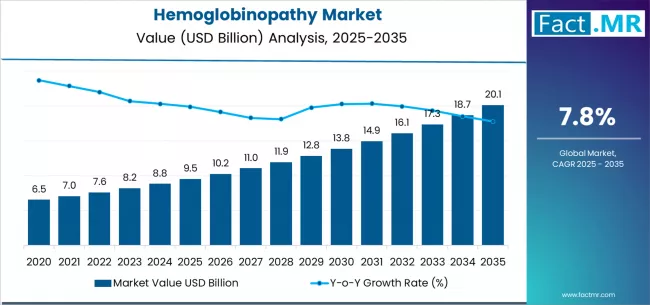
The global hemoglobinopathy market is set to witness strong and sustained growth over the next decade, driven by increasing prevalence of inherited blood disorders, improved diagnostic capabilities, and expanding access to advanced treatment options. According to a new analysis by Fact.MR, the market is projected to grow from USD 9.5 billion in 2025 to approximately USD 20.1 billion by 2035, registering an absolute increase of USD 10.6 billion over the forecast period.
This represents a total market growth of 111.6%, with the industry expected to expand at a robust CAGR of 7.8% from 2025 to 2035. Rising awareness of genetic screening, government-led healthcare initiatives, and innovation in gene and drug therapies are significantly accelerating market expansion worldwide.
Browse Full Report: https://www.factmr.com/report/hemoglobinopathy-market
Strategic Market Drivers
Rising Prevalence of Genetic Blood Disorders
Hemoglobinopathies—including thalassemia, sickle cell disease (SCD), and hemoglobin C disorders—are among the most common inherited genetic diseases globally. High birth rates in regions with elevated carrier frequency, combined with improved survival rates, are increasing long-term treatment demand.
Growing emphasis on early diagnosis and lifelong disease management is further supporting sustained market growth.
Expansion of Newborn Screening & Genetic Testing Programs
Governments and healthcare organizations are expanding newborn screening and prenatal genetic testing programs to enable early detection and timely intervention. Advances in molecular diagnostics and carrier screening technologies are improving accuracy and adoption rates.
Early diagnosis is proving critical in reducing disease severity and healthcare costs, boosting demand for hemoglobinopathy-related diagnostics and therapies.
Advancements in Treatment & Gene Therapy
Breakthroughs in gene therapy, stem cell transplantation, iron chelation therapy, and disease-modifying drugs are transforming hemoglobinopathy care. Novel therapies aimed at reducing transfusion dependency and improving quality of life are gaining regulatory approvals across major markets.
Ongoing clinical trials and R&D investments are expanding the treatment landscape and creating long-term growth opportunities.
Increasing Healthcare Access in Emerging Economies
Improving healthcare infrastructure, rising healthcare spending, and growing awareness in emerging economies are expanding access to diagnosis and treatment for hemoglobinopathy patients.
International collaborations, NGO initiatives, and public–private partnerships are further strengthening care delivery in high-burden regions.
Regional Growth Highlights
North America: Advanced Treatment Adoption & R&D Leadership
North America dominates the hemoglobinopathy market due to strong healthcare infrastructure, high awareness levels, and early adoption of advanced therapies. The U.S. leads in gene therapy research, orphan drug development, and reimbursement support for rare disease treatments.
Europe: Strong Policy Support & Screening Programs
European countries benefit from well-established newborn screening programs, strong regulatory frameworks, and government-backed rare disease initiatives. Germany, the U.K., France, and Italy are key contributors to regional growth.
Asia-Pacific: High Disease Burden Fuels Rapid Expansion
Asia-Pacific represents the fastest-growing regional market, driven by high prevalence of thalassemia and sickle cell disease in countries such as India, China, and Southeast Asia. Growing investments in diagnostics, awareness campaigns, and treatment accessibility are accelerating adoption.
Middle East & Africa: Increasing Awareness in High-Risk Populations
The Middle East and Africa are witnessing rising demand due to high carrier rates and improving healthcare outreach programs. Premarital screening initiatives and genetic counseling are playing a critical role in disease prevention and management.
Market Segmentation Insights
By Disease Type
- Thalassemia – Largest market share due to high global prevalence
- Sickle Cell Disease (SCD) – Fastest-growing segment with expanding treatment options
- Other Hemoglobin Disorders
By Treatment Type
- Blood Transfusions – Core treatment approach
- Iron Chelation Therapy – Essential for long-term patient management
- Gene Therapy & Stem Cell Transplantation – High-growth, next-generation treatments
- Pharmacological Therapies
By End User
- Hospitals & Specialty Clinics
- Diagnostic Laboratories
- Research & Academic Institutes
Challenges Impacting Market Growth
High Cost of Advanced Therapies
Gene therapy and stem cell transplantation involve high treatment costs, limiting accessibility in low- and middle-income regions.
Limited Awareness in Underserved Regions
Despite rising prevalence, lack of awareness and late diagnosis continue to hinder optimal disease management in certain regions.
Infrastructure & Skilled Workforce Gaps
Advanced treatment delivery requires specialized facilities and trained professionals, which remain limited in some emerging markets.
Competitive Landscape
The hemoglobinopathy market is moderately competitive, with companies focusing on innovative therapies, orphan drug development, and strategic collaborations to expand global reach.
Key Companies Profiled
- Novartis AG
- Bluebird Bio
- Pfizer Inc.
- Bristol Myers Squibb
- Vertex Pharmaceuticals
- Ionis Pharmaceuticals
- Sangamo Therapeutics
- Emmaus Life Sciences
These players are investing heavily in gene editing technologies, disease-modifying drugs, and next-generation diagnostics.
Recent Developments
- 2024: Expansion of gene therapy clinical trials targeting sickle cell disease and beta-thalassemia
- 2023: Increased approvals of novel iron chelation and disease-modifying therapies
- 2022: Governments expand newborn and premarital screening programs in high-risk region
Future Outlook: A Transformative Decade for Hemoglobinopathy Care
The next decade will mark a paradigm shift in hemoglobinopathy management, driven by:
- Rapid progress in gene and cell therapies
- Expansion of genetic screening initiatives
- Improved access to advanced treatments in emerging economies
- Strong regulatory support for rare disease drugs
- Growing focus on patient-centric and curative solutions
As healthcare systems worldwide prioritize early diagnosis, precision medicine, and long-term disease management, the global hemoglobinopathy market is poised for strong, sustained growth through 2035.