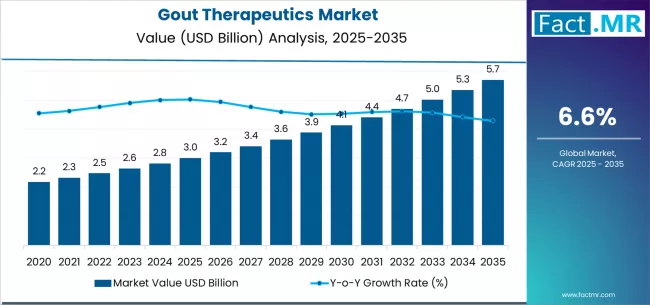
The global gout therapeutics market is experiencing steady growth. In 2025, the market is valued at USD 3.0 billion, and it is projected to reach USD 5.7 billion by 2035, adding approximately USD 2.7 billion in new revenue and expanding at a CAGR of 6.6% over the decade. This growth is driven by rising prevalence of hyperuricemia and gout, increased awareness about effective treatment strategies, improved healthcare infrastructure, and growing adoption of advanced therapies for both acute flare-ups and long-term urate management.
With changing lifestyles, higher rates of obesity, metabolic disorders, and sedentary living, gout is increasingly affecting both developed and emerging markets. Patients and healthcare providers are now focusing on evidence-based management strategies that combine rapid relief from acute attacks with long-term uric acid control to prevent recurrence and joint damage.
Quick Stats for Gout Therapeutics Market
-
Market Value (2025): USD 3.0 billion
-
Projected Market Value (2035): USD 5.7 billion
-
Forecast CAGR (2025–2035): 6.6%
-
Leading Product Class (2025): NSAIDs — ~ 41% share
-
Dominant Disease Segment (2025): Acute gout — ~ 58% share
-
Key Growth Regions: Asia Pacific, North America, Europe
-
Top Companies: Takeda Pharmaceutical, Novartis, Regeneron, AstraZeneca, and other leading pharmaceutical firms
To access the complete data tables and in-depth insights, request a Discount On The Report here: https://www.factmr.com/connectus/sample?flag=S&rep_id=12063
Market Drivers
1. Rising Prevalence of Gout and Hyperuricemia
As populations age and metabolic disorders like obesity, diabetes, and hypertension increase, gout incidence rises. This expands the patient base for both acute and long-term management therapies.
2. Demand for Comprehensive Disease Management
Gout therapy extends beyond treating painful flare-ups. Long-term urate-lowering therapies and preventive care are increasingly critical to avoid recurrent attacks, joint damage, and comorbidities. Physicians and patients are emphasizing a more holistic, sustained approach to management.
3. Advances in Therapeutic Options
While NSAIDs and corticosteroids remain standard for acute flares, newer urate-lowering drugs, biologics, and combination therapies are gaining traction, particularly for chronic gout patients or those with comorbid conditions.
4. Expanding Healthcare Access in Emerging Markets
Rising healthcare awareness and infrastructure development in regions like Asia Pacific enable greater access to prescription therapies and professional gout care, boosting market growth.
Market Segmentation & Revenue Sources — Current vs Future
Current Revenue Mix (“Now”):
-
NSAIDs (~ 41%) — widely used for acute flare management.
-
Acute Gout Treatment (~ 58% of patients treated) — current demand is driven primarily by flare relief.
-
Retail Pharmacies (~ 66% distribution) — majority of gout therapeutics are dispensed via traditional pharmacies.
-
Urate-Lowering Agents (~ 22%) and Corticosteroids (~ 18%) — smaller yet essential portions of the market for chronic or alternative treatments.
Expected Future Revenue Trends (“Next”):
-
Novel Biologics & Advanced Therapies (35–41%) — increasing acceptance for difficult or recurrent cases.
-
Personalized Medicine & Combination Therapies (25–31%) — tailored treatment plans targeting individual patient needs.
-
Prophylactic & Maintenance Treatments (30–36%) — emphasis on long-term uric acid control and flare prevention.
-
Digital Health & Adherence Tools (22–28%) — emerging tools to improve chronic therapy adherence.
-
Chronic Disease Management (38–44%) — shift toward long-term management rather than episodic flare treatment.
This shift reflects a broader healthcare trend toward long-term disease management, preventive care, and personalized treatment strategies.
Challenges
-
Patient Compliance: Chronic therapy adherence can be difficult, especially when symptoms are not constant.
-
Safety Concerns: NSAIDs and urate-lowering drugs may have side effects, influencing prescribing patterns.
-
Access and Affordability: In under-resourced regions, access to advanced therapies may be limited.
-
Need for Specialist Care: Effective long-term management often requires rheumatologists and ongoing monitoring.
Market Outlook
The gout therapeutics market is projected to maintain steady growth through 2035, driven by increasing awareness of long-term disease consequences, rising adoption of urate-lowering agents and biologics, and expanded access to healthcare. Personalized and preventive approaches, along with supportive digital tools, are expected to further strengthen patient adherence and outcomes. Overall, the market is positioned for sustainable expansion across both developed and emerging regions, providing opportunities for pharmaceutical companies, healthcare providers, and stakeholders to improve patient care and long-term disease management.
Browse Full Report: https://www.factmr.com/report/gout-therapeutics-market