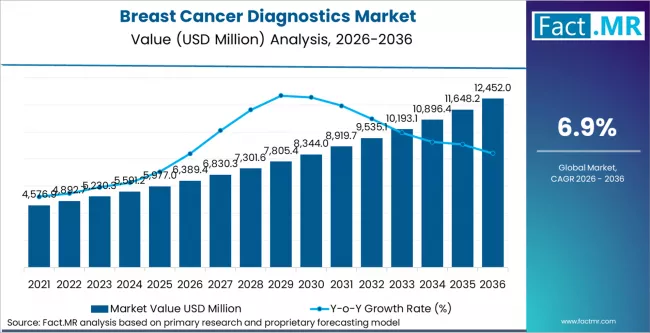
As healthcare systems worldwide prioritize early disease detection and improved patient outcomes, the breast cancer diagnostics market is gaining significant momentum. Breast cancer remains one of the most commonly diagnosed cancers among women, making timely and accurate diagnosis essential for effective treatment. Continuous advancements in diagnostic technologies, combined with increasing awareness and screening initiatives, are transforming the landscape of breast cancer detection and management.
Market Overview:
The breast cancer diagnostics market encompasses a wide range of technologies and procedures used to identify and monitor breast cancer. These include imaging techniques such as mammography, ultrasound, magnetic resonance imaging, and molecular diagnostics like biopsy, genetic testing, and biomarker analysis. The integration of advanced technologies has significantly improved the accuracy, speed, and reliability of diagnostic procedures.
Healthcare providers are increasingly adopting digital and automated solutions to enhance diagnostic efficiency. Artificial intelligence and machine learning are being incorporated into imaging systems to assist radiologists in detecting abnormalities at earlier stages. Additionally, the shift toward personalized medicine is encouraging the use of genetic and molecular diagnostics to tailor treatment strategies based on individual patient profiles.
Rising healthcare expenditure, improved access to medical facilities, and the expansion of diagnostic infrastructure are further supporting market growth. Governments and healthcare organizations are actively promoting regular screening programs, which is contributing to increased demand for diagnostic services.
Regional Insights:
North America holds a prominent position in the breast cancer diagnostics market, driven by advanced healthcare infrastructure, high awareness levels, and widespread adoption of screening programs. The region benefits from strong research and development activities and the presence of leading diagnostic technology providers.
Europe follows closely, supported by well-established healthcare systems and government initiatives focused on cancer prevention and early detection. Stringent regulatory frameworks and reimbursement policies are also encouraging the adoption of advanced diagnostic solutions.
The Asia-Pacific region is emerging as a rapidly growing market, fueled by increasing healthcare investments, rising awareness about breast cancer, and improving access to diagnostic services. Countries in this region are focusing on expanding screening programs and upgrading healthcare infrastructure to address the growing burden of cancer.
Key Trends & Forecast:
One of the most significant trends in the breast cancer diagnostics market is the growing adoption of digital mammography and three-dimensional imaging technologies. These advancements provide clearer and more detailed images, enabling earlier and more accurate detection of tumors.
Another key trend is the increasing use of artificial intelligence in diagnostic workflows. AI-powered tools are helping healthcare professionals analyze imaging data more efficiently, reducing the likelihood of human error and improving diagnostic accuracy. These technologies are particularly valuable in high-volume screening environments.
The rise of liquid biopsy is also transforming the market. This non-invasive diagnostic approach allows for the detection of cancer-related biomarkers in blood samples, offering a less invasive alternative to traditional tissue biopsies. It also enables continuous monitoring of disease progression and treatment response.
Genetic testing is gaining traction as well, with a growing focus on identifying individuals at high risk of developing breast cancer. This enables preventive measures and early intervention, which can significantly improve patient outcomes.
In addition, there is a strong emphasis on improving accessibility to diagnostic services. Mobile screening units and telemedicine solutions are being deployed to reach underserved and remote populations, ensuring that more individuals have access to early detection services.
Applications & End-Use Outlook:
The breast cancer diagnostics market serves a variety of applications, including screening, diagnosis, prognosis, and monitoring of treatment response. Screening remains the most critical application, as early detection significantly increases the chances of successful treatment.
Hospitals and diagnostic centers are the primary end users of breast cancer diagnostic technologies. These facilities are equipped with advanced imaging systems and skilled healthcare professionals, enabling comprehensive diagnostic services. The increasing number of specialized cancer care centers is further driving demand for diagnostic solutions.
Research institutions also play a vital role in the market, focusing on the development of innovative diagnostic technologies and the identification of new biomarkers. Their efforts are contributing to the advancement of precision medicine and improving the overall effectiveness of cancer care.
Additionally, the growing adoption of home-based and point-of-care diagnostic solutions is expanding the reach of breast cancer detection. These solutions provide convenience and accessibility, particularly for individuals who may face barriers to accessing traditional healthcare facilities.
Competitive Landscape:
The breast cancer diagnostics market is characterized by intense competition, with numerous global and regional players striving to innovate and expand their market presence. Companies are investing heavily in research and development to introduce advanced diagnostic technologies and improve existing solutions.
Strategic collaborations, partnerships, and acquisitions are common in this market, as organizations seek to strengthen their capabilities and broaden their product portfolios. The integration of digital technologies and data analytics is also a key focus area, enabling companies to offer more comprehensive and efficient diagnostic solutions.
Market participants are also emphasizing regulatory compliance and quality assurance to ensure the safety and reliability of their products. Continuous innovation and a strong focus on patient-centric solutions are essential for maintaining a competitive edge in this evolving market.
Conclusion:
The breast cancer diagnostics market is playing a crucial role in the global fight against cancer by enabling early detection and improving treatment outcomes. Advances in imaging technologies, molecular diagnostics, and artificial intelligence are transforming the way breast cancer is diagnosed and managed.
As awareness continues to grow and healthcare systems invest in expanding diagnostic capabilities, the market is expected to witness sustained growth. Organizations that prioritize innovation, accessibility, and precision care will be well-positioned to address the evolving needs of patients and healthcare providers.
Access to comprehensive market insights and strategic analysis can help stakeholders navigate this dynamic landscape, identify emerging opportunities, and contribute to the advancement of breast cancer diagnostics for better global health outcomes.
Browse Full Report: https://www.factmr.com/report/55/breast-cancer-diagnostics-market