As organizations increasingly adopt cloud computing, IoT devices, and remote work models, the traditional network perimeter is rapidly dissolving. This shift has made edge security a critical component of modern cybersecurity strategies. Edge security focuses on protecting data, applications, and users at or near the source of data generation—whether it’s a remote device, branch office, or edge server. With cyber threats becoming more sophisticated and distributed, businesses are prioritizing robust edge security solutions to safeguard their digital ecosystems and ensure uninterrupted operations.
Market Overview:
Edge security refers to a set of technologies and practices designed to secure distributed IT environments at the network edge. It includes solutions such as secure access service edge (SASE), zero trust network access (ZTNA), firewalls, secure web gateways, and intrusion detection systems. These tools work together to provide real-time threat detection, secure connectivity, and data protection across decentralized networks.
The market is driven by the rapid growth of connected devices and the increasing adoption of cloud-based services. As organizations move workloads outside traditional data centers, securing endpoints and edge locations has become essential. Additionally, the rise in cyberattacks targeting remote environments has heightened the need for advanced security frameworks that can operate effectively beyond centralized infrastructures.
Businesses are also embracing edge security to support digital transformation initiatives. From smart cities to industrial automation, edge computing environments require secure and scalable solutions to manage data and ensure compliance with evolving regulatory standards.
Regional Insights:
North America remains a dominant force in the edge security market, supported by early adoption of advanced technologies, a strong cybersecurity ecosystem, and the presence of major industry players. Organizations in the region are actively investing in innovative security solutions to address the complexities of distributed networks.
Europe follows closely, driven by stringent data protection regulations and increasing awareness of cybersecurity risks. Enterprises across sectors are focusing on implementing secure frameworks to comply with regulatory requirements and protect sensitive information.
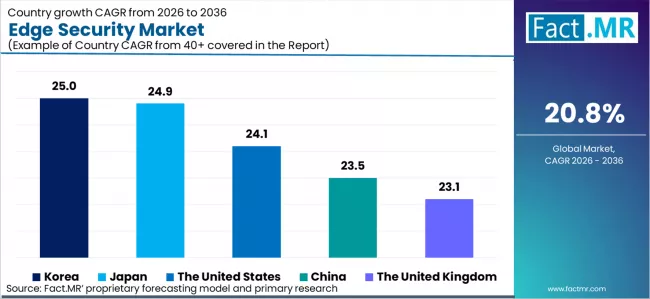
The Asia-Pacific region is emerging as a high-growth market, fueled by rapid digitalization, expanding internet penetration, and the proliferation of IoT devices. Countries such as China, India, Japan, and South Korea are witnessing increased demand for edge security solutions as businesses scale their digital infrastructure and adopt cloud-based services.
Key Trends & Forecast:
- Adoption of Zero Trust Architecture:
Organizations are shifting toward zero trust models, where every user and device must be verified before accessing network resources. This approach enhances security in distributed environments. - Integration of SASE Frameworks:
Secure Access Service Edge (SASE) is gaining traction as it combines networking and security functions into a unified cloud-based platform, simplifying management and improving performance. - Growth of IoT and Edge Devices:
The increasing number of connected devices is expanding the attack surface, driving demand for robust edge security solutions that can protect endpoints in real time. - AI and Machine Learning in Threat Detection:
Advanced analytics powered by AI and machine learning are being used to identify anomalies, predict threats, and automate response mechanisms. - Focus on Secure Remote Work Environments:
With the rise of hybrid and remote work models, organizations are investing in secure access solutions to protect employees accessing corporate networks from various locations.
Applications & End-Use Outlook:
Edge security solutions are widely adopted across industries that rely on distributed networks and real-time data processing.
- IT and Telecommunications:
These sectors require strong edge security to manage vast networks, ensure data integrity, and maintain service reliability. - Healthcare:
The growing use of connected medical devices and telemedicine platforms necessitates secure data transmission and patient privacy protection. - Retail and E-commerce:
Businesses use edge security to safeguard customer data, secure payment systems, and prevent cyber threats in digital transactions. - Manufacturing and Industrial IoT:
Edge security plays a crucial role in protecting connected machinery, ensuring operational continuity, and preventing cyberattacks on critical infrastructure. - BFSI (Banking, Financial Services, and Insurance):
Financial institutions rely on advanced security frameworks to protect sensitive financial data and maintain regulatory compliance.
End users include large enterprises and small to medium-sized businesses. While large enterprises are early adopters of advanced edge security solutions, small and medium enterprises are increasingly recognizing the importance of securing their digital assets as cyber threats become more widespread.
Competitive Landscape:
The edge security market is highly competitive, with key players focusing on innovation, strategic partnerships, and product integration. Companies are developing comprehensive security platforms that combine multiple functionalities into a single solution, enabling organizations to manage their security infrastructure more efficiently.
Investments in research and development are driving the introduction of advanced technologies such as AI-driven threat intelligence, automated incident response, and cloud-native security solutions. Additionally, collaborations between cybersecurity providers and cloud service companies are helping deliver integrated solutions that address evolving enterprise needs.
Conclusion:
The edge security market is becoming a cornerstone of modern cybersecurity strategies as organizations navigate the complexities of distributed and dynamic IT environments. With the increasing reliance on cloud computing, IoT, and remote connectivity, securing the network edge is no longer optional—it is essential.
As cyber threats continue to evolve, businesses must adopt proactive and scalable edge security solutions to protect their data, systems, and users. Leveraging comprehensive market
Browse Full Report – https://www.factmr.com/report/edge-security-market