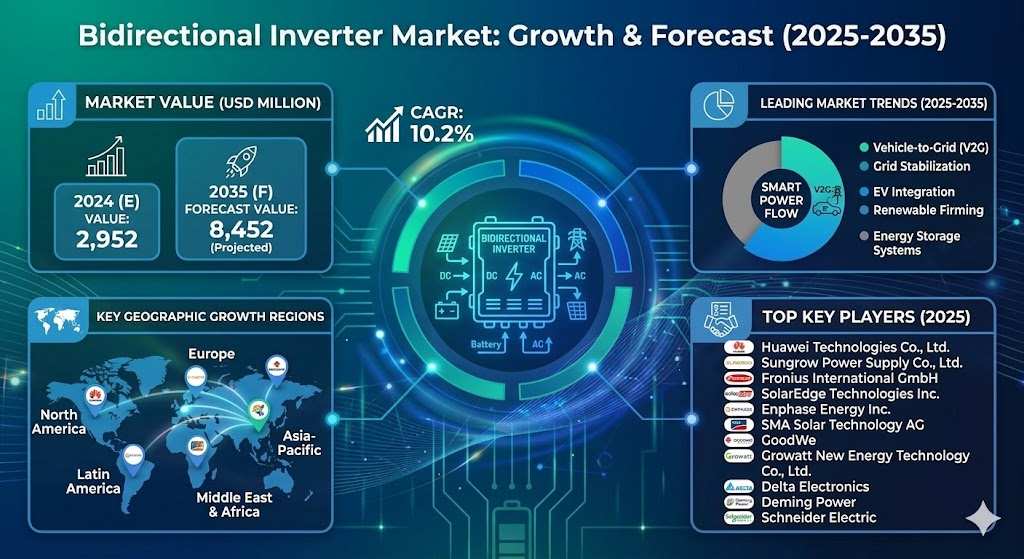
As the global energy landscape shifts toward sustainability and decentralization, the demand for advanced power management solutions is increasing rapidly. The bidirectional inverter market is emerging as a key enabler in this transition, supporting efficient energy flow between power sources and storage systems. These inverters play a critical role in modern energy ecosystems, particularly with the growing adoption of renewable energy and electric vehicles. Their ability to convert and manage power in two directions highlights their importance in building resilient and flexible energy infrastructures.
Market Overview:
Bidirectional inverters are advanced devices capable of converting direct current (DC) to alternating current (AC) and vice versa. This dual functionality allows them to not only supply power to electrical systems but also feed excess energy back into the grid or storage units. They are widely used in applications such as energy storage systems, electric vehicle charging, and renewable energy integration.
The market is experiencing steady growth due to increasing investments in renewable energy sources such as solar and wind power. As more households and industries adopt distributed energy systems, the need for efficient power conversion and energy management solutions is rising. Bidirectional inverters help optimize energy usage, reduce dependency on traditional power grids, and enhance overall energy efficiency.
Technological advancements are further driving market expansion, with manufacturers focusing on improving efficiency, reliability, and compatibility with various energy systems. The integration of smart technologies and digital controls is also enhancing the functionality of these inverters, making them more adaptable to evolving energy needs.
Regional Insights:
North America holds a significant share in the bidirectional inverter market, supported by strong adoption of renewable energy systems and increasing deployment of energy storage solutions. The region’s focus on grid modernization and sustainable energy practices is contributing to market growth.
Europe is also a key market, driven by ambitious renewable energy targets and supportive government policies. The widespread adoption of electric vehicles and energy-efficient technologies is further boosting demand for bidirectional inverters in the region.
Asia-Pacific is emerging as a rapidly growing market due to expanding renewable energy projects, rising electricity demand, and increasing investments in smart grid infrastructure. Countries in this region are focusing on energy security and sustainability, creating favorable conditions for the adoption of bidirectional inverters.
Key Trends & Forecast:
The bidirectional inverter market is being shaped by several important trends that are influencing its future growth. One of the most notable trends is the increasing adoption of energy storage systems. Bidirectional inverters play a crucial role in managing the flow of energy between batteries and power grids, making them essential for efficient energy storage solutions.
Another key trend is the rise of electric vehicles and vehicle-to-grid technology. Bidirectional inverters enable electric vehicles to not only draw power for charging but also supply energy back to the grid when needed. This capability is expected to play a significant role in balancing energy demand and supply in the future.
The integration of smart grid technologies is also driving demand for advanced inverters. These systems allow for real-time monitoring and control of energy flow, improving grid stability and efficiency. Manufacturers are increasingly incorporating features such as remote monitoring, automation, and advanced analytics into their products.
Sustainability and energy efficiency remain central to market development. Bidirectional inverters support the efficient use of renewable energy by enabling seamless energy exchange between different systems. This aligns with global efforts to reduce carbon emissions and promote cleaner energy solutions.
Looking ahead, the market is expected to witness continuous innovation, with a strong focus on enhancing performance, reducing costs, and expanding application areas.
Applications & End-Use Outlook:
Bidirectional inverters are widely used across various applications, reflecting their versatility and importance in modern energy systems. In residential settings, they are used in solar power systems and home energy storage solutions, allowing homeowners to store excess energy and use it when needed. This helps in reducing electricity costs and increasing energy independence.
In the commercial and industrial sectors, bidirectional inverters are used to optimize energy consumption and improve operational efficiency. They enable businesses to manage energy more effectively, reduce reliance on conventional power sources, and enhance sustainability efforts.
The electric vehicle sector represents a significant application area, where bidirectional inverters facilitate efficient charging and support vehicle-to-grid interactions. This not only improves the functionality of electric vehicles but also contributes to grid stability.
In utility-scale applications, these inverters are used in large renewable energy projects and grid energy storage systems. They help in balancing energy supply and demand, ensuring reliable and efficient power distribution.
Additionally, bidirectional inverters are increasingly being used in microgrids and off-grid systems, where they play a crucial role in managing energy flow and ensuring uninterrupted power supply.
Conclusion:
The bidirectional inverter market is set to play a pivotal role in the evolving energy landscape, driven by the growing adoption of renewable energy, energy storage systems, and electric vehicles. With continuous technological advancements and increasing emphasis on sustainability, these inverters are becoming essential components of modern energy infrastructure.
Organizations and consumers alike can benefit from the enhanced efficiency, flexibility, and reliability offered by bidirectional inverters. Access to comprehensive market insights and emerging trends can help stakeholders make informed decisions and capitalize on the opportunities in this dynamic and rapidly growing market.
Browse Full Report – https://www.factmr.com/report/bidirectional-inverter-market