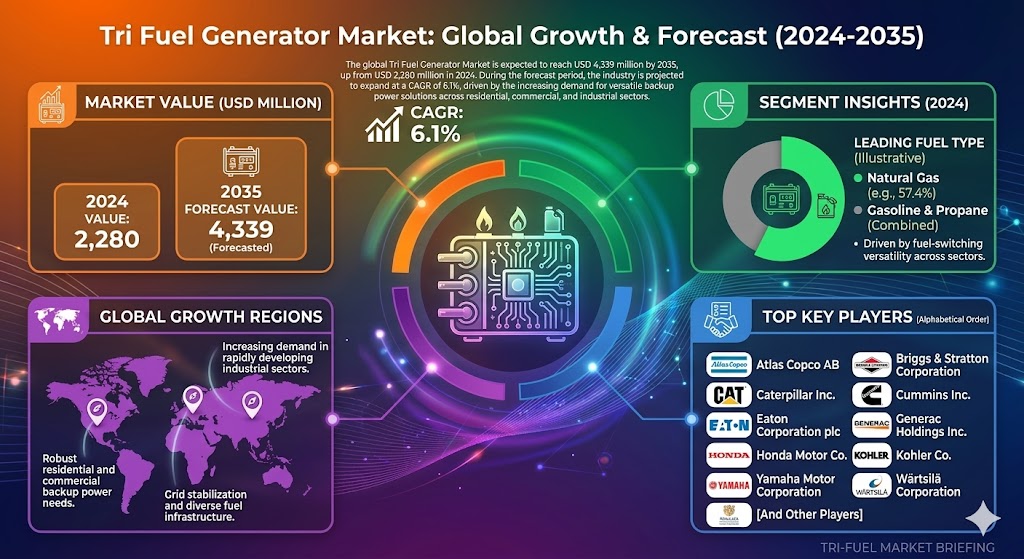
As the demand for reliable and adaptable power sources continues to rise, the tri fuel generator market is gaining significant traction. These generators, capable of operating on three different fuel types—typically gasoline, propane, and natural gas—offer enhanced flexibility and energy security. In an era marked by power uncertainties, natural disasters, and increasing energy needs, tri fuel generators are emerging as a practical solution for uninterrupted power supply. Their ability to switch between fuels based on availability and cost makes them an attractive option across residential, commercial, and industrial sectors.
Market Overview:
Tri fuel generators are designed to provide operational versatility by allowing users to choose from multiple fuel sources. This flexibility ensures continuous power generation even when one fuel type is unavailable or cost-prohibitive. These generators are widely used for backup power, emergency preparedness, and off-grid applications.
The market is driven by the growing need for reliable energy solutions, especially in regions prone to power outages or with limited access to stable electricity grids. Increasing awareness about energy resilience and preparedness is encouraging consumers and businesses to invest in multi-fuel generators.
Technological advancements have led to the development of more efficient and user-friendly tri fuel generators. Modern units are equipped with improved fuel switching mechanisms, enhanced safety features, and better emission control systems. Manufacturers are also focusing on compact designs and portability to cater to diverse user requirements.
The expanding adoption of alternative fuels, particularly propane and natural gas, is further supporting market growth. These fuels are often considered cleaner and more environmentally friendly compared to traditional gasoline, aligning with global sustainability goals.
Regional Insights:
North America holds a prominent position in the tri fuel generator market, driven by frequent weather-related power disruptions and a strong emphasis on emergency preparedness. Consumers in the region are increasingly adopting flexible power solutions to ensure energy security during outages.
Europe is witnessing steady growth, supported by a focus on energy efficiency and environmental sustainability. The adoption of cleaner fuel options and the integration of advanced generator technologies are contributing to market expansion in the region.
Asia-Pacific is emerging as a rapidly growing market due to increasing urbanization, industrialization, and infrastructure development. The rising demand for reliable and cost-effective power solutions, particularly in developing economies, is boosting the adoption of tri fuel generators.
Latin America and the Middle East & Africa are also experiencing gradual growth. These regions are benefiting from increased investments in infrastructure and energy projects, along with a growing need for dependable power solutions in remote and off-grid areas.
Key Trends & Forecast:
- Rising Demand for Fuel Flexibility:
Consumers and businesses are increasingly seeking generators that can operate on multiple fuels, ensuring uninterrupted power supply under varying conditions. - Shift Toward Cleaner Energy Sources:
The use of propane and natural gas is gaining popularity due to their lower emissions, driving the development of environmentally friendly generator solutions. - Technological Advancements in Generator Design:
Manufacturers are introducing generators with improved efficiency, advanced control systems, and seamless fuel-switching capabilities. - Growing Focus on Emergency Preparedness:
Increasing awareness of power outages and natural disasters is encouraging the adoption of reliable backup power solutions. - Expansion of Portable and Compact Models:
The demand for easy-to-transport and space-efficient generators is driving innovation in compact and lightweight designs.
Applications & End-Use Outlook:
Tri fuel generators are widely used across various sectors due to their versatility and reliability. In the residential sector, they serve as dependable backup power sources, ensuring the continuous operation of essential appliances during outages. Their ability to switch fuels makes them particularly useful in emergency situations.
In the commercial sector, businesses rely on tri fuel generators to maintain operations and prevent downtime during power disruptions. Retail stores, offices, and service providers benefit from their flexibility and consistent performance.
The industrial sector utilizes these generators for backup and supplementary power, especially in facilities where continuous operations are critical. Construction sites and remote projects also benefit from tri fuel generators, as they provide reliable power in areas without access to the grid.
Additionally, the generators are widely used in recreational activities, outdoor events, and mobile applications, where portability and fuel flexibility are key advantages. Sectors such as healthcare, telecommunications, and emergency services depend on these generators to ensure uninterrupted operations in critical scenarios.
Conclusion:
The tri fuel generator market is poised for steady growth as the demand for flexible, efficient, and reliable power solutions continues to increase. With advancements in technology, rising adoption of cleaner fuels, and growing awareness of energy resilience, the market is evolving to meet modern energy challenges.
Tri fuel generators offer a versatile solution that enhances energy security and operational efficiency across a wide range of applications. Access to comprehensive market insights can help stakeholders identify emerging opportunities, understand evolving trends, and make informed decisions in this dynamic and expanding market.
Browse Full Report – https://www.factmr.com/report/tri-fuel-generator-market