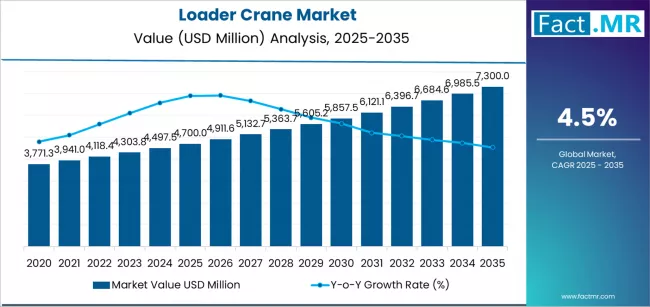
The Loader Crane Market is witnessing steady expansion as industries increasingly prioritize efficient, flexible, and safe material handling solutions. Loader cranes, also known as knuckle boom cranes, are widely used for loading and unloading heavy materials onto trucks and trailers. Their compact structure, foldable boom design, and operational versatility make them an essential asset in construction, logistics, forestry, marine, and infrastructure projects.
With growing urbanization, rising infrastructure investments, and expanding industrial activities, loader cranes are becoming indispensable equipment across both developed and emerging economies. Technological advancements and increasing demand for improved lifting capacity and operational precision are further shaping the evolution of this market.
Market Overview
Loader cranes are hydraulically powered lifting systems mounted on trucks or flatbed vehicles. These cranes are designed to provide flexibility, ease of maneuverability, and high load-handling efficiency in confined spaces. Their articulated boom allows for precise control and optimal positioning of materials, making them ideal for demanding environments.
The market growth is largely driven by expanding construction activities, especially in urban areas where compact and mobile lifting solutions are essential. Rapid infrastructure development, including roadways, bridges, utilities, and residential projects, has fueled demand for reliable and high-performance loader cranes.
Additionally, the increasing need for faster cargo handling in logistics and transportation sectors is boosting the adoption of truck-mounted cranes. Businesses are focusing on operational efficiency and minimizing downtime, encouraging investments in advanced loader crane systems equipped with safety and automation features.
Regional Insights
North America holds a significant share in the loader crane market, supported by ongoing construction projects, strong logistics networks, and the presence of well-established equipment manufacturers. The region’s emphasis on safety standards and productivity enhancements has further strengthened demand for technologically advanced loader cranes.
Europe follows closely, driven by infrastructure upgrades, modernization initiatives, and increasing adoption of smart lifting solutions. Stringent safety regulations and environmental policies have encouraged manufacturers to design energy-efficient and emission-compliant crane systems.
Asia-Pacific is emerging as a high-growth region due to rapid industrialization, urban expansion, and large-scale infrastructure development. Growing investments in transportation networks and commercial construction projects are contributing to rising demand for truck-mounted loader cranes. Meanwhile, Latin America and the Middle East & Africa are gradually expanding due to infrastructure development and increasing construction activities.
Key Trends & Forecast
Integration of Advanced Safety Systems
Manufacturers are incorporating load stability control, overload protection, and automated safety monitoring systems to reduce workplace accidents. Enhanced safety features are becoming a critical purchasing factor for contractors and fleet operators.
Focus on Automation and Smart Technologies
Digital control systems and remote operation capabilities are transforming the loader crane landscape. Telematics integration enables real-time monitoring of crane performance, predictive maintenance, and efficient fleet management.
Growing Demand for Lightweight and High-Capacity Cranes
Companies are investing in high-strength steel and advanced materials to reduce equipment weight while maintaining lifting capacity. Lightweight cranes improve fuel efficiency and payload optimization for transport vehicles.
Rising Adoption in Logistics and E-commerce
The rapid expansion of logistics and supply chain operations has increased the need for efficient cargo loading and unloading solutions. Loader cranes help streamline delivery operations, especially in urban environments with limited space.
Sustainability and Emission Reduction Initiatives
Environmental considerations are encouraging the development of eco-friendly hydraulic systems and fuel-efficient engines. Manufacturers are exploring alternative power options and optimizing hydraulic performance to reduce carbon footprints.
Applications & End-Use Outlook
Loader cranes serve a wide range of industries due to their flexibility and operational efficiency:
Construction Sector
Construction sites rely heavily on loader cranes for lifting steel beams, concrete blocks, machinery, and building materials. Their ability to operate in confined urban spaces makes them highly suitable for residential and commercial projects.
Logistics and Transportation
Truck-mounted loader cranes simplify loading and unloading processes, reducing the need for separate lifting equipment. This improves operational speed and lowers overall logistics costs.
Forestry and Agriculture
In forestry operations, loader cranes are used to handle logs and heavy timber efficiently. Agricultural sectors also utilize them for transporting heavy equipment and materials across farms.
Marine and Ports
Loader cranes are widely used in ports and marine environments for handling cargo, containers, and heavy goods. Their compact design and mobility enhance operational flexibility in dockside operations.
Utilities and Infrastructure Maintenance
Utility companies use loader cranes for installing power poles, handling heavy cables, and maintaining infrastructure equipment. Their versatility supports various public works and maintenance projects.
Competitive Landscape
The loader crane market is characterized by strong competition, continuous innovation, and strategic expansion initiatives. Key players are focusing on product differentiation through advanced hydraulic systems, improved lifting capacities, and enhanced durability.
Research and development investments are aimed at integrating smart controls, improving fuel efficiency, and ensuring compliance with global safety standards. Companies are also expanding their distribution networks and strengthening after-sales services to maintain customer loyalty and improve market presence.
Customization is becoming a significant trend, with manufacturers offering tailored solutions to meet specific industry requirements. Modular designs and adaptable configurations allow customers to optimize crane performance according to operational needs.
Challenges and Opportunities
Despite strong growth prospects, the loader crane market faces certain challenges. High initial investment costs and maintenance requirements may limit adoption among small-scale operators. Additionally, fluctuations in raw material prices can impact production costs and profitability.
The growing preference for rental equipment in construction and infrastructure projects also influences purchasing decisions. However, this trend simultaneously creates opportunities for rental service providers to expand their fleets with advanced loader cranes.
Emerging markets present substantial growth potential as governments invest in infrastructure modernization and urban development. Technological innovation, particularly in automation and sustainable design, is expected to unlock new avenues for long-term expansion.
Conclusion
The Loader Crane Market continues to evolve as industries demand efficient, safe, and versatile material handling solutions. With rising infrastructure projects, expanding logistics networks, and increasing industrial activities, loader cranes play a vital role in enhancing operational productivity.
Advancements in automation, safety features, and lightweight materials are shaping the next generation of loader cranes, ensuring improved performance and sustainability. As businesses focus on efficiency and compliance with regulatory standards, investment in advanced lifting equipment is expected to remain strong.
Comprehensive market research and industry insights can help stakeholders understand emerging trends, competitive dynamics, and growth opportunities within the loader crane sector, enabling informed strategic decisions in a rapidly evolving marketplace.
Browse Full Report – https://www.factmr.com/report/loader-crane-market