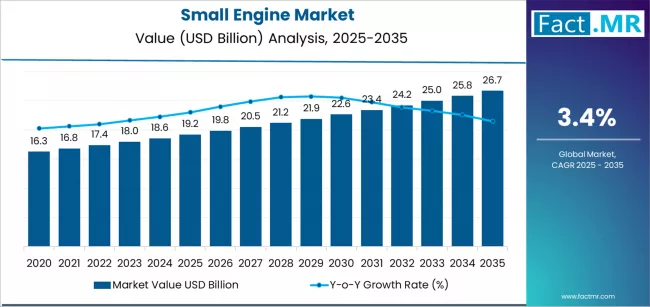
The Small Engine Market continues to gain momentum as industries and consumers increasingly rely on compact, fuel-efficient, and high-performance power solutions. Small engines play a critical role in powering outdoor equipment, light industrial machinery, and recreational vehicles. Their compact design, ease of maintenance, and versatility make them indispensable across residential, commercial, and agricultural sectors. As demand for landscaping tools, construction equipment, and portable machinery grows, the small engine industry is evolving with innovation, efficiency, and sustainability at its core.
Market Overview
Small engines are typically low-horsepower internal combustion engines used to power equipment such as lawn mowers, generators, chainsaws, snow blowers, and water pumps. These engines are primarily categorized into two-stroke and four-stroke variants, each designed for specific performance and efficiency requirements.
The market is influenced by rising demand for gardening and landscaping equipment, expanding construction activities, and the growing popularity of portable power devices. In addition, advancements in engine design are improving fuel efficiency while reducing emissions, enabling manufacturers to comply with evolving environmental regulations.
Electrification trends are also shaping the competitive landscape, prompting traditional small engine manufacturers to invest in hybrid and alternative fuel technologies. However, internal combustion-based small engines continue to hold strong demand due to their durability, cost-effectiveness, and suitability for heavy-duty applications.
Regional Insights
North America remains a significant market for small engines, supported by a strong culture of lawn care, home improvement activities, and outdoor recreational equipment usage. The presence of established manufacturers and advanced distribution networks further strengthens the region’s position.
Europe follows closely, driven by stringent environmental standards and growing awareness around energy efficiency. Manufacturers in this region are focusing on emission-compliant engine designs and sustainable production practices.
Asia-Pacific is emerging as a high-growth region due to rapid urbanization, increasing agricultural mechanization, and expanding construction infrastructure. Rising disposable income and a growing middle-class population are also contributing to increased demand for outdoor power equipment. Meanwhile, Latin America and the Middle East & Africa are witnessing gradual growth supported by infrastructure development and agricultural expansion initiatives.
Key Trends & Forecast
Shift Toward Fuel Efficiency and Emission Control
Manufacturers are prioritizing advanced combustion technologies and improved engine components to reduce fuel consumption and meet emission regulations. Cleaner-burning engines and improved air filtration systems are becoming standard features in new product launches.
Integration of Smart Technologies
The incorporation of digital monitoring systems and IoT-enabled diagnostics is transforming equipment maintenance. Smart engine solutions allow users to track performance, optimize fuel use, and detect issues before they escalate into costly repairs.
Growth in Agricultural and Landscaping Applications
Increased focus on productivity in agriculture and commercial landscaping is fueling demand for reliable small engines. Equipment such as tillers, pumps, and trimmers relies heavily on robust engine performance.
Expansion of Portable Power Solutions
Frequent power outages and rising demand for backup energy systems are driving sales of portable generators. Small engines remain a preferred choice for these applications due to their power output and operational reliability.
Innovation in Lightweight and Compact Designs
Product development efforts are increasingly focused on reducing weight without compromising performance. Lightweight engines enhance portability and user convenience, especially in handheld equipment.
Applications & End-Use Outlook
Small engines are widely used across several industries:
Residential Sector
Homeowners depend on small engines for lawn mowers, hedge trimmers, leaf blowers, and pressure washers. The growth of DIY home improvement culture continues to support steady demand in this segment.
Commercial Landscaping and Grounds Maintenance
Professional landscaping companies require durable and high-performance engines to power commercial-grade equipment. Consistent reliability and reduced downtime are key purchasing factors.
Agriculture
Farmers utilize small engines in irrigation pumps, cultivators, and portable machinery. Increasing mechanization of small-scale farming operations is boosting demand across rural markets.
Construction and Industrial Applications
Construction sites rely on small engines for concrete mixers, compactors, and portable generators. Their ability to deliver dependable power in remote or off-grid locations makes them essential in this sector.
Recreational and Outdoor Equipment
All-terrain vehicles, go-karts, and small boats also use compact engines, contributing to steady market demand driven by recreational activities.
Competitive Landscape
The small engine market is characterized by continuous innovation, product differentiation, and strong brand positioning. Manufacturers are investing in research and development to enhance engine efficiency, durability, and environmental performance. Strategic partnerships, distribution expansion, and after-sales service improvements are common approaches adopted to strengthen market presence.
Companies are also focusing on customer-centric product design, offering easy-start systems, lower noise levels, and simplified maintenance features. Sustainability initiatives, including the development of alternative fuel-compatible engines, are expected to shape long-term competitiveness.
Challenges and Opportunities
While the market outlook remains positive, the industry faces challenges related to tightening emission regulations and the growing shift toward battery-powered alternatives. Electric equipment is gaining traction in certain segments, particularly in residential applications where lower noise and zero emissions are valued.
However, small engines continue to offer superior power output and operational endurance for heavy-duty and commercial applications. Emerging markets present strong opportunities as infrastructure development and agricultural mechanization accelerate. Additionally, technological advancements in cleaner combustion systems are expected to mitigate environmental concerns while maintaining performance standards.
Conclusion
The Small Engine Market is poised for sustained expansion as demand for compact, reliable, and efficient power solutions continues to grow across industries. From residential lawn care to agricultural mechanization and construction applications, small engines remain fundamental to modern equipment ecosystems.
Ongoing innovation in fuel efficiency, emission control, and smart diagnostics is reshaping the competitive landscape, enabling manufacturers to address evolving regulatory and consumer expectations. As industries strive for productivity and operational efficiency, small engines will continue to power essential tools and machinery worldwide.
For businesses seeking strategic insights and detailed market analysis, comprehensive industry research can provide valuable guidance in navigating growth opportunities and competitive dynamics within the small engine sector.
Browse Full Report – https://www.factmr.com/report/small-engine-market