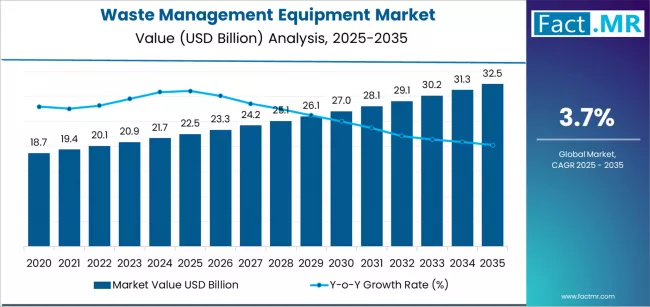
Rapid urbanization, industrial expansion, and rising consumer consumption patterns have significantly increased global waste generation. Managing this growing waste volume efficiently has become a top priority for governments, municipalities, and private enterprises. The Waste Management Equipment Market plays a critical role in enabling systematic collection, transportation, processing, recycling, and disposal of waste materials.
As environmental regulations tighten and sustainability goals gain prominence, the demand for advanced waste management equipment continues to rise. Modern solutions are designed not only to enhance operational efficiency but also to minimize environmental impact and promote resource recovery.
Market Overview
Waste management equipment includes a wide range of machinery and systems used for handling solid and liquid waste. These include collection vehicles, compactors, shredders, balers, sorting systems, recycling machinery, and waste-to-energy processing units. Such equipment ensures safe handling of municipal, industrial, commercial, and hazardous waste streams.
The market is evolving in response to stricter environmental compliance requirements and increasing awareness of circular economy practices. Organizations are investing in technologically advanced machinery that improves waste segregation, enhances recycling rates, and reduces landfill dependency.
Growing emphasis on automation in waste processing facilities is also influencing market dynamics. Automated sorting systems equipped with sensors and artificial intelligence are transforming recycling efficiency and reducing manual labor requirements.
Key Market Drivers
- Rising Urban Population and Waste Generation
Expanding urban centers are producing higher volumes of municipal solid waste. Efficient waste collection and processing equipment are essential to maintain public health standards and prevent environmental degradation. - Stringent Environmental Regulations
Governments worldwide are implementing stricter waste disposal and recycling policies. These regulations encourage investments in advanced equipment capable of meeting emission control and recycling efficiency standards. - Growth of Industrial and Commercial Sectors
Industrialization generates significant amounts of hazardous and non-hazardous waste. Specialized equipment such as industrial shredders, compactors, and waste treatment systems are increasingly deployed to manage these waste streams safely. - Increasing Focus on Recycling and Resource Recovery
The shift toward a circular economy has boosted demand for recycling machinery and sorting systems. Waste is increasingly viewed as a resource, and advanced equipment enables the extraction of valuable materials from waste streams.
Regional Insights
North America remains a prominent market due to well-established waste management infrastructure and high adoption of advanced recycling technologies. The region’s regulatory framework supports sustainable waste disposal practices and encourages modernization of waste handling systems.
Europe demonstrates strong growth driven by ambitious recycling targets and environmental sustainability initiatives. Many countries in the region emphasize landfill reduction and invest heavily in waste-to-energy and recycling equipment.
Asia-Pacific is emerging as a high-growth region, supported by rapid urbanization and industrial development. Expanding cities and growing environmental awareness are driving investments in modern waste management systems.
Other regions are gradually upgrading their waste management infrastructure to address environmental concerns and public health challenges.
Technology and Innovation Trends
Technological innovation is reshaping the waste management equipment landscape. Automation and smart waste collection systems are gaining traction, enabling real-time tracking of waste bins and optimizing collection routes. These solutions reduce fuel consumption and operational costs.
Advanced sorting technologies, including optical sensors and robotics, enhance recycling efficiency by accurately separating materials such as plastics, metals, and paper. Such systems improve material recovery rates and reduce contamination levels.
Waste-to-energy technologies are also gaining prominence. Equipment designed to convert waste into usable energy supports renewable energy goals while reducing landfill usage. This trend aligns with global sustainability objectives and climate action strategies.
Electric and hybrid waste collection vehicles are another emerging trend. These vehicles help reduce carbon emissions and noise pollution, particularly in urban environments.
Applications Across Industries
Waste management equipment serves diverse sectors, including:
- Municipal Services: Collection and disposal of household waste.
- Industrial Facilities: Handling of manufacturing byproducts and hazardous materials.
- Commercial Establishments: Waste management for retail centers, offices, and hospitality businesses.
- Healthcare Institutions: Safe disposal of medical and biohazard waste.
- Construction Sector: Management of demolition debris and construction waste.
The versatility of equipment ensures its applicability across different waste streams and operational environments.
Competitive Landscape
The waste management equipment market is characterized by the presence of global manufacturers and regional suppliers. Companies compete through innovation, product reliability, and service excellence.
Strategic partnerships with municipalities and private waste management firms are common. Manufacturers focus on expanding product portfolios and integrating digital technologies to differentiate their offerings.
Research and development investments are directed toward improving energy efficiency, durability, and automation capabilities. After-sales support and maintenance services play a vital role in building long-term customer relationships.
Sustainability and Future Outlook
Sustainability remains at the core of market evolution. Equipment manufacturers are exploring eco-friendly materials and energy-efficient designs to minimize environmental impact. The adoption of smart waste management systems supports data-driven decision-making and improved operational transparency.
The growing global emphasis on zero-waste initiatives and landfill reduction strategies is expected to drive further demand for advanced waste processing and recycling equipment. Integration of digital monitoring systems and predictive maintenance technologies will enhance operational reliability and reduce downtime.
Emerging economies are investing in infrastructure development, creating new opportunities for market expansion. As awareness of environmental protection and public health increases, the adoption of modern waste management equipment is likely to accelerate.
Conclusion
The Waste Management Equipment Market is playing a pivotal role in shaping sustainable waste handling practices worldwide. Driven by urban growth, regulatory pressures, and the transition toward circular economy models, the market continues to evolve with technological advancements and innovative solutions.
Efficient waste management systems are essential for environmental protection, resource recovery, and public health. As industries and municipalities strive to achieve sustainability goals, advanced waste management equipment will remain a cornerstone of modern infrastructure development.
Organizations seeking long-term operational efficiency and environmental compliance can benefit from comprehensive market insights to guide strategic investments in waste management technologies.
Browse Full Report – https://www.factmr.com/report/waste-management-equipment-market