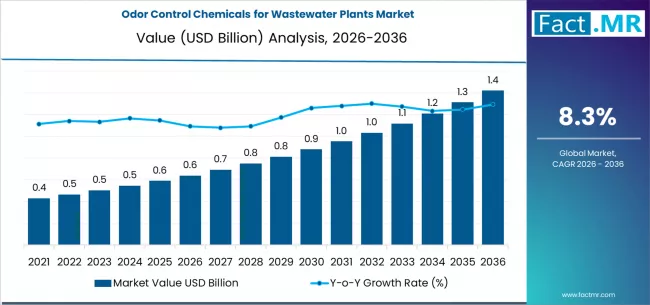
As urban populations expand and wastewater treatment infrastructure grows, managing unpleasant and potentially harmful odors has become a critical challenge for wastewater treatment plants. In this context, the odor control chemicals for wastewater plants market is gaining increasing importance as municipalities and industrial operators seek effective solutions to control emissions and improve air quality around treatment facilities.
Odor management is no longer limited to comfort and aesthetics; it plays a vital role in regulatory compliance, worker safety, and maintaining positive relationships with surrounding communities.
Market Overview:
Odor control chemicals are specialized formulations designed to neutralize, suppress, or prevent the formation of odorous compounds commonly generated during wastewater treatment processes. These odors typically arise from sulfur-based gases, organic decomposition, and anaerobic treatment conditions.
Chemical solutions used in odor control include oxidizing agents, neutralizers, scavengers, masking agents, and biological additives. These chemicals are applied at various stages of wastewater treatment, including collection systems, lift stations, sludge handling units, and treatment tanks. Advances in chemical formulations have improved effectiveness while reducing environmental impact and operational complexity.
Regional Insights:
Regions with dense urban infrastructure and stringent environmental standards are leading the adoption of odor control chemicals. North America remains a prominent market due to well-established wastewater treatment networks and strong regulatory oversight on air quality and environmental protection. Europe follows closely, supported by strict environmental directives and growing public awareness of air pollution and odor-related health concerns.
The Asia-Pacific region is emerging as a key growth area as rapid urbanization and infrastructure development increase wastewater treatment capacity. Governments across the region are investing in modern treatment facilities and adopting advanced odor control measures to address community concerns and environmental challenges.
Key Trends & Forecast:
- Increasing focus on proactive odor prevention rather than reactive treatment
- Growing adoption of environmentally friendly and low-toxicity odor control chemicals
- Integration of chemical odor control with advanced wastewater treatment technologies
- Rising emphasis on improving workplace safety and reducing health risks for plant operators
- Collaboration between chemical suppliers and wastewater utilities to develop tailored solutions
These trends reflect a broader shift toward sustainable and efficient odor management strategies.
Applications & End-Use Outlook:
Odor control chemicals are widely used across municipal and industrial wastewater treatment plants. Key applications include sewer networks, pumping stations, headworks, aeration basins, sludge processing units, and odor scrubber systems.
End users such as municipal utilities, industrial wastewater operators, and environmental service providers rely on these chemicals to maintain compliance with air quality regulations and minimize nuisance complaints. Industries including food and beverage processing, chemicals, pulp and paper, and pharmaceuticals also utilize odor control solutions to manage emissions from their wastewater streams.
Technological Advancements and Innovation:
Technological innovation continues to shape the odor control chemicals market. Manufacturers are developing advanced formulations that offer longer-lasting odor suppression and improved compatibility with existing treatment processes. Innovations include slow-release chemical systems, targeted dosing technologies, and bio-based odor control solutions.
Research efforts are also focused on reducing chemical consumption while maintaining effectiveness, helping wastewater plants optimize operational costs and minimize environmental impact. The integration of digital monitoring and automation further enhances odor management by enabling precise application and real-time performance tracking.
Competitive Landscape and Strategic Developments:
The market features a mix of global chemical manufacturers and specialized environmental solution providers. Companies are expanding their product portfolios to include sustainable and application-specific odor control chemicals.
Strategic initiatives include partnerships with wastewater utilities, investment in research and development, and the provision of technical support services. Suppliers that offer comprehensive odor management programs, including site assessments and customized solutions, are gaining a competitive edge in the market.
Future Outlook:
The future of the odor control chemicals for wastewater plants market is closely linked to continued urbanization, infrastructure expansion, and rising environmental expectations. As regulatory scrutiny intensifies and public awareness grows, wastewater treatment facilities are expected to prioritize odor control as a core operational requirement.
Ongoing innovation and the adoption of integrated odor management strategies will further support market growth. Odor control chemicals will remain essential in ensuring efficient, compliant, and community-friendly wastewater treatment operations.
Conclusion:
Odor control chemicals play a crucial role in maintaining air quality, regulatory compliance, and public acceptance of wastewater treatment plants. By effectively managing odorous emissions, these solutions support environmental sustainability and operational excellence. Access to comprehensive market insights can help stakeholders identify emerging trends and implement effective odor management strategies in an evolving wastewater treatment landscape.
Browse Full Report – https://www.factmr.com/report/odor-control-chemicals-for-wastewater-plants-market