The Extension Ladder Market is witnessing steady expansion as construction, maintenance, and industrial activities continue to grow worldwide. Extension ladders are essential access equipment designed to provide adjustable height solutions for various applications, ranging from residential repairs to large-scale commercial projects. Their versatility, portability, and ease of use make them a fundamental tool across construction sites, utility services, warehouses, and facility management operations.
With increasing emphasis on workplace safety and productivity, demand for durable and high-performance extension ladders is rising. Manufacturers are focusing on innovative materials, improved load capacities, and enhanced safety mechanisms to meet evolving industry standards.
Market Overview
Extension ladders consist of two or more sections that slide to extend their length, allowing users to reach elevated areas safely. These ladders are commonly made from aluminum, fiberglass, or steel, each offering specific advantages such as lightweight construction, corrosion resistance, or electrical insulation properties.
The market is influenced by rapid urbanization, expanding infrastructure projects, and ongoing maintenance requirements in residential and commercial buildings. In addition, safety regulations imposed by occupational health authorities are encouraging the adoption of certified ladders designed with anti-slip features, secure locking systems, and reinforced rungs.
As industries prioritize operational efficiency and worker protection, extension ladders are evolving to deliver greater stability and durability while maintaining ease of transport and storage.
Key Market Drivers
Growth in Construction and Infrastructure Development
Increasing construction activities in both developed and emerging economies are driving the demand for access equipment. Extension ladders are widely used in building construction, painting, roofing, and installation tasks.
Rising Maintenance and Repair Operations
Regular maintenance of residential, commercial, and industrial facilities requires reliable elevation tools. Extension ladders provide a cost-effective solution for accessing rooftops, lighting fixtures, and high walls.
Focus on Workplace Safety Standards
Stringent safety regulations are prompting companies to invest in certified and ergonomically designed ladders. Features such as slip-resistant feet, rung locks, and stabilizers enhance user safety.
Growing Demand from Utility and Electrical Sectors
Utility companies rely on extension ladders for installation and maintenance of power lines, communication systems, and street lighting. Fiberglass ladders, in particular, are preferred for their non-conductive properties.
Product Segmentation
The extension ladder market can be segmented based on material type, end-use industry, distribution channel, and application.
- By Material Type: Aluminum, fiberglass, and steel. Aluminum ladders are lightweight and corrosion-resistant, while fiberglass ladders offer electrical insulation benefits.
- By End-Use Industry: Construction, utilities, industrial manufacturing, residential, and commercial sectors.
- By Application: Roofing, painting, electrical maintenance, cleaning, and installation services.
- By Distribution Channel: Offline retail stores, specialty equipment suppliers, and online platforms.
Each segment reflects diverse user preferences and operational requirements.
Regional Insights
North America
North America represents a mature market with strong adoption of advanced and safety-compliant extension ladders. Renovation projects and strict workplace safety standards support consistent demand.
Europe
Europe shows steady growth driven by infrastructure upgrades and adherence to occupational safety regulations. The emphasis on durable and certified access equipment contributes to market expansion.
Asia-Pacific
Asia-Pacific is emerging as a high-growth region due to rapid urban development and increasing industrial activities. Expanding construction projects and rising demand for cost-effective tools are key growth drivers.
Middle East & Africa and Latin America
Infrastructure development and industrial growth in these regions create new opportunities for extension ladder manufacturers. Demand is supported by residential construction and utility sector expansion.
Key Trends Shaping the Market
Lightweight and Durable Materials
Manufacturers are investing in advanced aluminum alloys and reinforced fiberglass materials to enhance durability while reducing overall weight.
Enhanced Safety Features
Modern extension ladders incorporate anti-slip rungs, locking mechanisms, and stabilizing bars to minimize accident risks. Compliance with international safety standards remains a critical focus area.
Compact and Multi-Functional Designs
Consumers are increasingly seeking ladders that offer adjustable heights and compact storage capabilities. Multi-position ladders that combine extension and step ladder features are gaining popularity.
Growth of E-Commerce Sales
Online distribution channels are expanding product accessibility, especially among small contractors and DIY users. Digital platforms provide detailed product specifications and customer reviews, influencing purchasing decisions.
Competitive Landscape
The extension ladder market is moderately competitive, with manufacturers focusing on product innovation, pricing strategies, and distribution network expansion. Companies aim to differentiate themselves through high load capacities, improved stability features, and extended product warranties.
Strategic partnerships with construction firms and retail chains strengthen market presence. In addition, branding and certification play an essential role in gaining customer trust and ensuring regulatory compliance.
Applications & End-Use Outlook
Extension ladders are widely used across various industries:
- Construction: Supporting tasks such as roofing, painting, and structural installations.
- Utilities: Facilitating maintenance of electrical and communication lines.
- Industrial Facilities: Assisting in equipment maintenance and inspections.
- Residential Sector: Enabling homeowners to perform repairs and cleaning tasks.
- Commercial Buildings: Supporting facility management and maintenance operations.
The broad range of applications highlights the essential role of extension ladders in daily operations across sectors.
Future Outlook
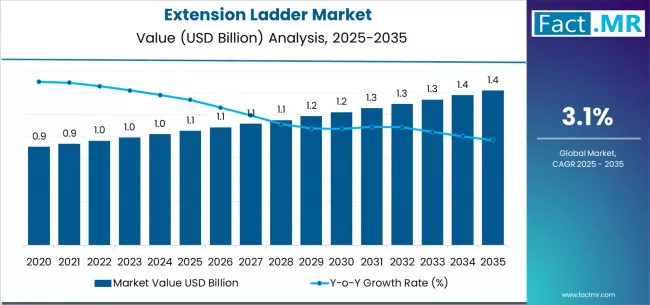
The future of the extension ladder market is shaped by technological innovation, safety enhancements, and rising construction activities. As infrastructure development accelerates globally, demand for reliable access equipment will continue to grow. Manufacturers are expected to focus on eco-friendly materials, improved design ergonomics, and compliance with evolving safety standards.
Emerging markets offer significant opportunities due to expanding urban landscapes and industrialization initiatives. Companies that prioritize product quality, affordability, and regulatory adherence are likely to gain a competitive advantage.
Conclusion
Extension ladders remain a vital tool for construction, maintenance, and utility operations. Their adaptability, durability, and cost-effectiveness make them indispensable across industries. With ongoing advancements in materials and safety features, the extension ladder market is positioned for sustained growth. As global infrastructure projects expand and safety awareness increases, extension ladders will continue to play a crucial role in supporting efficient and secure elevated access solutions.
Browse Full Report – https://www.factmr.com/report/extension-ladder-market