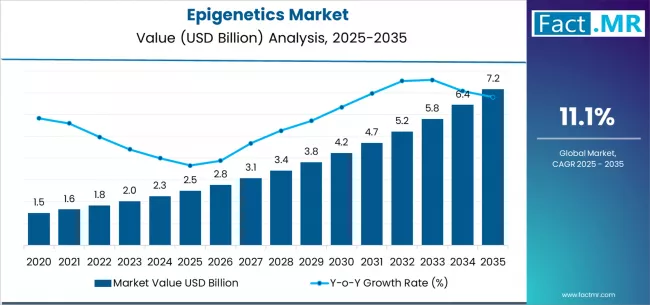
The epigenetics market is rapidly emerging as a transformative force in life sciences, reshaping how diseases are understood, diagnosed, and treated. Epigenetics focuses on heritable changes in gene expression that occur without altering the underlying DNA sequence. These modifications, influenced by environmental factors, lifestyle, and biological processes, play a crucial role in regulating cellular function and disease development.
With growing interest in personalized medicine, oncology research, and advanced drug discovery, epigenetics has become central to modern biomedical innovation. Researchers and healthcare providers are increasingly leveraging epigenetic insights to uncover disease mechanisms, identify biomarkers, and develop targeted therapies, positioning the epigenetics market for sustained long-term relevance.
Market Overview
The epigenetics market encompasses a broad range of technologies, products, and services, including epigenetic enzymes, reagents, kits, sequencing tools, bioinformatics platforms, and epigenetic drugs. These solutions are widely used in research laboratories, pharmaceutical and biotechnology companies, and academic institutions.
Epigenetic research enables scientists to study DNA methylation, histone modification, chromatin remodeling, and non-coding RNA interactions. These mechanisms are critical for understanding complex diseases such as cancer, neurological disorders, autoimmune conditions, and metabolic diseases.
The market is witnessing increased adoption of high-throughput sequencing technologies and advanced analytical tools, allowing researchers to generate deeper insights into gene regulation patterns. Pharmaceutical companies are also expanding their focus on epigenetic targets to develop novel therapeutics that offer improved efficacy and reduced side effects.
Regional Insights
North America remains a leading region in the epigenetics market, driven by strong research funding, advanced healthcare infrastructure, and a robust presence of biotechnology and pharmaceutical companies. Academic-industry collaborations and early adoption of innovative research tools further support market growth in the region.
Europe holds a significant position due to its emphasis on genomics research, precision medicine initiatives, and supportive regulatory frameworks for life sciences innovation. Countries across the region are investing in epigenetics research to advance cancer diagnostics and personalized treatment strategies.
Asia-Pacific is emerging as a rapidly expanding market, supported by increasing investments in biomedical research, expanding pharmaceutical manufacturing, and rising awareness of genetic and epigenetic testing. Growing research capabilities in countries across the region are accelerating the adoption of epigenetic technologies.
Other regions are gradually gaining momentum as access to advanced research infrastructure improves and governments prioritize biotechnology and healthcare innovation.
Key Trends and Market Outlook
One of the most prominent trends in the epigenetics market is the growing integration of epigenetic data with genomics and proteomics. Multi-omics approaches are enabling researchers to gain a more comprehensive understanding of disease pathways and biological systems.
Advancements in sequencing technologies and bioinformatics are enhancing the accuracy, speed, and scalability of epigenetic analysis. Cloud-based platforms and AI-driven analytics are increasingly used to manage complex datasets and identify actionable insights from epigenetic research.
The development of epigenetic drugs, particularly in oncology, is another key trend. These therapies aim to reverse abnormal epigenetic modifications associated with disease progression, offering new treatment options for patients with limited response to conventional therapies.
There is also rising interest in epigenetics-based diagnostics and companion diagnostics, which support early disease detection and personalized treatment planning.
Applications and End-Use Outlook
Oncology represents the largest application area for epigenetics, as epigenetic alterations are closely linked to cancer initiation, progression, and resistance to therapy. Epigenetic profiling is increasingly used to identify tumor subtypes and guide treatment decisions.
Drug discovery and development is another major application, with pharmaceutical and biotechnology companies using epigenetic targets to design innovative therapeutics. Epigenetics plays a key role in understanding drug response variability and optimizing clinical outcomes.
Academic and research institutions remain significant end users, utilizing epigenetic tools to study gene regulation, developmental biology, and disease mechanisms. These institutions drive foundational research that supports downstream clinical and commercial applications.
Clinical diagnostics is an emerging application area, with epigenetic biomarkers gaining attention for their potential in early disease detection and prognosis assessment.
Challenges and Considerations
Despite strong momentum, the epigenetics market faces certain challenges. High costs associated with advanced sequencing technologies and data analysis tools may limit accessibility for smaller research facilities. Additionally, the complexity of epigenetic mechanisms requires specialized expertise, which can slow adoption in less developed research environments.
Standardization of epigenetic assays and data interpretation remains an ongoing challenge. Regulatory approval pathways for epigenetic diagnostics and therapies can also be complex, requiring extensive validation and clinical evidence.
Conclusion
The epigenetics market is redefining the future of biomedical research and precision medicine by uncovering the regulatory layers that influence gene expression and disease outcomes. As technological advancements continue to improve analytical capabilities and therapeutic development, epigenetics is expected to play an increasingly central role across healthcare and life sciences.
Access to comprehensive market intelligence can help researchers, pharmaceutical companies, investors, and healthcare stakeholders navigate evolving trends, identify growth opportunities, and make informed strategic decisions in the rapidly advancing epigenetics landscape.
Browse Full Report – https://www.factmr.com/report/435/epigenetics-market