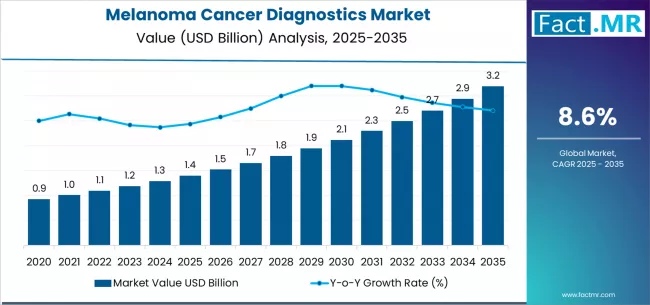
Melanoma remains one of the most aggressive forms of skin cancer, and its rising incidence has accelerated global efforts toward early diagnosis, screening accuracy, and timely clinical intervention. The melanoma cancer diagnostics market is evolving rapidly as healthcare providers, diagnostic laboratories, and technology developers prioritize more effective diagnostic tools. As research advances and awareness grows, the emphasis on early melanoma identification is becoming stronger, leading to innovations across biopsy techniques, imaging technologies, molecular tests, and AI-driven dermatology solutions.
Market Overview:
The melanoma cancer diagnostics market is shaped by the increasing occurrence of skin cancer, heightened public awareness about the dangers of UV radiation, and the growing adoption of precision diagnostics. Medical professionals and diagnostic centers are shifting toward more reliable, minimally invasive, and faster diagnostic approaches. These include dermatoscopy advancements, genetic profiling, and high-resolution imaging tools that help clinicians detect early-stage melanoma with improved accuracy.
The market also benefits from technological improvements that expand the scope of melanoma detection beyond traditional examinations. Digital dermatology, telemedicine, and algorithm-based skin lesion analysis are now enabling broader access to screening services, particularly in regions with limited dermatology specialists. As the adoption of these technologies grows, the landscape for melanoma diagnostics continues to strengthen.
Regional Insights:
North America maintains a leading position in melanoma diagnostics due to advanced healthcare infrastructure, strong awareness campaigns, and the presence of major diagnostic companies. Dermatology clinics and hospitals in this region are early adopters of digital imaging and AI-based diagnostic systems, which enhances early detection efforts.
Europe closely follows with robust healthcare policies, advancements in skin cancer screening programs, and a rising focus on research-driven diagnostic development. Several European nations have also increased public health initiatives aimed at preventing and detecting melanoma at earlier stages.
Asia-Pacific is emerging as a rapidly growing region, driven by expanding healthcare access, rising awareness of melanoma symptoms, and significant investments in diagnostic technologies. Healthcare systems in countries across Asia are gradually integrating modern imaging and molecular testing technologies, contributing to market expansion.
Other Regions, including Latin America and the Middle East & Africa, are gaining momentum as awareness spreads and healthcare infrastructure improves. Growing interest in early cancer detection initiatives is paving the way for greater adoption of diagnostic tools in these regions.
Key Trends & Forecast:
Growing Adoption of Non-Invasive Diagnostic Techniques
Clinicians are increasingly preferring non-invasive screening tools that reduce patient discomfort and provide quicker results. Techniques such as dermatoscopy, confocal microscopy, optical imaging, and digital mole mapping are becoming mainstream in melanoma diagnosis.
Advancements in Molecular and Genetic Testing
Molecular diagnostics are gaining attention for their ability to detect melanoma-specific biomarkers and genetic mutations. These tests enable personalized treatment planning and help differentiate between benign and malignant skin lesions more accurately.
Integration of AI and Digital Dermatology
Artificial intelligence is transforming melanoma diagnostics by analyzing skin lesion images with high precision. AI-powered tools can detect subtle changes that may be overlooked by the human eye, improving diagnostic accuracy and supporting dermatologists in making well-informed decisions.
Emphasis on Early Detection and Preventive Screening
Early detection is crucial for melanoma survival rates, driving demand for tools that enable screening before the cancer becomes invasive. Public health campaigns, mobile screening units, and digital tracking solutions are expanding early diagnosis efforts globally.
Growing Collaboration Between Research Institutions and Industry Players
Collaborations between medical research centers, universities, diagnostic firms, and healthcare providers are accelerating innovation. These partnerships focus on developing next-generation diagnostic tests, exploring genetic markers, and improving imaging accuracy.
Applications & End-Use Outlook:
Hospitals and Cancer Treatment Centers
Hospitals play a central role in melanoma diagnosis by utilizing biopsy procedures, pathology testing, and advanced imaging systems. With multidisciplinary teams managing cancer cases, hospitals continue to be key contributors to market growth.
Diagnostic Laboratories
Specialized laboratories are essential for conducting detailed histopathological examinations, molecular tests, and genomic profiling. Improvements in laboratory automation and testing techniques enhance diagnostic precision and support faster report generation.
Dermatology Clinics and Skin Care Centers
Dermatology clinics are at the forefront of early melanoma detection. These clinics use dermatoscopes, digital imaging, and AI-enabled tools to track skin lesions over time, identify suspicious growths, and recommend timely biopsies.
Research Institutes and Academic Centers
Research institutions play a significant role in discovering new biomarkers, advancing genetic research, and improving diagnostic accuracy. Innovations from academic research often translate into clinical diagnostic solutions.
Home-Based and Remote Diagnostic Tools
Growing interest in teledermatology and mobile applications is expanding access to melanoma screening. Users can capture images of skin lesions using smartphones, which are analyzed by AI-driven platforms or reviewed by dermatologists, making remote diagnostics more accessible.
Conclusion:
The melanoma cancer diagnostics market is undergoing significant transformation as healthcare systems prioritize early screening, accurate detection, and advanced diagnostic technologies. Innovations in imaging, molecular testing, AI, and telemedicine are reshaping how melanoma is diagnosed and managed worldwide. With rising awareness and continuous technological advancements, the market is poised for sustained development. Organizations and healthcare providers aiming to enhance melanoma care can benefit from in-depth market insights and evolving diagnostic solutions, ensuring stronger clinical outcomes and improved patient safety.
Browse Full Report – https://www.factmr.com/report/57/melanoma-cancer-diagnostics-market