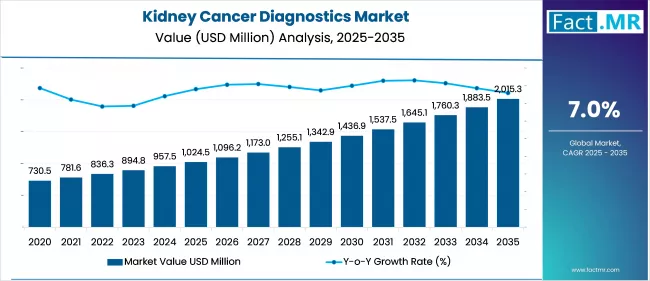
The kidney cancer diagnostics market is witnessing significant growth as global healthcare systems emphasize the importance of early detection, improved patient outcomes, and adoption of advanced medical technologies. With kidney cancer cases rising worldwide, accurate and timely diagnosis has become essential to support effective treatment planning. Growing awareness about early-stage detection, advancements in imaging technologies, and the rise of innovative diagnostic methods are collectively shaping the future of this market.
Market Overview:
Kidney cancer diagnostics comprise a wide range of tools and techniques designed to identify malignant changes in the kidneys. These include imaging tests, molecular diagnostics, biomarker analysis, biopsies, and advanced digital pathology. The market is evolving rapidly as healthcare providers and laboratories adopt more precise and less invasive diagnostic methodologies. Increasing investment in healthcare infrastructure and the global shift toward proactive cancer screening are key factors driving growth.
Clinicians now rely on a combination of imaging, laboratory tests, and molecular insights to make informed decisions. The broadening availability of diagnostic technologies across both developed and emerging economies is further accelerating the market’s expansion.
Regional Insights:
North America
North America remains one of the leading regions in the kidney cancer diagnostics market due to its advanced healthcare ecosystem, widespread access to diagnostic technologies, and strong focus on cancer awareness and screening. High adoption of innovative imaging tools and rapid integration of digital and AI-based solutions support the region’s market leadership.
Europe
Europe is progressing steadily as precision medicine initiatives and government-screening programs drive uptake of advanced diagnostic methods. The region benefits from strong research collaboration, favorable regulatory environments, and increasing investment in cancer care systems.
Asia-Pacific
Asia-Pacific is emerging as one of the fastest-growing markets due to expanding healthcare infrastructure, higher diagnosis rates, and rising awareness about early cancer detection. Growing healthcare expenditure and technological advancements are enabling greater accessibility to diagnostic services across the region.
Other Regions
Latin America, the Middle East, and Africa are also demonstrating notable potential, although adoption remains slower due to infrastructure limitations. However, increasing health initiatives and gradual improvements in healthcare access are supporting steady market development.
Key Market Drivers:
Increasing Prevalence of Kidney Cancer
The rising number of kidney cancer cases worldwide has intensified the need for effective diagnostic solutions. Early detection significantly improves treatment outcomes, encouraging hospitals and laboratories to invest in high-performance diagnostic tools.
Technological Advancements
Ongoing innovations in imaging modalities such as CT, MRI, ultrasound, and PET scans have enhanced accuracy and improved detection capabilities. Molecular diagnostics and biomarker testing are also gaining popularity, offering deeper insights into tumor characteristics and aiding in personalized treatment planning.
Shift Toward Minimally Invasive Diagnostics
Non-invasive and minimally invasive diagnostics — including liquid biopsies, urine-based tests, and molecular assays — are gaining momentum. These patient-friendly techniques reduce the need for surgical procedures and enable easier monitoring of disease progression.
Growing Investment in Healthcare Infrastructure
Governments and private organizations around the world are strengthening cancer care facilities, expanding diagnostic laboratories, and investing in research and innovation. These initiatives support broader availability and adoption of advanced diagnostic technologies.
Trends Shaping the Market:
AI and Digital Pathology Integration
Artificial intelligence is transforming diagnostic workflows by enhancing accuracy, reducing human error, and speeding up interpretation. AI-powered tools help in analyzing imaging scans, detecting subtle abnormalities, and offering decision support to clinicians.
Precision Medicine Adoption
There is a rising focus on personalized healthcare, where diagnostics play a crucial role in identifying genetic and molecular markers that influence treatment responses. Precision diagnostics enable targeted therapy selection and improve chances of successful outcomes.
Expansion of Non-Invasive Diagnostics
Demand for non-invasive diagnostic solutions is growing as patients and healthcare providers prefer methods that require minimal preparation and offer faster results. These tools are especially beneficial for individuals who cannot undergo invasive biopsies.
Growing Availability of Point-of-Care Testing
Point-of-care diagnostic devices are increasingly being used for quick screening and evaluation, particularly in outpatient and remote settings. These innovations are improving access to early detection in underserved regions.
Applications & End-User Outlook:
Hospitals remain the primary users of kidney cancer diagnostics due to their comprehensive infrastructure and ability to perform complex imaging and laboratory tests. Cancer specialty centers and diagnostic laboratories also play an essential role by offering advanced testing services and molecular profiling.
Independent diagnostic labs are expanding their service portfolios, particularly in emerging markets, making high-quality kidney cancer diagnostic tests more accessible. The market is also witnessing involvement from research institutions focusing on biomarker discovery and technological advancements.
Challenges and Market Constraints:
High Cost of Advanced Diagnostics
Advanced imaging and molecular testing can be expensive, limiting accessibility for certain patient populations and healthcare systems. Cost remains a critical challenge in low-income regions.
Limited Awareness in Developing Regions
In many parts of the world, awareness of kidney cancer symptoms and the importance of early screening remains low, resulting in delayed diagnosis and poorer outcomes.
Complexity of Regulatory Approvals
New diagnostic technologies require strict regulatory validation, which can delay market entry. Differences in approval processes across regions further add to complexity.
Conclusion:
The kidney cancer diagnostics market is undergoing significant transformation, driven by rising disease incidence, technological innovation, and the growing importance of early detection. Advancements in imaging, digital pathology, molecular testing, and AI are reshaping diagnostic pathways and offering hope for improved patient outcomes. As global healthcare systems continue to focus on precision medicine and patient-centered care, the demand for effective kidney cancer diagnostics is expected to rise steadily.
With continued investment, innovation, and improved accessibility, the kidney cancer diagnostics market is poised to play a crucial role in reducing cancer mortality and supporting better clinical decision-making in the years ahead.
Browse Full Report – https://www.factmr.com/report/56/kidney-cancer-diagnostics-market