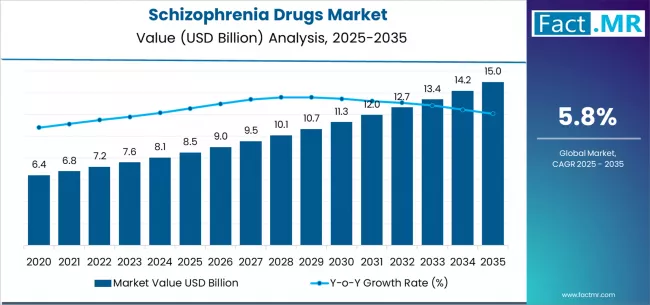
The global schizophrenia drugs market is projected to reach USD 7.6 billion by 2035, recording an absolute increase of USD 2.4 billion over the forecast period. The market is valued at USD 5.2 billion in 2025 and is set to rise at a CAGR of 3.9% during the assessment period.
The schizophrenia drugs market continues to gain momentum as awareness about mental health grows, diagnostic capabilities improve, and access to psychiatric care expands worldwide. Schizophrenia remains one of the most complex chronic mental disorders, requiring long-term, consistent, and often multi-modal treatment. As global health systems strengthen their mental-health management frameworks, demand for antipsychotic drugs is steadily increasing.
Market Overview
The market landscape is driven by steady adoption of antipsychotics, especially second-generation (atypical) drugs that offer improved tolerability and reduced side effects compared to traditional formulations. Pharmaceutical companies are actively investing in R&D to develop more effective and longer-acting medications aimed at reducing relapse, improving adherence, and minimizing adverse effects.
Rising prevalence of schizophrenia, increased awareness, and improved access to psychiatric treatment in emerging economies are collectively strengthening market performance. Additionally, the introduction of long-acting injectables (LAIs) and novel drug formulations is reshaping the therapeutic space.
To access the complete data tables and in-depth insights, request a Discount On The Report here: https://www.factmr.com/connectus/sample?flag=S&rep_id=12076
Key Market Drivers
1. Rising Global Prevalence of Schizophrenia
Millions of individuals worldwide are affected by schizophrenia, with the disorder typically requiring lifelong treatment. Growing identification and diagnosis directly contribute to rising medication demand.
2. Increasing Adoption of Long-Acting Injectables
Long-acting injectable antipsychotics are becoming a preferred option for improving medication adherence, reducing relapse rates, and enhancing patient outcomes. Their convenience is accelerating market uptake.
3. Advancements in Drug Development
Continuous research into newer mechanisms of action, more targeted pathways, and reduced metabolic side effects supports the development of next-generation antipsychotics and adjunct therapies.
4. Government Initiatives & Mental Health Funding
Increasing public health investments, national mental-health programs, and improved insurance coverage are supporting access to schizophrenia treatments globally.
Market Challenges
1. High Treatment Costs
The expense associated with long-acting formulations, novel therapies, and sustained treatment cycles can limit access in low-income regions.
2. Side-Effect Profile of Antipsychotics
Despite advancements, many antipsychotics still pose risks such as weight gain, metabolic issues, and neurological side effects, impacting patient adherence.
3. Stigma & Underdiagnosis
Stigma surrounding mental illness continues to hinder early diagnosis and consistent treatment in many regions.
Future Outlook
The schizophrenia drugs market is expected to display steady expansion through 2035, driven by innovation, improved patient management technologies, and rising global acceptance of mental-health care. The development of personalized medicine, digital adherence tools, and biologic therapies will play a growing role in shaping the future.
Opportunities lie in innovative drug delivery systems, combination therapies, AI-enabled psychiatric assessment tools, and expanded healthcare access across emerging economies.
Where Revenue Comes From — Now vs Next
Now (Current Revenue Sources)
-
Atypical antipsychotics remain the dominant revenue generator.
-
Long-acting injectable antipsychotics continue gaining traction.
-
Hospital pharmacies and outpatient psychiatric centers represent major distribution channels.
Next (Future Revenue Shifts toward 2035)
-
Stronger revenue growth from long-acting injectable formulations.
-
Increased uptake of digital therapeutics and medication-monitoring tools paired with drug regimens.
-
Expanded commercialization of next-generation drugs with improved metabolic profiles and novel mechanisms.
Browse Full Report: https://www.factmr.com/report/schizophrenia-drugs-market