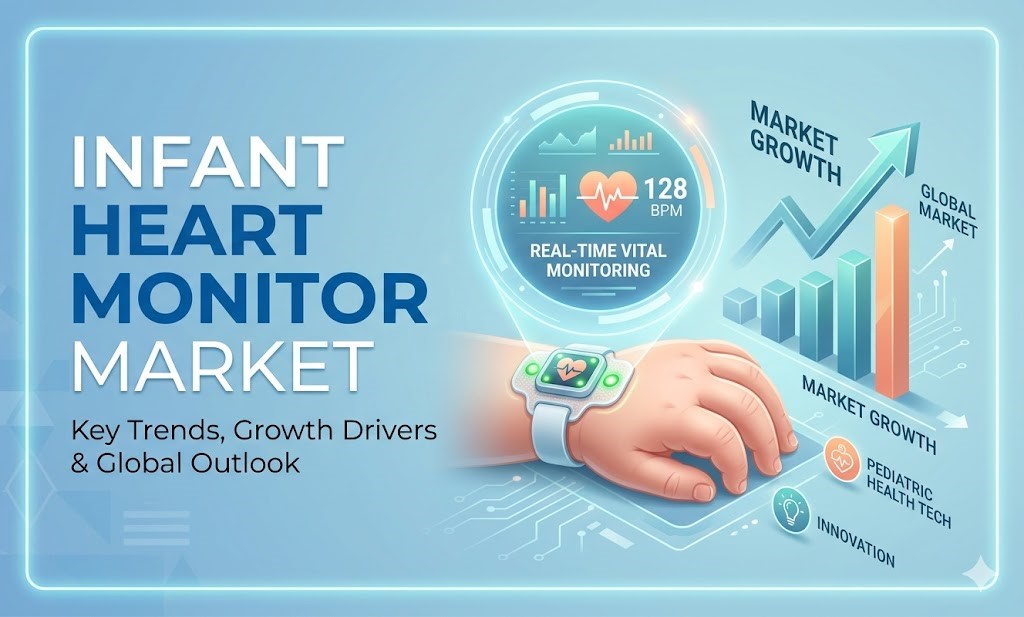
The infant heart monitor market is gaining significant attention as healthcare systems increasingly prioritize early detection and continuous monitoring of cardiac activity in newborns. With rising awareness about neonatal health, especially in premature and high-risk infants, the demand for reliable heart monitoring solutions is steadily increasing. These devices play a crucial role in reducing infant mortality rates by enabling timely medical intervention and ensuring better clinical outcomes.
Market Overview:
Infant heart monitors are specialized medical devices designed to track the heart rate and rhythm of infants, particularly those in neonatal intensive care units (NICUs) or those requiring home-based monitoring. These systems are equipped with advanced sensors and wireless technologies that provide real-time data, helping healthcare professionals and caregivers respond quickly to any irregularities.
The market is evolving with the integration of smart technologies, including wearable devices and mobile-connected monitoring systems. These innovations are enhancing convenience, accuracy, and accessibility, making it easier for both hospitals and parents to monitor infant health effectively. As digital healthcare continues to expand, infant heart monitors are becoming more sophisticated, offering features such as remote monitoring, data analytics, and alert systems.
Regional Insights:
North America continues to dominate the infant heart monitor market due to its well-established healthcare infrastructure, high adoption of advanced medical technologies, and strong focus on neonatal care. The presence of leading medical device manufacturers and supportive healthcare policies further contributes to market growth in this region.
Europe is also a significant market, driven by stringent healthcare regulations and increasing investments in neonatal care facilities. Countries in this region are emphasizing patient safety and quality care, which supports the adoption of advanced monitoring systems.
Asia-Pacific is emerging as a rapidly growing market, fueled by improving healthcare infrastructure, rising birth rates, and increasing awareness about infant health. Governments and private healthcare providers in countries such as India and China are investing in neonatal care units, creating new opportunities for market expansion.
Key Trends & Developments:
One of the most notable trends in the infant heart monitor market is the shift toward wireless and wearable devices. These solutions offer greater flexibility and comfort, allowing continuous monitoring without restricting infant movement. Wearable monitors are particularly beneficial for home care settings, enabling parents to track their baby’s heart activity with ease.
Another important development is the integration of artificial intelligence and data analytics. Modern monitoring systems are capable of analyzing large volumes of data to detect patterns and predict potential health issues. This proactive approach helps in early diagnosis and reduces the risk of complications.
The growing emphasis on remote patient monitoring is also shaping the market. Telehealth solutions are enabling healthcare providers to monitor infants from a distance, reducing the need for frequent hospital visits. This is especially valuable in regions with limited access to specialized healthcare facilities.
Additionally, there is a rising focus on user-friendly designs and enhanced safety features. Manufacturers are developing devices that are easy to use, non-invasive, and designed to minimize discomfort for infants. Improved battery life, better connectivity, and real-time alerts are further enhancing the effectiveness of these devices.
Applications & End-Use Outlook:
Infant heart monitors are widely used across various healthcare settings, including hospitals, neonatal intensive care units, and home care environments. In hospitals and NICUs, these devices are essential for continuously monitoring the vital signs of newborns, particularly those born prematurely or with medical conditions.
Home care is becoming an increasingly important segment, as more parents seek reliable ways to monitor their infant’s health outside of clinical settings. Portable and wearable monitors are enabling caregivers to ensure continuous supervision, providing peace of mind and reducing anxiety.
The application of these devices extends to managing conditions such as congenital heart defects, respiratory disorders, and other neonatal complications. By providing accurate and real-time data, infant heart monitors support timely diagnosis and treatment, improving overall healthcare outcomes.
Challenges and Opportunities:
Despite the positive growth outlook, the market faces certain challenges. High costs associated with advanced monitoring devices can limit their adoption, particularly in developing regions. Additionally, concerns related to data privacy and device accuracy may impact user confidence.
However, these challenges also present opportunities for innovation. Companies are focusing on developing cost-effective solutions and improving device reliability to cater to a broader customer base. The increasing adoption of digital health technologies and supportive government initiatives are expected to further drive market growth.
Conclusion:
The infant heart monitor market is poised for steady expansion as the demand for advanced neonatal care continues to rise. With ongoing technological advancements and growing awareness about infant health, these devices are becoming an integral part of modern healthcare systems. By enabling continuous monitoring and early detection of potential issues, infant heart monitors play a vital role in improving the quality of care and ensuring better health outcomes for newborns.
As healthcare providers and caregivers increasingly embrace innovative monitoring solutions, the market is expected to witness sustained growth, driven by the need for safer, smarter, and more efficient neonatal care technologies.
Browse Full Report – https://www.factmr.com/report/infant-heart-monitor-market