The growing prevalence of gastrointestinal disorders and the increasing demand for minimally invasive treatment options are driving significant advancements in medical technology. Among these innovations, alimentary tract implants have emerged as a vital solution for managing a wide range of digestive system conditions. The alimentary tract implant market is witnessing steady growth as healthcare providers adopt advanced implantable devices to improve patient outcomes, enhance procedural efficiency, and support long-term disease management.
Market Overview:
Alimentary tract implants are medical devices designed to support, repair, or replace parts of the digestive system, including the esophagus, stomach, intestines, and related structures. These implants include stents, feeding tubes, gastric bands, and other specialized devices that aid in restoring normal digestive function or managing chronic conditions.
The market is primarily driven by the rising incidence of gastrointestinal diseases such as colorectal cancer, esophageal disorders, inflammatory bowel diseases, and obesity-related complications. As these conditions become more common due to changing lifestyles and aging populations, the need for effective and durable treatment solutions is increasing.
In addition, the shift toward minimally invasive procedures has significantly boosted the adoption of alimentary tract implants. Compared to traditional surgical methods, implant-based interventions often result in shorter recovery times, reduced hospital stays, and lower risks of complications. This has made them an attractive option for both patients and healthcare providers.
Technological advancements are further contributing to market expansion. Innovations in biomaterials, device design, and imaging technologies have improved the safety, performance, and longevity of alimentary tract implants, making them more reliable and widely accepted in clinical practice.
Regional Insights:
North America holds a prominent position in the alimentary tract implant market, supported by a well-established healthcare infrastructure, high healthcare spending, and strong adoption of advanced medical technologies. The presence of leading medical device manufacturers and ongoing research activities also contribute to the region’s growth.
Europe is another key market, driven by increasing awareness of gastrointestinal health and the availability of advanced treatment options. Government initiatives aimed at improving healthcare access and quality are encouraging the adoption of innovative medical devices across the region.
The Asia-Pacific region is emerging as a significant growth area, fueled by a large patient population, rising healthcare investments, and improving medical infrastructure. Countries such as India, China, and Japan are witnessing increased demand for advanced treatment solutions, including alimentary tract implants, as awareness and affordability continue to improve.
Key Trends & Forecast:
A major trend in the alimentary tract implant market is the growing use of biodegradable and biocompatible materials. These materials reduce the risk of adverse reactions and eliminate the need for additional procedures to remove implants, enhancing patient comfort and safety.
Another important trend is the integration of advanced imaging and navigation technologies in implant procedures. These technologies enable precise placement of implants, improving treatment outcomes and reducing procedural risks.
The market is also experiencing increased adoption of customized and patient-specific implants. Advances in manufacturing technologies, such as 3D printing, allow for the development of implants tailored to individual patient anatomy, resulting in better functionality and improved clinical outcomes.
Furthermore, there is a rising focus on outpatient and ambulatory care settings. As healthcare systems aim to reduce costs and improve efficiency, many implant procedures are being performed outside traditional hospital environments, contributing to the market’s growth.
Looking ahead, the alimentary tract implant market is expected to continue evolving with ongoing research and development efforts. The introduction of next-generation implants with enhanced capabilities will further expand their applications and drive market expansion.
Applications & End-Use Outlook:
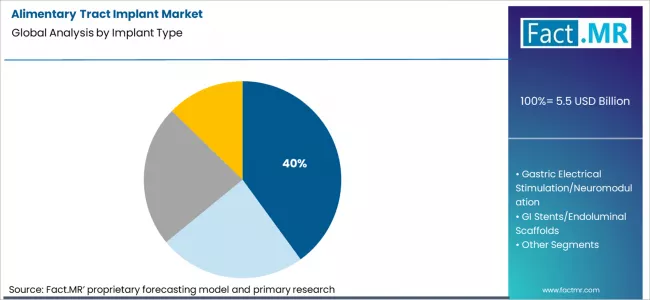
Alimentary tract implants are widely used in the treatment and management of various gastrointestinal conditions. Esophageal and intestinal stents are commonly used to relieve obstructions caused by tumors or strictures, improving patients’ ability to eat and digest food.
Gastric bands and other bariatric implants are used in the management of obesity, helping patients achieve sustainable weight loss and reduce the risk of associated health conditions. Feeding tubes are another important category, providing nutritional support to patients who are unable to consume food orally.
Hospitals remain the primary end-users of alimentary tract implants due to the availability of specialized equipment and skilled healthcare professionals. However, ambulatory surgical centers and specialty clinics are increasingly adopting these devices as minimally invasive procedures become more common.
The growing emphasis on home healthcare is also influencing the market, particularly in the use of long-term feeding devices. Patients are increasingly managing their conditions at home with the support of healthcare providers, improving convenience and quality of life.
Conclusion:
The alimentary tract implant market is playing a crucial role in transforming the treatment landscape for gastrointestinal disorders. By offering effective, minimally invasive solutions, these implants are improving patient outcomes and enhancing the overall quality of care.
As technological innovations continue to advance and healthcare systems evolve, the adoption of alimentary tract implants is expected to increase across various regions and applications. Organizations that focus on research, innovation, and patient-centric solutions will be well-positioned to capitalize on emerging opportunities in this dynamic market.
In an era where precision and efficiency are paramount, alimentary tract implants represent a significant step forward in the field of gastrointestinal healthcare, paving the way for more effective and accessible treatment options.
Browse Full Report – https://www.factmr.com/report/alimentary-tract-implant-market