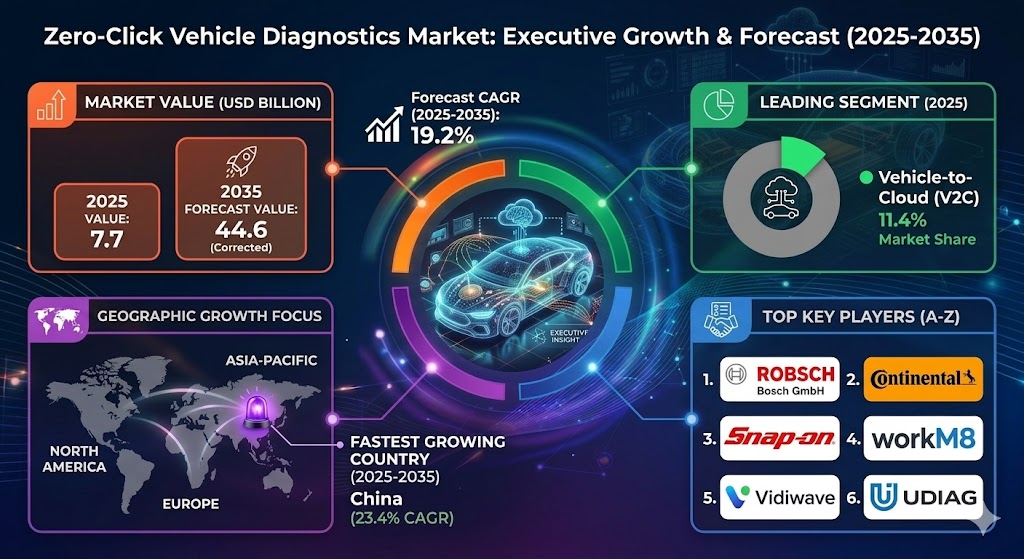
As vehicles become increasingly connected and software-driven, the need for faster, smarter, and more efficient diagnostic systems is growing rapidly. Zero-click vehicle diagnostics is emerging as a transformative solution, enabling automatic detection and analysis of vehicle issues without requiring manual input from drivers or technicians. This innovation is reshaping how vehicle health is monitored, offering a seamless and proactive approach to maintenance. The growing demand for convenience, predictive maintenance, and enhanced vehicle performance is driving significant momentum in the zero-click vehicle diagnostics market.
Market Overview:
Zero-click vehicle diagnostics refers to advanced systems that automatically collect, analyze, and transmit vehicle performance data in real time. These systems leverage embedded sensors, telematics, and cloud-based analytics to identify faults, predict failures, and recommend maintenance actions without any human intervention.
Unlike traditional diagnostic methods that require manual scanning tools or physical inspections, zero-click solutions operate continuously in the background. This ensures that potential issues are detected early, reducing the risk of unexpected breakdowns and costly repairs. The integration of artificial intelligence and machine learning further enhances the accuracy and efficiency of these systems, enabling smarter decision-making and improved vehicle reliability.
Automakers and technology providers are increasingly focusing on integrating zero-click diagnostics into connected vehicle ecosystems. As vehicles evolve into data-driven platforms, these systems are becoming essential for ensuring optimal performance, safety, and user satisfaction.
Regional Insights:
North America holds a prominent position in the zero-click vehicle diagnostics market, driven by the early adoption of connected vehicle technologies and strong investments in automotive innovation. The presence of leading automotive manufacturers and technology firms further accelerates market growth in this region.
Europe is also witnessing steady growth, supported by stringent vehicle safety regulations and a strong emphasis on sustainability and efficiency. Automotive companies in the region are actively incorporating advanced diagnostic systems to enhance vehicle lifecycle management and reduce emissions.
Asia-Pacific is emerging as a high-growth market, fueled by rapid urbanization, increasing vehicle production, and rising demand for smart mobility solutions. Countries such as China, Japan, and India are investing in connected infrastructure and digital automotive technologies, creating favorable conditions for the adoption of zero-click diagnostics.
Key Trends & Forecast:
One of the key trends shaping the market is the growing adoption of predictive maintenance strategies. Zero-click diagnostics enable real-time monitoring and data analysis, allowing manufacturers and service providers to anticipate issues before they occur. This not only improves vehicle uptime but also reduces maintenance costs.
Another significant trend is the integration of cloud computing and Internet of Things (IoT) technologies. These systems facilitate seamless data exchange between vehicles, service centers, and manufacturers, enabling remote diagnostics and over-the-air updates.
Cybersecurity is also becoming a critical focus area, as connected diagnostic systems require robust protection against data breaches and unauthorized access. Companies are investing in secure communication protocols and advanced encryption methods to safeguard vehicle data.
The rise of electric vehicles (EVs) and autonomous driving technologies is further accelerating the demand for zero-click diagnostics. These vehicles rely heavily on software and electronic components, making continuous monitoring and automated diagnostics essential for ensuring safety and performance.
Applications & End-Use Outlook:
Zero-click vehicle diagnostics systems are widely used in passenger vehicles, where convenience and reliability are key priorities for consumers. These systems enhance the overall driving experience by providing real-time insights into vehicle health and minimizing the need for manual intervention.
In the commercial vehicle segment, zero-click diagnostics play a crucial role in fleet management. Logistics and transportation companies use these systems to monitor vehicle performance, optimize maintenance schedules, and reduce downtime. This leads to improved operational efficiency and cost savings.
Automotive service providers are also benefiting from these technologies, as they enable faster and more accurate diagnostics. This reduces service time and enhances customer satisfaction by providing timely and reliable solutions.
Furthermore, zero-click diagnostics are becoming an integral part of connected car platforms, supporting features such as remote monitoring, automated alerts, and predictive analytics. These capabilities are essential for the development of smart mobility ecosystems and next-generation transportation solutions.
Conclusion:
The zero-click vehicle diagnostics market is poised for substantial growth as the automotive industry continues to embrace connectivity, automation, and data-driven innovation. By eliminating the need for manual diagnostics, these systems offer a more efficient, accurate, and user-friendly approach to vehicle maintenance.
With advancements in AI, IoT, and cloud technologies, zero-click diagnostics are set to become a standard feature in modern vehicles. As consumer expectations for convenience and reliability continue to rise, and as automakers focus on enhancing safety and performance, the adoption of these intelligent diagnostic solutions will accelerate.
In the coming years, zero-click vehicle diagnostics will play a pivotal role in shaping the future of automotive maintenance, enabling a shift from reactive repairs to proactive and predictive care. This evolution will not only improve vehicle longevity but also redefine the overall driving and ownership experience.
Browse Full Report – https://www.factmr.com/report/zero–click-vehicle-diagnostics-market