Global Bioinformatics Services Market Projected to Surpass USD 15 Billion by 2035 Amidst Surge in Precision Medicine and AI Integration
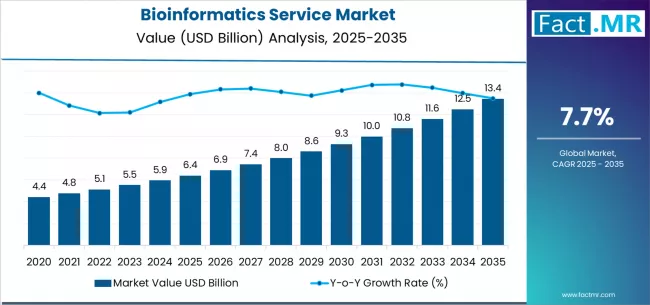
The global bioinformatics services market is entering a transformative decade of growth, fueled by the convergence of high-throughput genomic sequencing and advanced computational intelligence. According to recent industry analysis, the market is valued at approximately USD 4.52 billion in 2026 and is strategically positioned to reach USD 15.27 billion by 2035, expanding at a compound annual growth rate (CAGR) of 14.51%.
As pharmaceutical pipelines shift toward personalized therapies, the demand for outsourced bioinformatics expertise has transitioned from a niche research requirement to a core operational necessity. This growth is primarily driven by the escalating volume of biological data and the urgent need for scalable, cloud-based analytical frameworks to interpret complex multi-omics datasets.
The Data Revolution: Driving Market Dynamics
The bioinformatics services sector addresses a critical bottleneck in modern life sciences: the data deluge. With the cost of whole-genome sequencing continuing to decline, the bottleneck has shifted from data generation to data interpretation.
-
Who: Key beneficiaries include pharmaceutical and biotechnology giants, contract research organizations (CROs), and academic institutions.
-
What: The market encompasses sequencing services, data analysis, drug discovery support, and database management.
-
Where: While North America maintains a dominant market share of nearly 46%, the Asia-Pacific region is identified as the fastest-growing corridor due to increasing government-backed genomic initiatives in China and India.
-
Why: The integration of Artificial Intelligence (AI) and Machine Learning (ML) is now essential for identifying novel biomarkers and accelerating drug repurposing, reducing the time-to-market for life-saving treatments.
Market Segmentation and Key Growth Drivers
1. Sequencing and Data Analysis Supremacy
Sequencing services currently represent the largest segment of the market, accounting for over 37% of total revenue. However, the Data Analysis and Consulting segments are witnessing the highest growth rates as organizations seek specialized expertise to navigate the regulatory and technical complexities of clinical-grade genomic data.
2. The Shift to Cloud-Native Solutions
Cloud-based deployment has become the industry standard, holding a 61% market share. These platforms offer the elastic scalability required for big data in biology while providing the collaborative environments necessary for global research teams.
3. Precision Medicine and Oncology
The rise of precision medicine—specifically in oncology and rare disease diagnostics—remains a primary catalyst. Clinical bioinformatics services are projected to expand as hospitals and diagnostic laboratories integrate next-generation sequencing (NGS) into standard patient care workflows.
The bottleneck in modern drug discovery is no longer the laboratory bench, but the server rack, states a leading industry analyst. Bioinformatics services are the bridge that turns raw genetic code into actionable medical insights.
Strategic Competitive Landscape
The competitive environment is characterized by aggressive consolidation and technological partnerships. Industry leaders are focusing on end-to-end platforms that combine storage, compliance, and AI-driven insights to lower the total cost of ownership for end-users.
Prominent players shaping the 2026–2036 landscape include:
-
Illumina, Inc. (Focus: Integrated NGS workflows)
-
Thermo Fisher Scientific (Focus: Clinical diagnostics and proteomics)
-
QIAGEN N.V. (Focus: Bioinformatics for companion diagnostics)
-
Eurofins Scientific (Focus: Outsourced laboratory and analytical services)
-
BGI Group (Focus: Population-scale genomics)
Challenges and Future Outlook (2026–2036)
Despite the robust growth, the industry faces headwinds, including a global shortage of skilled bioinformaticians and ongoing concerns regarding data privacy and standardization. Addressing these interoperability gaps will be a major focus for service providers over the next decade.
As we look toward 2036, the market is expected to move beyond simple genomics, with proteomics and metabolomics services gaining significant traction. This multi-omics approach will provide a holistic view of human biology, further solidifying bioinformatics services as the backbone of the bio-economy.
About the Industry Report This press release is based on comprehensive market data evaluating the Bioinformatics Services Market from 2026 to 2036. The analysis considers regional growth, technological shifts, and the impact of AI on biological data processing.
Browse Full Report : https://www.factmr.com/report/bioinformatics-service-market
– Contact Us –
11140 Rockville Pike, Suite 400, Rockville,
MD 20852, United States
Tel: +1 (628) 251-1583 | sales@factmr.com
About Fact.MR
Fact.MR is a global market research and consulting firm, trusted by Fortune 500 companies and emerging businesses for reliable insights and strategic intelligence. With a presence across the U.S., UK, India, and Dubai, we deliver data-driven research and tailored consulting solutions across 30+ industries and 1,000+ markets. Backed by deep expertise and advanced analytics, Fact.MR helps organizations uncover opportunities, reduce risks, and make informed decisions for sustainable growth.