Endocrine disorders are among the most commonly diagnosed chronic conditions in companion animals, particularly in dogs. Conditions such as hypothyroidism, hyperadrenocorticism, diabetes mellitus, and other hormonal imbalances can significantly impact a dog’s quality of life if left undiagnosed or untreated. As pet ownership rises and veterinary care becomes more sophisticated, demand for accurate and timely diagnostic solutions is increasing. Within this context, the canine endocrine testing market is gaining prominence as veterinary professionals prioritize early detection and effective disease management.
Market Overview
Canine endocrine testing encompasses a range of diagnostic assays and tools designed to measure hormone levels and assess endocrine function in dogs. These tests support the diagnosis, monitoring, and management of hormonal disorders, enabling veterinarians to tailor treatment strategies more precisely. Testing methods include laboratory-based assays, point-of-care testing kits, and advanced immunoassay platforms.
The market is driven by growing awareness of pet health, increasing willingness among pet owners to invest in advanced veterinary diagnostics, and the rising prevalence of age-related endocrine disorders in dogs. Veterinary clinics and diagnostic laboratories are expanding their testing capabilities to meet expectations for faster turnaround times and improved diagnostic accuracy.
Advancements in Diagnostic Technologies
Technological innovation is playing a crucial role in shaping the canine endocrine testing landscape. Modern diagnostic platforms offer improved sensitivity, specificity, and reproducibility compared to traditional methods. Automated immunoassays and analyzer-based testing systems are helping reduce manual errors while enhancing consistency across test results.
Point-of-care testing solutions are also gaining traction, allowing veterinarians to perform endocrine tests directly within clinics. These systems support quicker clinical decision-making and improve the overall pet care experience. In addition, digital reporting and integration with veterinary practice management software are streamlining workflows and supporting better data management.
Regulatory and Quality Considerations
Quality assurance and regulatory compliance are essential factors influencing the adoption of canine endocrine testing solutions. Diagnostic test manufacturers must adhere to established veterinary laboratory standards to ensure accuracy and reliability. Veterinary professionals rely on validated testing protocols to support confident diagnoses and long-term disease monitoring.
As diagnostic standards evolve, there is growing emphasis on consistency, repeatability, and evidence-based testing practices. This focus is encouraging the adoption of advanced testing systems that support standardized procedures and improved quality control across veterinary practices.
Regional Insights
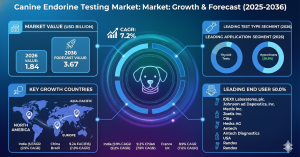
The canine endocrine testing market demonstrates varying levels of adoption across regions, shaped by veterinary infrastructure, pet ownership trends, and access to diagnostic technologies.
North America represents a well-established market, supported by high pet ownership rates, advanced veterinary care systems, and strong awareness of companion animal health. Europe follows closely, with increasing emphasis on preventive veterinary care and early diagnosis of chronic conditions.
The Asia-Pacific region is emerging as a significant growth area, driven by rising urbanization, expanding middle-class populations, and growing interest in companion animal wellness. Improvements in veterinary infrastructure and increased availability of diagnostic services are contributing to broader adoption of endocrine testing in this region.
Key Trends Shaping the Market
One of the key trends in the canine endocrine testing market is the shift toward preventive diagnostics. Veterinarians are increasingly recommending routine screening for endocrine disorders, particularly in aging dogs and breeds predisposed to hormonal conditions. This proactive approach supports early intervention and improved treatment outcomes.
Another notable trend is the expansion of in-clinic diagnostic capabilities. Veterinary practices are investing in compact analyzers and testing kits that enable faster diagnosis without relying solely on external laboratories. This trend enhances efficiency and strengthens client trust through timely communication of results.
Collaboration between diagnostic companies and veterinary professionals is also increasing. These partnerships help refine testing protocols, improve test accuracy, and support continuing education within the veterinary community.
Applications and End-Use Outlook
Canine endocrine testing is widely used in veterinary clinics, animal hospitals, and diagnostic laboratories. Primary care veterinarians rely on these tests for initial diagnosis and ongoing disease monitoring, while referral hospitals and specialty clinics utilize advanced testing platforms for complex cases.
Veterinary diagnostic laboratories remain a critical end-user segment, offering specialized testing services and supporting clinics with limited in-house capabilities. Research institutions also contribute to market growth by advancing understanding of endocrine disorders and evaluating novel diagnostic approaches.
As awareness of endocrine health continues to grow, the use of testing solutions across diverse veterinary settings is expected to expand.
Competitive Landscape
The canine endocrine testing market features a mix of established veterinary diagnostic companies and emerging technology providers. Competition is driven by test accuracy, ease of use, turnaround time, and customer support. Continuous innovation and strong relationships with veterinary professionals are key to maintaining market presence.
Manufacturers are also focusing on expanding product portfolios and improving global distribution networks to meet increasing demand. Training and technical support services are becoming important differentiators in purchasing decisions.
Conclusion
The canine endocrine testing market plays a vital role in improving the diagnosis and management of hormonal disorders in dogs. As veterinary medicine continues to advance and pet owners seek higher standards of care, reliable diagnostic testing has become essential. Ongoing innovations in testing technologies, combined with growing emphasis on preventive care, are expected to support sustained market development.
Access to comprehensive market intelligence, such as in-depth analyses from Fact.MR, can help veterinary professionals, diagnostic companies, and investors better understand evolving trends and opportunities. For stakeholders across the veterinary healthcare ecosystem, canine endocrine testing represents a critical component of modern, patient-focused animal care.
Browse Full Report – https://www.factmr.com/report/canine-endocrine-testing-market