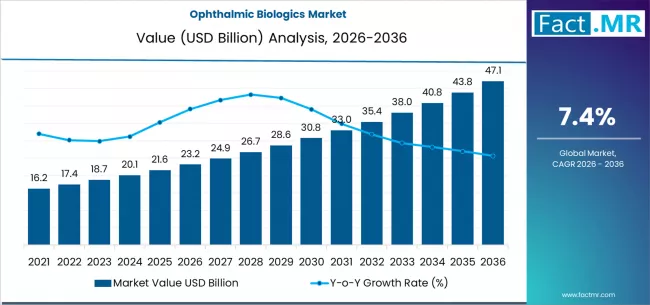
The global Ophthalmic Biologics Market is expected to experience strong growth over the next decade, driven by increasing prevalence of chronic eye diseases, rapid innovation in biologic drug development, and expanding access to specialized ophthalmic care. Industry analysis indicates that the market is projected to grow from approximately USD 23.2 billion in 2026 to around USD 47.1 billion by 2036, registering a robust compound annual growth rate (CAGR) of about 7.4% during the forecast period.
Ophthalmic biologics are advanced therapeutic agents, including monoclonal antibodies and protein-based drugs, used to treat serious eye disorders such as age-related macular degeneration (AMD), diabetic retinopathy, and other retinal diseases. These biologics target specific disease pathways, offering improved efficacy and better vision preservation compared to conventional small-molecule therapies. Their growing adoption has significantly transformed modern retinal care.
Key Market Growth Drivers
Several factors are supporting the steady expansion of the ophthalmic biologics market:
-
Rising Burden of Retinal Disorders: Aging populations and increasing diabetes prevalence worldwide are leading to a higher incidence of retinal diseases, driving long-term demand for effective biologic treatments.
-
Clinical Preference for Targeted Therapies: Anti-VEGF biologics have become the standard of care for many vision-threatening conditions due to their ability to slow disease progression and improve visual outcomes.
-
Innovation in Long-Acting Therapies: Ongoing research is focused on developing biologics with extended durability and reduced injection frequency, helping improve patient compliance and overall treatment experience.
Together, these factors are encouraging pharmaceutical companies and healthcare providers to invest heavily in biologic-based ophthalmic solutions.
To Access the Complete Data Tables & in-depth Insights, Request a Discount on this report: https://www.factmr.com/connectus/sample?flag=S&rep_id=13529
Product and Application Insights
Among all product categories, anti-VEGF therapies dominate the market, accounting for nearly 62% of total revenue in 2026. These treatments are widely used for wet AMD and other vascular retinal conditions, supported by strong clinical evidence and physician acceptance. Other biologic segments include anti-inflammatory agents and emerging novel therapies targeting alternative molecular pathways.
In terms of application, age-related macular degeneration represents the largest segment, contributing close to 48% of overall market demand in 2026. As one of the leading causes of irreversible vision loss among older adults, AMD continues to drive sustained use of ophthalmic biologics. Diabetic retinopathy and other ocular conditions also contribute significantly as screening and diagnosis rates improve globally.
End-User Landscape
Ophthalmology clinics account for the largest share of biologic administration, representing approximately 56% of the market. These clinics are well-equipped to deliver intravitreal injections and provide ongoing monitoring required for biologic therapies. Hospitals and ambulatory surgical centers also play an important role, particularly in regions with integrated healthcare systems.
Regional Market Outlook
The ophthalmic biologics market shows strong growth potential across multiple regions:
-
Asia Pacific is emerging as a high-growth region, supported by expanding healthcare infrastructure, growing awareness of eye diseases, and increasing access to advanced treatments.
-
North America continues to lead in market value due to strong reimbursement frameworks, early adoption of innovative therapies, and high diagnosis rates.
-
Europe maintains steady growth, driven by aging demographics and well-established ophthalmic care systems.
-
Latin America is also gaining momentum as private healthcare investments increase.
Competitive Landscape
The market is characterized by the presence of leading pharmaceutical and biotechnology companies actively engaged in research, product development, and lifecycle management of ophthalmic biologics. Competitive strategies focus on improving treatment durability, expanding indications, and developing next-generation biologics and biosimilars to enhance patient outcomes and market reach.
Future Outlook
The global ophthalmic biologics market is poised for sustained expansion through 2036 as technological advancements, demographic shifts, and unmet clinical needs continue to converge. With ongoing innovation and broader access to advanced eye care, ophthalmic biologics are expected to play an increasingly vital role in preventing vision loss and improving quality of life for patients worldwide.
Browse Full Report: https://www.factmr.com/report/ophthalmic-biologics-market