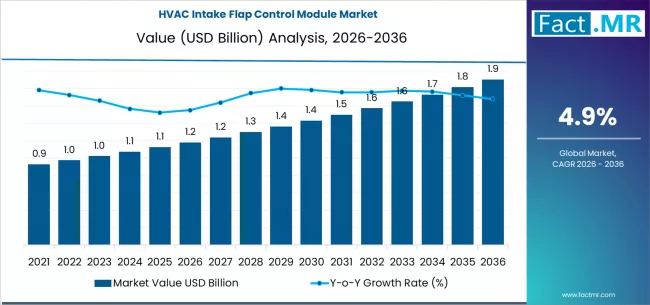
The global HVAC industry is entering a transformative decade, driven by rising energy efficiency standards, increased adoption of intelligent climate control systems, and the ongoing electrification of vehicles and buildings. Within this evolving ecosystem, HVAC intake flap control modules—essential components that regulate airflow, volume, and indoor air quality—are emerging as key contributors to performance optimization and system efficiency. Data analysis indicates that the period from 2026 to 2036 will represent a period of sustained growth and high potential returns for this niche but strategic market segment.
Market Valuation Outlook: Growth Anchored in HVAC & Climate Control Expansion
Intake flap control modules, though small, are integral to automotive and building HVAC systems. Their market valuation closely aligns with broader HVAC growth, particularly in vehicles and intelligent building systems.
The automotive HVAC market is projected to experience significant expansion, driven by increasing vehicle production, higher consumer expectations for comfort, and the integration of advanced airflow technologies. Intake flap control modules are critical for enabling features like dual-zone and multi-zone climate control, which are becoming standard in modern vehicles.
In the building HVAC segment, micro-zone climate control systems are gaining traction, allowing individual rooms or areas to maintain precise temperature and airflow. The increasing adoption of these systems is expected to create strong demand for intake flap control modules, as each zone requires precise airflow regulation. Projections show that the micro-zone climate control segment is poised for robust double-digit growth over the next decade, with intake flap modules as a direct beneficiary.
Smart HVAC systems, which rely on automated controls, sensors, and adaptive airflow management, further boost the market potential for these modules. The rising emphasis on energy efficiency and climate control optimization in both vehicles and buildings ensures that intake flap control modules remain central to innovation and adoption trends.
ROI Potential: Why Intake Flap Control Modules Deliver Attractive Returns
From an investment standpoint, HVAC intake flap control modules offer an appealing ROI profile due to their critical functional role, scalable production, and increasing integration in advanced systems.
-
High Value Density, Low Material Costs
Intake flap control modules combine compact actuators, sensors, and control electronics. Compared with larger HVAC components like compressors or heat exchangers, they require lower raw material inputs while delivering high system-level value, supporting attractive margins for manufacturers. -
Growing Content per System
As HVAC systems evolve from single-zone to multi-zone architectures, the number of intake flaps per system increases. This growth in component per unit directly boosts demand and revenue potential for module suppliers. -
Recurring Aftermarket Demand
These modules are prone to wear, sensor degradation, and actuator fatigue, creating ongoing replacement needs. This generates consistent aftermarket revenue streams and enhances long-term ROI. -
Alignment with EV and Smart Building Trends
Electric vehicles require precise airflow management to maintain cabin comfort while optimizing battery efficiency. Smart building systems similarly rely on efficient airflow control to minimize energy consumption. Both trends increase demand for advanced intake flap modules, adding to their financial attractiveness.
Long-Term Growth Prospects (2026–2036): Key Drivers
The coming decade presents several structural drivers for growth in the HVAC intake flap control module market:
1. Electrification of Mobility
The rise of electric and hybrid vehicles accelerates demand for efficient HVAC systems. Unlike traditional vehicles, electric vehicles are highly sensitive to energy use in climate control, making precise intake flap control critical for both comfort and energy efficiency.
2. Energy-Efficient Buildings
Globally, the adoption of energy-efficient HVAC systems is on the rise. Buildings increasingly integrate smart airflow management, which relies on intake flap control modules to optimize air distribution, reduce leakage, and enhance overall energy performance.
3. Asia-Pacific as a Growth Hub
Rapid urbanization, increasing vehicle ownership, and stricter efficiency regulations in Asia-Pacific are driving strong adoption of advanced HVAC systems. This region is expected to be a key market for intake flap control modules, fueled by both automotive and building applications.
4. Smart Sensors and AI Integration
The incorporation of airflow sensors, intelligent controls, and AI-driven climate optimization enhances the functionality of intake flap modules. This trend is promoting greater module sophistication, higher system-level efficiency, and increased adoption across applications.
Competitive Landscape & Strategic Opportunities
Leading HVAC and automotive component suppliers are investing in modular, lightweight, and digitally controlled airflow components. For emerging suppliers and Tier-2 manufacturers, intake flap control modules represent a strategic entry point into high-growth HVAC markets without the capital intensity of larger system components.
The module’s compact size, functional importance, and integration potential make it a compelling target for innovation in materials, actuator technology, and electronic control systems. Companies that focus on efficiency, durability, and digital integration are likely to capture a disproportionate share of market growth.
Browse Full Report : https://www.factmr.com/report/hvac-intake-flap-control-module-market
Conclusion
Between 2026 and 2036, the HVAC intake flap control module market is set for steady valuation growth, strong ROI potential, and strategic relevance. Driven by automotive electrification, smart building adoption, and energy efficiency mandates, these modules are evolving from simple mechanical parts to intelligent, high-value system components.
For investors, manufacturers, and system integrators, intake flap control modules offer a data-driven growth opportunity within the next generation of HVAC systems. Their increasing deployment in dual-zone and multi-zone climate control, coupled with recurring aftermarket potential and rising technological sophistication, positions this market as a high-priority segment for long-term strategic investment.