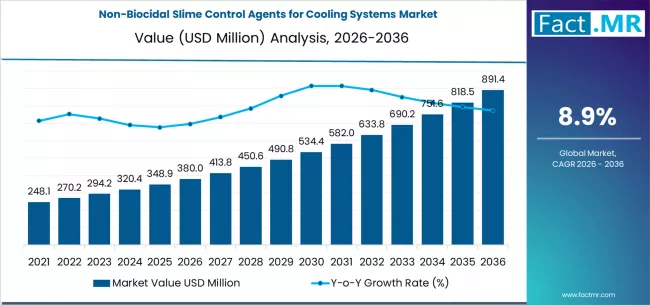
Cooling systems are essential to the efficient operation of industrial facilities, commercial buildings, and power generation plants. However, the accumulation of slime, biofilm, and organic deposits within these systems can significantly reduce heat transfer efficiency, increase energy consumption, and accelerate equipment corrosion. Traditionally, biocidal chemicals have been used to control microbial growth, but growing environmental and regulatory concerns have shifted attention toward safer alternatives. As a result, the non-biocidal slime control agents for cooling systems market is gaining momentum, offering environmentally responsible solutions that maintain system performance without relying on toxic biocides.
Market Overview
Non-biocidal slime control agents are specialized chemical formulations designed to prevent or disrupt slime and biofilm formation in cooling systems without directly killing microorganisms. Instead, these agents work by dispersing organic matter, preventing microbial adhesion, and inhibiting the buildup of deposits on system surfaces. This approach helps maintain cleaner heat exchange surfaces while reducing environmental impact.
The market for non-biocidal slime control agents is evolving alongside stricter environmental regulations and rising awareness of sustainable water treatment practices. Industries are increasingly seeking alternatives that minimize ecological harm, reduce chemical exposure risks, and support long-term system reliability. These agents are commonly used in open-loop and closed-loop cooling systems across a wide range of industrial and commercial applications.
Key Drivers Influencing Market Growth
One of the primary drivers of this market is the increasing emphasis on environmental sustainability. Regulatory authorities across regions are tightening restrictions on the use of hazardous biocides, prompting industries to adopt non-toxic and eco-friendly treatment solutions. Non-biocidal slime control agents align well with these regulatory trends, making them an attractive choice for compliance-driven organizations.
Another important growth driver is the rising demand for efficient water management. Slime and biofilm accumulation can significantly impair cooling system performance, leading to higher operational costs and unplanned maintenance. Non-biocidal agents help improve heat transfer efficiency and reduce fouling-related downtime, supporting overall operational optimization.
Growing industrialization and the expansion of cooling-intensive sectors such as power generation, chemical processing, and manufacturing are also contributing to market growth. As cooling systems become more complex and mission-critical, the need for reliable and sustainable treatment solutions continues to rise.
Technology Trends and Product Innovation
Innovation plays a crucial role in shaping the non-biocidal slime control agents market. Manufacturers are focusing on advanced dispersant technologies that effectively break down organic deposits and prevent microbial attachment. These formulations are designed to work synergistically with other water treatment chemicals, enhancing overall system performance.
Another notable trend is the development of multifunctional agents that address multiple challenges simultaneously, such as scale inhibition, corrosion control, and slime dispersion. This integrated approach reduces chemical usage and simplifies treatment programs.
Digital monitoring and smart water management systems are also influencing product development. By combining non-biocidal agents with real-time monitoring solutions, facility operators can optimize dosing strategies, detect fouling risks early, and maintain consistent cooling system performance.
Regional Insights
The market demonstrates steady adoption across regions with strong industrial and commercial infrastructure. North America remains a key market due to its well-established industrial base and growing focus on environmentally responsible water treatment practices. Regulatory pressure and corporate sustainability initiatives are driving the transition toward non-biocidal solutions in this region.
Europe is another prominent market, supported by stringent environmental regulations and widespread adoption of green technologies. European industries are actively investing in sustainable cooling water treatment methods to reduce chemical discharge and meet compliance requirements.
The Asia-Pacific region is emerging as a high-potential market, driven by rapid industrial growth, expanding power generation capacity, and increasing awareness of water conservation. As industries in this region modernize their cooling systems, demand for non-biocidal slime control agents is expected to rise steadily.
Key Trends and Market Outlook
Several key trends are shaping the future of the non-biocidal slime control agents market. One major trend is the shift toward customized treatment programs tailored to specific system conditions and water chemistry. End users are increasingly seeking solutions that deliver targeted performance without excessive chemical use.
Another trend is the growing integration of sustainability metrics into water treatment decisions. Companies are evaluating treatment solutions based not only on performance but also on environmental impact, worker safety, and long-term compliance benefits.
Research and development efforts continue to focus on improving formulation efficiency and compatibility with diverse cooling system designs. This ongoing innovation is expected to enhance product effectiveness and broaden application scope.
Applications and End-Use Outlook
Non-biocidal slime control agents are widely used in industrial cooling systems across power plants, refineries, petrochemical facilities, and manufacturing units. These sectors rely on efficient cooling to maintain process stability and equipment longevity.
Commercial buildings, including data centers and large HVAC installations, also represent an important end-use segment. In these applications, non-biocidal agents help maintain cooling efficiency while supporting indoor environmental quality and safety standards.
The adoption of these agents is expanding in facilities that prioritize sustainability, water reuse, and reduced chemical discharge, reinforcing their role in modern water treatment strategies.
Competitive Landscape
The competitive landscape of the non-biocidal slime control agents market is characterized by continuous product innovation and strategic partnerships. Market participants focus on developing high-performance, environmentally friendly formulations that meet evolving customer and regulatory requirements.
Companies are also strengthening their service offerings, including technical support, system audits, and customized treatment programs, to enhance customer value and long-term relationships.
Conclusion
The non-biocidal slime control agents for cooling systems market is emerging as a vital component of sustainable industrial water management. By offering effective slime control without the environmental and safety concerns associated with traditional biocides, these agents support efficient, compliant, and eco-friendly cooling system operation.
As industries continue to prioritize sustainability, operational efficiency, and regulatory compliance, the adoption of non-biocidal slime control agents is expected to grow steadily. Access to comprehensive market intelligence, such as insights from Fact.MR, can help stakeholders understand evolving trends, evaluate opportunities, and develop informed strategies in this dynamic market.
Browse Full Report – https://www.factmr.com/report/non-biocidal-slime-control-agents-for-cooling-systems-market